Get Full Government Meeting Transcripts, Videos, & Alerts Forever!
Get email alerts on the Property Revaluation topic
No spam. Unsubscribe anytime.
Assessor warns falling equalization rate; revaluation would cost millions and take years
Summary
City staff told the finance committee that Schenectady’s equalization rate has dropped from 123% in the past to 60.39% today, a decline that can affect bond ratings and tax distribution. Staff estimated a revaluation could cost roughly $2 million and take two-to-four years; the committee discussed adding the project to future budget planning.
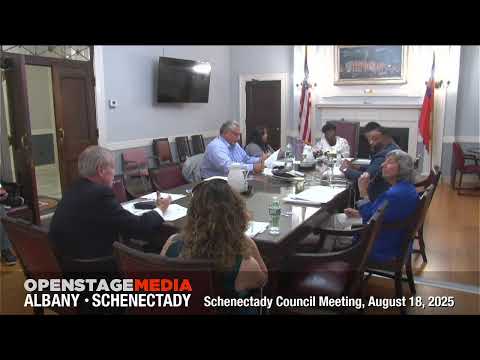
Schenectady — At the Aug. 18 finance committee meeting, city staff raised concerns about a sharp decline in the city’s equalization rate and urged the council to consider a revaluation to restore parity between assessed and market values.
"For the course of the time that I've been here at the city, we've gone from that equalization rate, at a high of a 123%, to 60.39% now," the staff member responsible for assessments told the committee. The presenter said that falling equalization can affect the city’s bond rating and how county property taxes are apportioned.
Why it matters: A citywide revaluation aligns assessed values with market values and is intended to spread tax burdens more equitably across neighborhoods; without a reval, properties selling well above assessed values create disparities and shift relative tax burdens. The presenter said properties in some neighborhoods now sell for roughly double their assessed values.
Costs, timeline and trade-offs: Staff estimated that a full revaluation for a city of Schenectady’s size could cost in the range of $2 million and take two to four years, depending on the approach. External vendors can bring staffing and tools (including aerial imaging and change-detection software such as ‘‘change finder’’ and pictometry) to speed data collection and modeling, but fieldwork and permit-verification still require time and resources. Staff noted building-permit compliance and incomplete property-record cards are complicating factors that reduce the assessor’s ability to capture accurate property changes without field verification.
Committee reaction: Members asked about revenue impacts and implementation timing. Staff explained that revaluation does not automatically generate more city revenue because tax rates are adjusted to the levy; instead, a revaluation equalizes assessed values and can shift the distribution of tax burdens. The presenter recommended planning for a revaluation in the next budget cycle rather than rushing to start immediately.
What’s next: No action was required at the Aug. 18 meeting. Staff asked the council to consider including reassessment planning and possible funding in future budgets and to review pilot agreements and permitting practices that affect assessed values.