Get Full Government Meeting Transcripts, Videos, & Alerts Forever!
Get email alerts on the Charter Reform topic
No spam. Unsubscribe anytime.
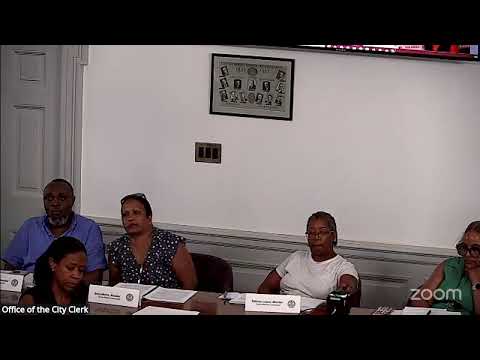
Mount Vernon charter commission fails to adopt final report; proposed council‑manager and appointed finance officer not placed on ballot
Summary
The Mount Vernon Charter Review Commission on Wednesday, July 16, voted against adopting its final report that would have placed two charter amendments on the November 4 ballot, leaving the proposed switch to a council‑manager form of government and a move to an appointed commissioner of finance unfiled.
The Mount Vernon Charter Review Commission on Wednesday, July 16, voted against adopting its final report that would have placed two charter amendments on the November 4 ballot, leaving the proposed switch to a council‑manager form of government and a move to an appointed commissioner of finance unfiled.
The commission meeting opened at 6:03 p.m. and the secretary read the two ballot questions into the record: one to create a city manager appointed by the city council (with candidates required to have at least 10 years of executive/administrative experience or a combination of a master’s‑level credential and experience, and to abide by the International City/County Management Association code of ethics) with an effective date of Jan. 1, 2028; and a second to replace the elected controller with an appointed commissioner of finance (requiring a CPA or similar credential and 7–10 years of public finance experience, with an effective date of Jan. 1, 2030). The reading also stated that implementing legislation must be adopted before the respective effective dates.
Commissioners engaged in more than an hour of debate before the roll‑call vote. Opponents said the proposals would reduce democratic accountability, concentrate power, weaken financial independence and lacked implementation planning and budget detail. ‘‘These charter changes are a step backward for democracy in the city of Mount Vernon,’’ Commissioner Rosa Blackwell Lawrence said, citing concerns about an unelected city manager and the replacement of an elected controller.
Counsel to the commission, Christian DiPalermo, repeatedly told commissioners that the ballot language was legally sufficient to appear on the ballot and that the longer report included sample implementing charter code language that would be finalized later by corporation counsel and the city council if voters approved the measures. ‘‘Legally, it is ready to go,’’ DiPalermo said, while also noting that if voters approve a change the city’s legal staff would need to align the charter and code with the initiative.
Commissioners pressing procedural and substantive questions asked whether the timeline would leave enough time for the city to hire an executive search firm, set compensation and adopt implementing ordinances so a city manager could assume duties by Jan. 1, 2028. Several members asked the attorney to check specific calendar and implementation dates and noted the absence of a detailed budget plan for the new positions and search costs.
A motion to adopt the commission’s final report in its entirety, including the ballot questions as read into the record, was put to a roll‑call vote and failed. The roll call recorded the following votes: Rosa Blackwell Lawrence — No; Brian Wyatt — Yes; Anitra Hadley — No; Mary Kingsley — No; Susan Lawley — Yes; Eileen Lambert — No; Dolores Lopes — Yes; Erin McGarry — Yes; Geeta Morris — No; Kevin Morrison — No; Hailey Pilgrim — No; David Rogers — Yes; Monica Whiting Hogan — No. The motion therefore did not carry and the commission did not file the report with the city clerk.
The meeting record shows continuing disagreement among commissioners about whether to delay placing the questions on the ballot so that additional community outreach, translated materials and detailed implementation and budget plans could be developed. Several commissioners urged more public education and wider engagement, saying outreach to non‑English‑speaking residents and to neighborhoods outside a single ZIP code had been insufficient.
Next steps described in the meeting: because the motion to adopt the report failed, the commission did not transmit the ballot questions to the city clerk for the board of elections; commissioners and counsel discussed follow‑up actions including verifying implementation dates and ensuring corporation counsel and the city clerk would review any future report language for compliance. The transcript records no further formal action on the two ballot questions at the July 16 meeting.
The meeting ended with approval to table minutes from the June 4 meeting and adjournment.