
Albany preservation panel backs Warehouse District national-register nomination with caveat on Erie Canal archaeology
Get AI-powered insights, summaries, and transcripts
Subscribe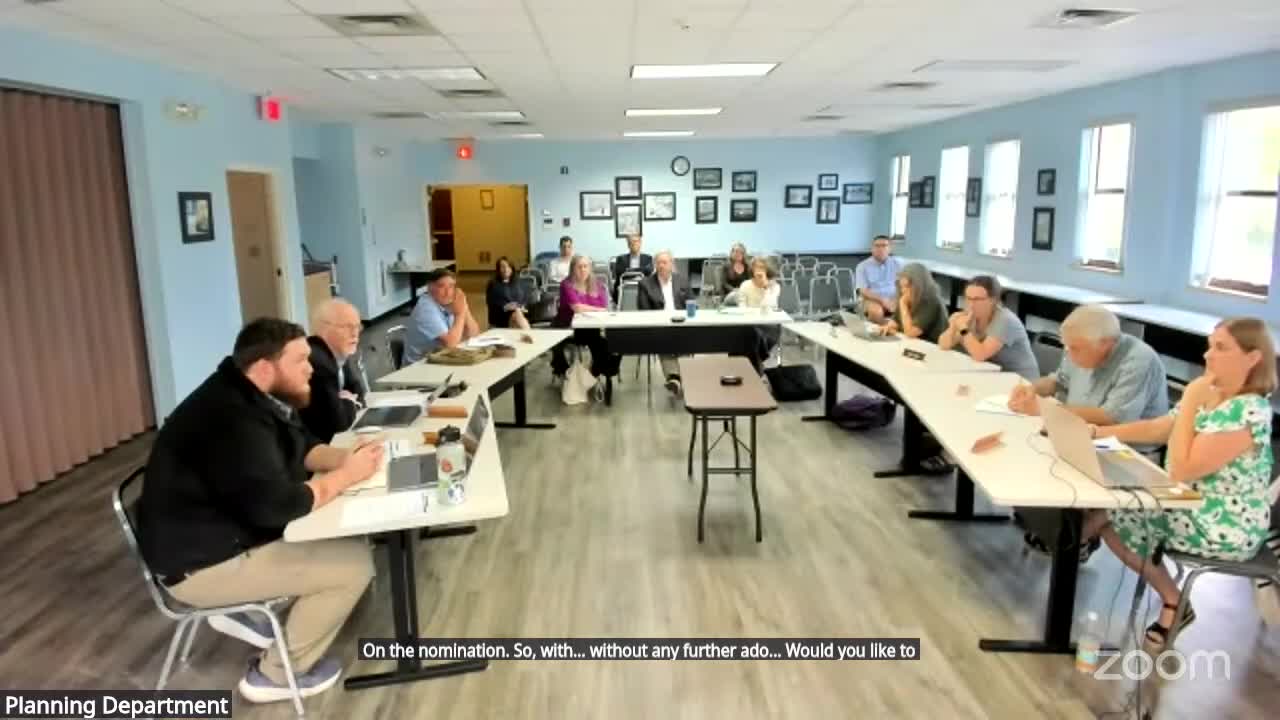
Summary
The Albany City Historic Preservation Commission voted to recommend the City of Albany’s Warehouse (Industrial) District nomination for the National Register of Historic Places while asking for follow-up archaeological assessment of the Erie Canal entrance area that was excluded from the draft boundary.
The Albany City Historic Preservation Commission voted to forward a recommendation supporting the City of Albany’s nomination of the Warehouse (Industrial) District to the state for National Register consideration, while asking staff to pursue further archaeological assessment of the triangular area near the Erie Canal entrance that the draft nomination excludes.
The nomination hearing included a presentation from City planning staff, a historian/consultant from HartGen Archaeology who prepared the nomination materials, and representatives from the New York State Historic Preservation Office. Catherine Frank of the State Historic Preservation Office (SHPO) outlined tax-credit benefits for properties that become part of a listed district and answered owners’ questions during the public comment period.
The commission’s recommendation will be sent to the State Review Board for its September meeting; the panel’s motion included a specific caveat that staff continue work to evaluate the archaeological potential for the area around the Erie Canal entrance and, if warranted, seek its appropriate protection or inclusion in the nomination.
Why it matters: listing on the National Register does not impose restrictions on private owners acting with private funds but makes properties eligible for state and federal rehabilitation tax credits and obliges state and federal agencies to consider effects on listed resources when projects use government funds or permits. Several speakers and commissioners said the combined effect of National Register listing and recent Brownfield Opportunity Area designations strengthens development incentives in the Warehouse District.
Presentation and boundary changes
City planning staff explained that an intensive-level survey by Easton Architects, followed by a nomination prepared with consultant HartGen Archaeology, led to a proposed district boundary. Wally Wheeler of HartGen presented the district’s history and the nomination’s changes from earlier drafts, including removal of three small parcels with no buildings and a triangular parcel along Water/Cottonwood/North Lawrence near the river that had been included previously on archaeological grounds.
Wheeler said the nomination’s period of significance was revised to focus on standing resources rather than wide-ranging archaeological claims: the draft now emphasizes structures built from about 1853 (the oldest extant building in the district) through 1975. He described transportation technologies—roads, the Erie Canal and later rail—as “primary themes” that shaped industrial development in the district.
Archaeology and the Erie Canal entrance
Commission discussion centered on whether to include the triangular basin area associated with the Erie Canal entrance. SHPO staff and the HartGen consultant said existing investigative work for that specific parcel has been limited and described earlier materials as an advocacy-style report with a few test pits rather than a comprehensive professional archaeological assessment.
Wheeler and SHPO staff said the available evidence does not yet support treating that triangular area as a contributing archaeological site within the nomination. Catherine Frank said the nomination will identify the area’s research potential but that the state’s professional archaeological unit would require additional, phased investigation (Phase I survey and, if warranted, Phase II trenching) before the site could be listed as a contributing archaeological resource.
Public comments and property-owner notices
Speakers from preservation organizations and property owners spoke during the public comment portion. Kara Macri of the Historic Albany Foundation voiced support for listing and expressed disappointment that part of the mapped area was removed; she asked whether nonprofit groups could fund archaeological study if the parcel remains outside the nomination.
A caller identified as Theresa asked whether a specific address (identified in the meeting as 74 Ferry Street / Joseph’s House Shelter) is considered contributing; SHPO staff confirmed the building referenced is treated as a contributing resource in the nomination and said owners could contact SHPO directly for details on tax-credit eligibility and next steps.
Tax credits and incentives
Catherine Frank (SHPO) summarized tax-credit incentives: “What the program does is it allows the owners of commercial properties, if they choose to do a substantial rehabilitation to their buildings... to apply for 20% of the rehabilitation costs back as a tax credit from federal taxes,” with a potential additional state credit depending on project and census-tract eligibility. Frank and other speakers noted that listing plus the site’s designation as a Brownfield Opportunity Area increases potential financing and rehabilitation incentives.
Formal action
A commission member moved that the commission support the nomination as presented and request continued work to evaluate the Erie Canal entrance area for archaeological significance and possible inclusion; another member seconded the motion. The commission voted in favor and the recommendation will be forwarded to the State Review Board for its September meeting, with the caveat on additional archaeological assessment.
What happens next
Because the City of Albany is a Certified Local Government, the commission’s recommendation will accompany the nomination to the State Review Board. SHPO staff said further changes to the draft nomination are possible before the state filing and that professional archaeologists will be engaged if development proposals or further study trigger review requirements under state or federal law.
The meeting record shows the commission’s recommendation passed and will be included in the materials submitted to SHPO and the State Review Board.