Get Full Government Meeting Transcripts, Videos, & Alerts Forever!
Albany preservation panel backs Warehouse District national-register nomination with caveat on Erie Canal archaeology
Summary
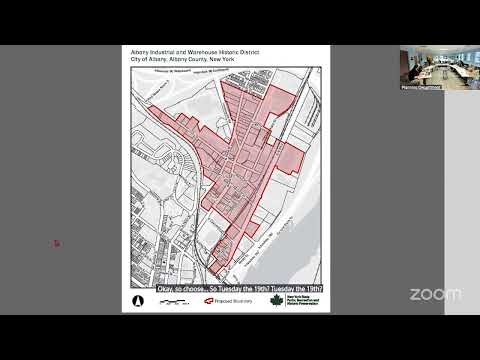
The Albany City Historic Preservation Commission voted to recommend the City of Albany’s Warehouse (Industrial) District nomination for the National Register of Historic Places while asking for follow-up archaeological assessment of the Erie Canal entrance area that was excluded from the draft boundary.
The Albany City Historic Preservation Commission voted to forward a recommendation supporting the City of Albany’s nomination of the Warehouse (Industrial) District to the state for National Register consideration, while asking staff to pursue further archaeological assessment of the triangular area near the Erie Canal entrance that the draft nomination excludes.
The nomination hearing included a presentation from City planning staff, a historian/consultant from HartGen Archaeology who prepared the nomination materials, and representatives from the New York State Historic Preservation Office. Catherine Frank of the State Historic Preservation Office (SHPO) outlined tax-credit benefits for properties that become part of a listed district and answered owners’ questions during the public comment period.
The commission’s recommendation will be sent to the State Review Board for its September meeting; the panel’s motion included a specific caveat that staff continue work to evaluate the archaeological potential for the area around the Erie Canal entrance and, if warranted, seek its appropriate protection or inclusion in the nomination.
Why it matters: listing on the National Register does not impose restrictions on private owners acting with private funds but makes properties eligible for state and federal rehabilitation tax credits and obliges state and federal agencies to consider effects on listed resources when projects use government…
Already have an account? Log in
Subscribe to keep reading
Unlock the rest of this article — and every article on Citizen Portal.
- Unlimited articles
- AI-powered breakdowns of topics, speakers, decisions, and budgets
- Instant alerts when your location has a new meeting
- Follow topics and more locations
- 1,000 AI Insights / month, plus AI Chat