Get Full Government Meeting Transcripts, Videos, & Alerts Forever!
Get email alerts on the Fence Setbacks topic
No spam. Unsubscribe anytime.
Fruit Heights planning commission moves to clarify fence setbacks, measurement for corner lots
Summary
The Fruit Heights Planning Commission discussed clarifying how the city measures fence setbacks on corner lots — including whether to measure from curb/gutter or right-of-way — citing safety, ADA sidewalk changes and recent permit disputes. Commissioners asked staff to draft clearer language for a future meeting.
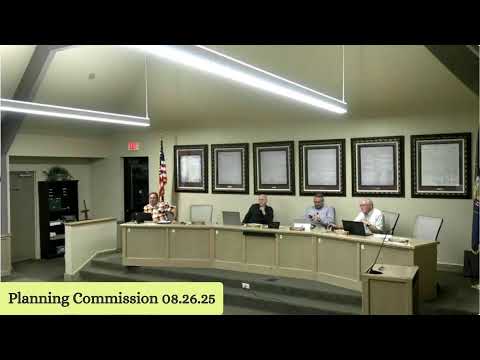
The Fruit Heights Planning Commission on Monday discussed clarifying city fence setback rules after multiple recent disputes over fences on corner lots and how the setback is measured.
The issue centers on a provision in the existing ordinance that, as written, requires "fences must be set back at least 9 feet from the edge of the street right right away," language that staff said has caused inconsistent interpretations on corner lots and where sidewalks and utilities are placed. "If you read through the ordinance, it states that, where there is no curve, that system must be set at least 9 feet, from the back edge of the street right away," said Speaker 5, City planner. "I think this ordinance needs to be a little more clearer."
Commissioners said the change in standard sidewalk widths — including new 5-foot ADA sidewalks and developments that locate curb and sidewalk differently — has made the phrase "edge of the street right of way" ambiguous for homeowners and permit reviewers. Speaker 3, Planning Commission member, noted that "in my mind, the edge of the right of way is where the city street ends and the property line starts," while Speaker 5 said staff has recommended measuring from the back of the curb in most locations because curb-and-gutter is often the clearest landmark for residents and inspectors.
Commissioners discussed the role of the existing clear-vision intersection rule — which they said remains in effect for intersections and requires nothing between approximately 2 and 10 feet above grade within a 40-foot triangle from the centerline — and whether that should be extended to driveway locations or other nonintersection corners. "We used to have a better clear-vision thing for driveways," Speaker 5 said. "We used to have that. Would we be able to accomplish it if any fencing that's in front of the house ... has to be non-privacy?" Speaker 1, Planning Commission member, added that the commission should avoid rewriting ordinances to address a single situation and instead seek clarity that applies across the city.
No ordinance amendment was adopted at the meeting. Commissioners directed staff to draft clearer language — including a default measurement (back of curb) with limited exceptions where curb-and-gutter does not exist — and to provide comparisons to neighboring cities for the next meeting. "The planning commission to kinda think about, consider, look to other communities ... Put something together," Speaker 5 said.
The discussion also included practical permit notes: Speaker 1 confirmed staff had not issued a permit for a specific disputed fence and said they would require a site plan measured to the clarified standard before approving any new fence.
The commission did formally approve minutes for the April 29, 2025, meeting during the same session; that vote was procedural and unrelated to the fence discussion.
Next steps: staff will return with proposed ordinance language and examples from other Utah municipalities for further discussion and possible referral to a public hearing.