Get Full Government Meeting Transcripts, Videos, & Alerts Forever!
Get email alerts on the Water Infrastructure topic
No spam. Unsubscribe anytime.
Helena Harbor official warns city water system still at risk despite state and federal support
Summary
John Edwards of Helena Harbor told the council the city has secured loan and grant commitments but faces consent-decree obligations, aging treatment-plant valves that could cause catastrophic outages and persistent staffing and reporting gaps.
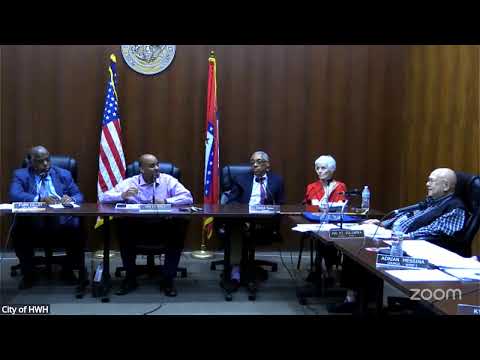
John Edwards, general counsel and economic development director for Helena Harbor, told the Helena-West Helena City Council on Tuesday that the city has “secured $24,000,000 in loan proceeds from the Arkansas Natural Resources Commission” and about $2,500,000 in grants from the Delta Regional Authority and the Arkansas Economic Development Commission, but that more funding will be required to complete comprehensive water-system rehabilitation. Edwards said the city continues to seek an additional $5,000,000 in federal funds and that the existing ANRC loan proceeds require legal steps—including ordinances and bond counsel work—before the money can be disbursed. He stressed that engineering work must be approved by the Arkansas Department of Health and that the city operates under consent decrees for its water and sewer systems. Edwards said an August 2023 overview prepared by the Arkansas Rural Water Association noted that pneumatic valves at the treatment plants are old and sometimes stuck, and that a failure of those valves “could have a catastrophic event” that would shut down treatment. He told council members replacement costs could be substantial and said the city has a history of emergency repairs that raise costs; he recommended moving toward planned maintenance and better records. Council members and staff discussed recent operational problems while Edwards was speaking: Mayor Pro Tem reported a text from water staff that the Hellandale booster station was down and that customers on the West Tank, including the hospital, were experiencing no water pressure. Council members emphasized the need for training, clear lines of command, signed and dated quarterly reports to the Arkansas Department of Health, and an accountable person named for each compliance filing. Edwards urged the council to use available state and federal support while promptly closing loans, starting engineering and following consent-decree obligations. He warned that if the city does not act quickly, state or federal actors might impose fixes the city would not welcome. He also highlighted staff turnover—"probably had 8 water managers in this city" over the last decade—and called for investing in training and retaining certified operators. No formal council action was taken on Edwards’s presentation; council members referenced ongoing weekly meetings with water staff and said they would continue oversight at future meetings.