Get Full Government Meeting Transcripts, Videos, & Alerts Forever!
Get email alerts on the Municipal Budget topic
No spam. Unsubscribe anytime.
Weatherford council hears public comment on $55.8 million FY‑26 budget; proposes no-new-revenue tax rate
Summary
City staff presented a balanced $55.8 million proposed general fund budget for fiscal year 2026 built on the no-new-revenue tax rate; council held the required public hearing and voted to formally propose the no-new-revenue rate of 39.2246¢ per $100 of taxable value.
Weatherford — City staff presented the proposed fiscal year 2026 budget, which would put the city’s general fund revenues at $55.8 million and expenditures at $55.7 million, and the council on Tuesday voted to propose the no-new-revenue tax rate of 39.2246¢ per $100 of taxable value.
The budget presentation, led by Assistant City Manager Ashley Esquivel, said the budget was built using the no-new-revenue tax rate and would preserve a reserve level “more than 120 days of operational funding.” Esquivel said the general fund was balanced with a marginal surplus of about $47,000 and that the city projects an ending fund balance of $32.6 million, equal to 229 working days of operations. “Our reserve level will remain more than 120 days of operational funding,” Esquivel said during the presentation.
The proposed budget allocates roughly 50 percent of general fund spending to public safety (police, fire, emergency management and animal services), 20 percent to infrastructure and capital projects, 10 percent to parks, recreation and library services, 6 percent to development and economic development, and 14 percent to support services. Sales tax revenue is projected at $22.3 million (a 4.3 percent increase), and the proposed tax rate would generate an estimated $1,154.46 for the owner of the average home in Weatherford, valued at $294,000, according to staff.
Why it matters: The council is required by state law to hold a public hearing on the proposed budget and to take a separate vote to propose a tax rate. The budget and proposed rate set the parameters for public hearings and final adoption at the September 9 council meeting.
Details and next steps: Esquivel outlined key projects included in the FY‑26 proposal: design costs for Fire Station 5 in the northeast portion of the city, Lamar Street and Claremont Boulevard improvements, park improvements at Haughn Lake Park and Grama Park, $3 million for street repairs, and $974,000 for vehicle and equipment replacements. The budget also includes the addition of three firefighters to complete a multi‑year staffing plan, one animal control officer, one animal care technician and an information technology specialist; staff said those additional positions produce a net‑zero change in full‑time employees except for the new firefighters. Esquivel said construction costs for major projects are not included in this year’s budget and that the FY‑26 budget process will continue at the council meeting on Sept. 9, when council will hold the required hearings to adopt the budget and finalize the tax rate.
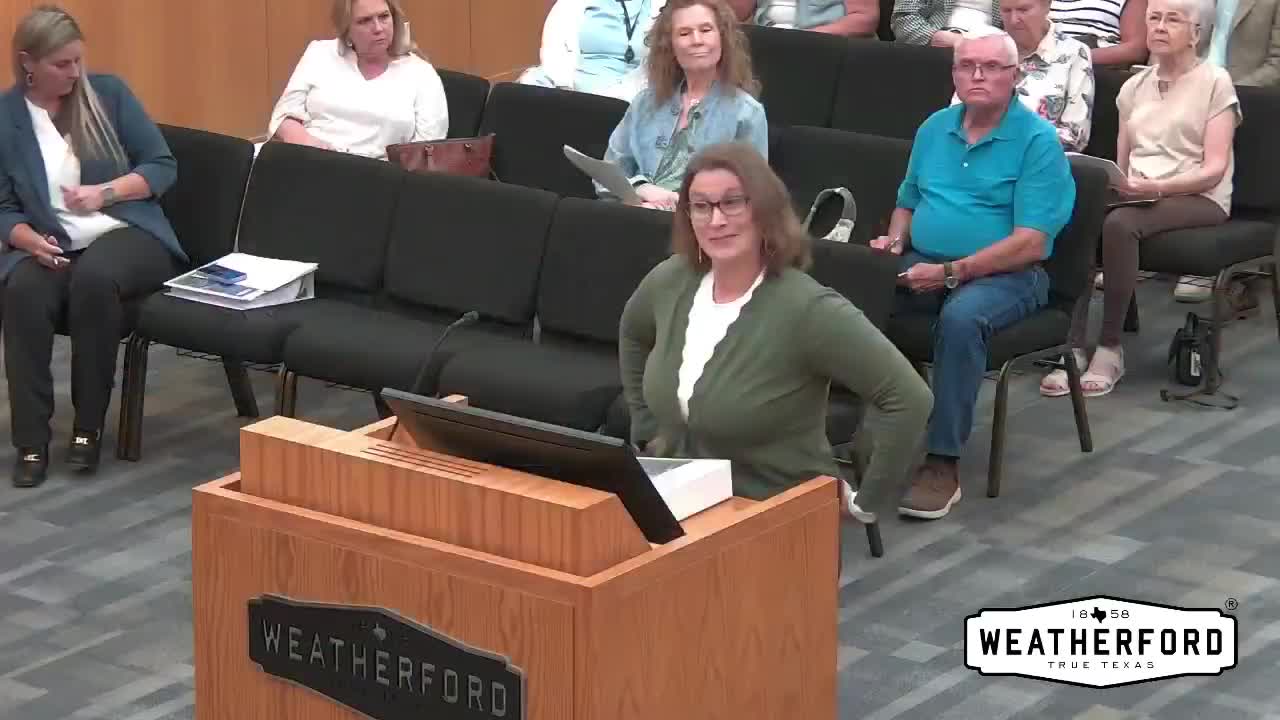
Public comment: One resident, Lynn Baber, used the public hearing to ask that the council provide more detail to the public about several projects listed in the budget, including a regional sports complex listed as “in progress” and a proposed convention center. “I would love to know more about that,” Baber said. She also asked whether a recently approved $3 million continuing obligation bond series 2025 appeared in the document; staff responded that Baber’s questions would be available for follow up as the budget process continues.
Council action: After the public hearing closed, the council voted to propose the no-new-revenue tax rate (39.2246¢ per $100) as the maximum rate for consideration; the vote to propose the rate was moved by Councilmember Heidi Wilder and seconded by Councilmember Matt Tiscus and passed by the council. Staff will publish the results and schedule the public hearing and adoption vote required by state truth-in-taxation rules.
What remains uncertain: The budget presentation said the city will again use the no-new-revenue tax rate, the fifth of the last six years to do so, but council members asked staff and each other for additional review of longer-term obligations — including debt service and a compensation‑absences reserve — and for additional public detail on multi-year projects before adoption. Final adoption of the FY‑26 budget and the tax rate are scheduled for Sept. 9.