Get Full Government Meeting Transcripts, Videos, & Alerts Forever!
Get email alerts on the Solicitors Ordinance topic
No spam. Unsubscribe anytime.
Rosenberg council seeks tighter rules, stiffer enforcement for door‑to‑door solicitors
Summary
After resident complaints about aggressive peddlers and repeated permit violations, councilmembers directed staff to draft tighter revisions to Chapter 16, Article 4 of the city code, explore higher penalties and streamline enforcement; city attorney warned a total ban may conflict with precedent.
Rosenberg residents and councilmembers asked city staff on Aug. 26, 2025, to tighten enforcement and amend the city’s ordinance governing itinerant vendors, solicitors and peddlers. The council directed staff to draft the strictest ordinance changes allowed by state and federal law and to return for consideration.
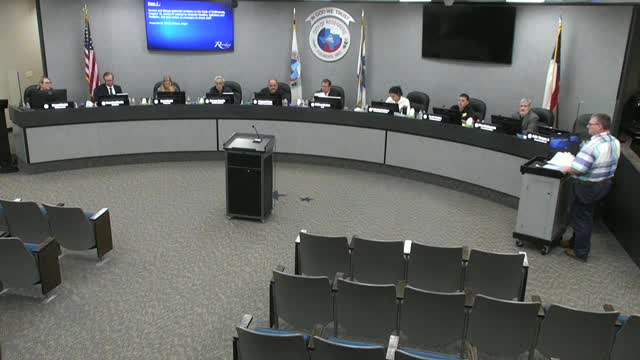
Mayor (unnamed) opened a workshop item asking for public input on possible revisions to the code of ordinances, Chapter 16, Article 4, which governs door‑to‑door peddling, soliciting and vending. Several residents said they had persistent, unwanted visits from commercial solicitors — including pest control and roofing representatives — and asked the council to prohibit door‑to‑door commercial soliciting. Wayne Polerak described an incident in which a solicitor without a visible permit asked to use his home restroom and stood on his property; Robbie Conley and Carolyn Seiler gave similar accounts of persistent visits that prompted police calls. Dan Ives, who identified himself as an HOA leader, urged a total prohibition with a $200 fine per violation and emphasized that laws must be enforced to be effective.
City attorney Brandon advised the council that the Local Government Code permits restrictions but that long‑standing case law (a Canyon, Texas decision from the 1940s and related decisions) has been interpreted to prohibit an outright, content‑neutral ban on peddlers. Brandon recommended tightening the existing ordinance along enforceable lines rather than pursuing a total ban that could face legal challenge. He identified specific ordinance changes staff could pursue: simplify and broaden the city’s “no soliciting” sign provision so any plainly posted no‑solicit sign prohibits approach; clarify and narrow affirmative defenses; create misdemeanor penalties tied to the city’s fine schedule (currently referenced in the city code as section 1‑13); and treat repeat violations as a nuisance to enable higher fines in some circumstances.
Police Chief White and code enforcement staff discussed enforcement mechanics. Chief White said officers have discretion but encouraged stepped‑up enforcement and said criminal trespass is available when a solicitor refuses a resident’s order to leave; that offense carries higher penalties and, in some instances, arrest. Councilmembers expressed a preference that officers issue citations rather than warnings for clear ordinance violations. The council also asked staff to examine whether businesses that repeatedly send solicitors can be penalized or given cease‑and‑desist orders and to examine permit fees (currently $50) and whether they can be raised and tied to program costs.
Council asked staff to return with draft language that tightens time restrictions, clarifies definitions (distinguishing canvassers, solicitors and peddlers), removes unnecessary procedural loopholes, simplifies enforcement of no‑solicit signs, and addresses repeat offenders and business accountability. No formal ordinance vote was taken; the item was directed for further staff work.
Why it matters: the discussion addresses resident safety and peace of mind, enforcement resources, First Amendment considerations for political and religious canvassers, and municipal authority limits under state law.