Get Full Government Meeting Transcripts, Videos, & Alerts Forever!
Get email alerts on the State Budget topic
No spam. Unsubscribe anytime.
Polis and Budget Office outline $252 million in midyear cuts, tap reserves and cash funds to balance Colorado budget
Summary
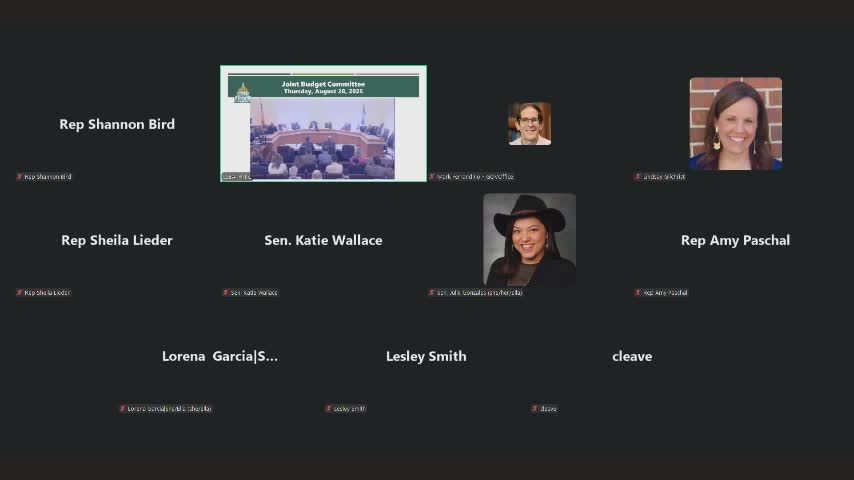
Governor Jared Polis and state budget staff on Aug. 28 told Colorado’s Joint Budget Committee they will use executive orders, special‑session fiscal changes and cash‑fund transfers to produce about $252 million in midyear reductions and transfers to close a shortfall caused largely by federal tax changes.
Governor Jared Polis and state budget officials told the Joint Budget Committee on Aug. 28 that they will implement about $252 million in midyear reductions and transfers to close a revenue shortfall created largely by federal legislation known in the meeting as “HR 1.” Polis said the actions are expected to leave a modest surplus of $10 million to $15 million and keep the state reserve above 13 percent of General Fund appropriations.
The measures combine executive orders, statutory changes passed during the special session and cash‑fund transfers. The governor said the legislature’s recent fiscal changes, including closing corporate tax loopholes, reduced the scale of cuts needed and protected K‑12 funding and public safety.
Polis said the revenue loss from HR 1 and concurrent rolling federal conformity reduced state receipts by roughly $1.2 billion and created an eight‑to‑nine hundred million dollar budget hole for the current fiscal year. “For months, of course, we’ve been communicating with Coloradans and our members of Congress about the disaster that was HR 1,” Polis said. He added that the early action spreads the necessary reductions across more months of the fiscal year and avoids deeper, shorter‑term cuts.
Why it matters: Colorado is constitutionally required to balance its budget. The executive and legislative actions presented to the Joint Budget Committee (JBC) allocate reductions, limited use of the rainy‑day reserve, and cash‑fund sweeps to avoid cutting K‑12 education and public safety while still addressing the shortfall created this year.
Key elements in the package, as presented by Mark Ferndino, budget director for the governor, include: - A planned sweep of about $105 million from Proposition 123 (the OEDIT portion) to the General Fund, subject to regular‑session implementing language. Ferndino said the ballot language allows use of these funds “if we are below the TABOR cap.” - Transfers and cash‑fund impacts totaling roughly $146.7 million, including $9.2 million from CollegeInvest administrative balances, $5 million from a CDLE disability trust balance, $3 million from a mobile‑home park water quality fund (leaving a reserve), and other smaller transfers. An ARPA custodial balance of $5.4 million in the governor’s office is also proposed for transfer after prior legislative allocations. - A hiring freeze that took effect August 26 estimated to save about $3 million this fiscal year; the executive order carves out exceptions for health and public‑safety positions. Ferndino said agencies will report more precise savings when available.
Ferndino said the Department of Health Care Policy and Financing (HCPF) would see about $79.1 million in reductions (details on provider‑rate actions are in a separate package), and that higher education reductions total about $12.7 million while still leaving higher education with a net increase for the year.
Polis and Ferndino stressed they limited reserve use to about 2 percent of the rainy‑day fund and expect to retain a reserve in excess of 13 percent; Polis said the administration’s goal is to restore the reserve toward 15 percent over time. “The reserve is important to buoy the state in the times of recession or economic downturn,” Polis said, and he noted forecasts show roughly a 50 percent chance of recession over the next two years.
Timing and next steps: Ferndino told the committee most of the reductions start Sept. 1; provider‑rate changes at HCPF are estimated to start Oct. 1. He said departments will submit any emergency “13‑30” requests to the JBC in the coming weeks and that the JBC can revisit or replace reductions during the February budget process. Ferndino also said implementing language for the Prop 123 transfer will be proposed in the regular session.
Caveats and procedural notes: Ferndino said many cash‑fund actions affect funds that are spent in arrears (collected this year, spent next year) so current contracts that rely on last year’s revenues are not immediately affected. He also noted some transfers rely on forecasts and will be updated in the September forecast.
What was not finalized: The administration and the committee acknowledged many decisions remain subject to the September economic forecast, federal approvals (for some Medicaid changes), and regular‑session legislation to implement the Prop 123 sweep and other technical changes.
Ending: The JBC indicated it will receive more detailed line‑by‑line information and implementation schedules from departments, including explicit dates for when specific rate adjustments and program changes take effect. Ferndino said the administration will provide an itemized list of department reductions and expected implementation timelines to the JBC.