Get Full Government Meeting Transcripts, Videos, & Alerts Forever!
Get email alerts on the Staffing Recruitment topic
No spam. Unsubscribe anytime.
Carson City schools report improved hiring and lower vacancy rates; music-teacher vacancies persist
Summary
Human Resources reported improved recruitment and retention: as of Aug. 8 the district showed a 3.7% overall vacancy rate and a 1.1% certified vacancy rate, with 51 certified hires this year; district leaders flagged continuing difficulty filling music positions.
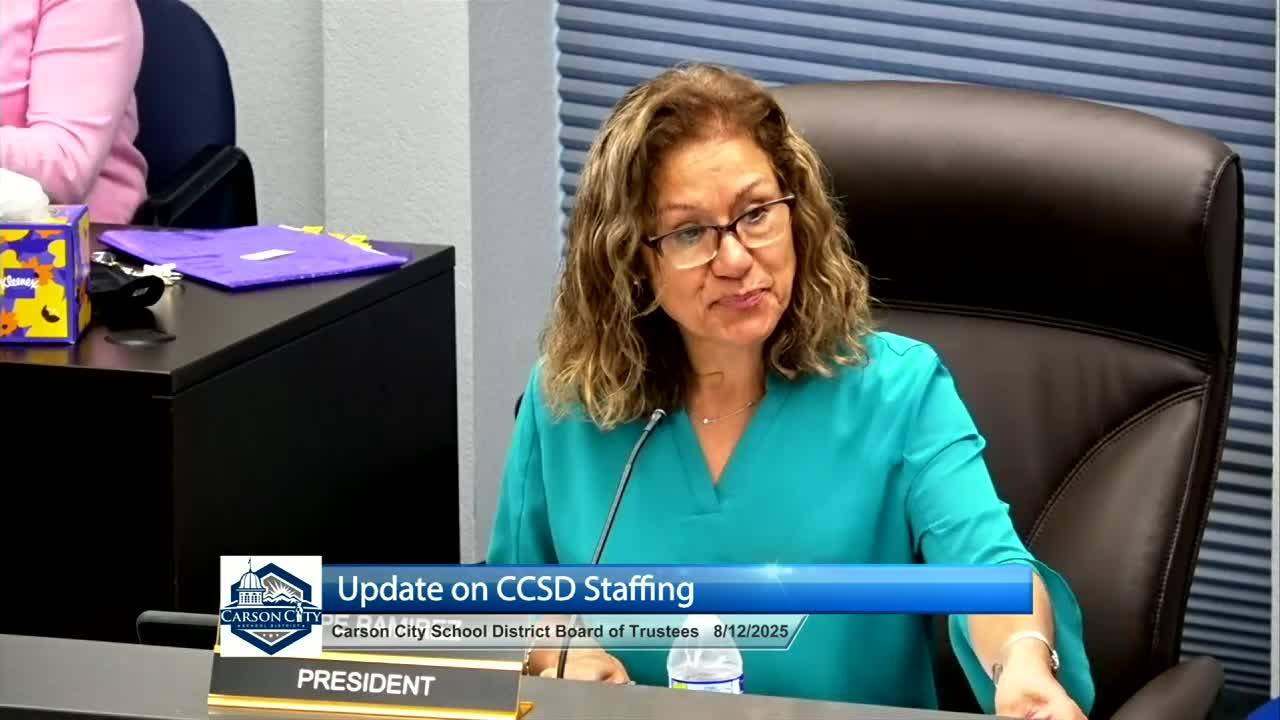
Dan Sadler, director of human resources for the Carson City School District, reported to trustees on Aug. 12 that the district’s vacancy rates have improved compared with prior years, attributing progress to earlier job postings, an early-retirement notification incentive and a revamped application process.
Why it matters: Staffing levels affect class coverage, program continuity and student services as the new school year begins.
Sadler presented historical hiring data beginning with the 2022–23 cycle and said he used Aug. 8 counts for the report. He reported a districtwide total of 14 vacancies as of Aug. 8 (a 3.7% vacancy rate on the district’s baseline count), down from a 7% vacancy rate in 2023. For certified positions the district counted six vacancies on Aug. 8 (a 1.1% certified vacancy rate), up substantially in fill-rate terms from prior years. The district hired 51 certified staff this year (the 2022 comparative number was 63 certified hires). Sadler noted the certified hires figure includes certified roles beyond classroom teachers, such as counselors, social workers, psychologists and speech-language pathologists.
Sadler listed tactics he said are working: posting certified vacancies earlier in the hiring cycle, offering an early-retirement notification incentive (which helps the district post and fill positions sooner), attending local career fairs and improving the Red Rover application process to make applying simpler. He also credited local publicity and word-of-mouth recruitment as important factors. Partnerships with teacher-preparation programs (for example, Western Governors University, Great Basin College, University of Nevada, Reno and WNC) have also helped pipeline hiring.
Sadler highlighted one persistent shortage area: music teacher positions. He said the district and neighboring districts are seeing fewer candidates from music-education programs and that several music roles — some halftime — remain open. The district reported success hiring classified applicants from a recent local career fair (20 people attended; 16 applicants yielded multiple hires) and encouraged trustees to continue supporting recruitment efforts.
Board members congratulated HR on the results and asked for follow-up data. Trustee Richard (last name used in the meeting) asked whether Sadler could provide a later breakdown showing how many separations were retirements versus resignations for other reasons; Sadler agreed to provide that information. Trustees also praised the energy at the district’s new-employee breakfast and noted the strong engagement from new hires.
This item was informational; trustees did not take formal action.