
County staff outline sagebrush conservation-credit program as resident presses for records on ecosystem funding
Get AI-powered insights, summaries, and transcripts
Subscribe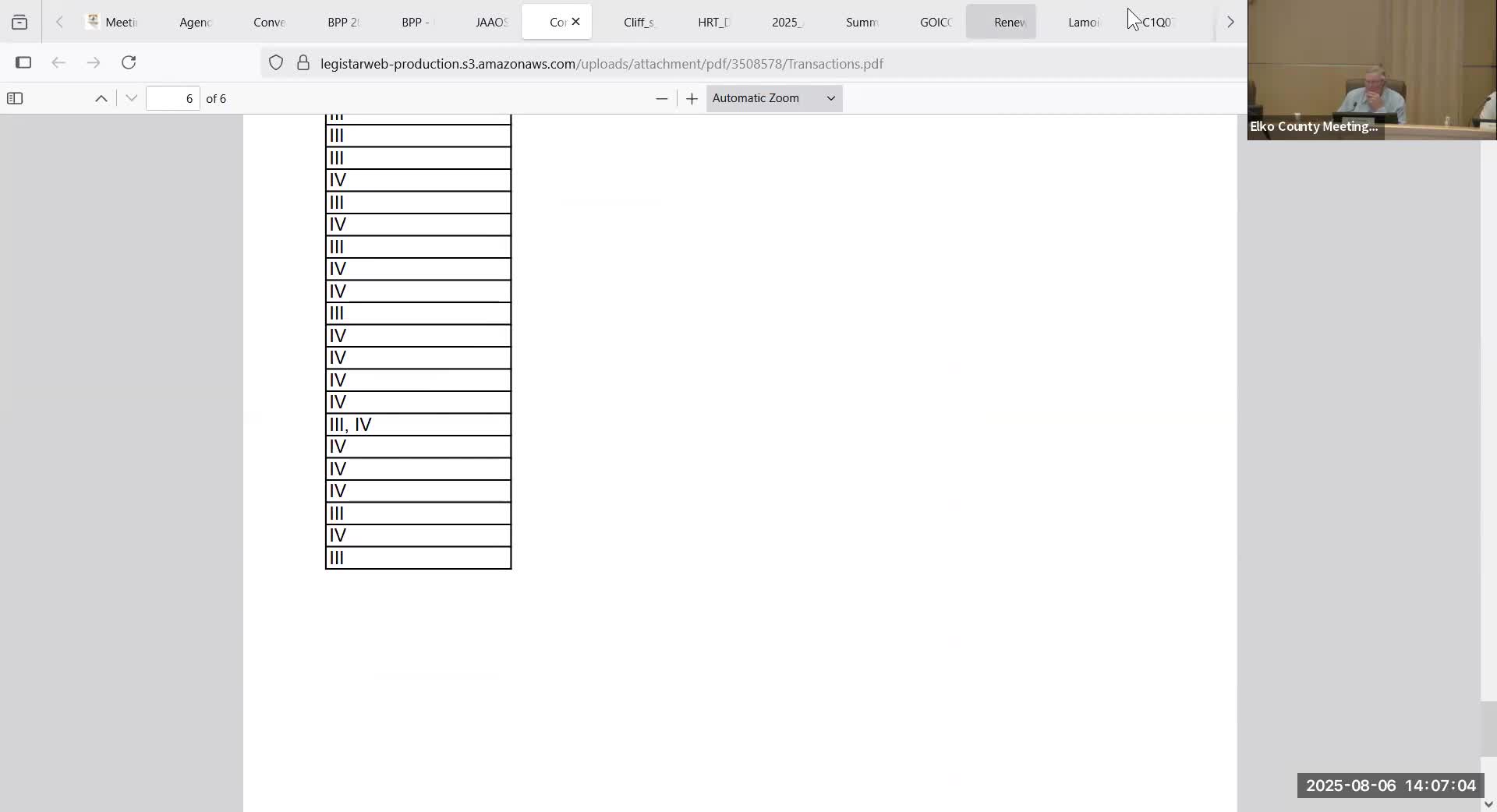
Summary
Elko County Natural Resources staff described how sagebrush ecosystem conservation credits are created, banked and sold; a resident petitioning for records asked the commission to require disclosure of where more than $1 billion earmarked for sagebrush conservation has been spent.
Elko County Natural Resources staff summarized the mechanics of the sagebrush ecosystem conservation-credit program and said credits are created by a landowner doing a qualifying conservation action, then sold to a buyer who negotiates price directly with the seller while the ecosystem council tracks transfers.
At a lengthy public discussion the commission heard repeated requests from resident Cliff Gardner for county action to obtain records and transparency about large sums said to have funded sagebrush ecosystem efforts and related programs. Gardner asked the county to request documents from the Sagebrush Ecosystem Council and related entities to show how funds were allocated.
Why it matters: Commissioners and residents said they want to know whether conservation-credit transactions are producing measurable habitat benefit and whether public dollars allocated for sagebrush conservation are being accounted for. The exchange highlighted local skepticism about program transparency and raised questions about how credits are priced, when credits are required for development permits and how much of the historic transfers actually change land management.
Natural resources staff said the program operates like water-right transfers: a buyer and seller negotiate price; the overseeing body changes the permit or ledger entry to move credits to the buyer. Staff explained that credits can be generated by refraining from subdivision, by habitat restoration or by other land-management practices; sellers and buyers negotiate prices privately and the Sagebrush Ecosystem Council maintains the registry. Staff also noted projects listed on a county spreadsheet that show mining and other projects purchasing credits in advance of or during permitting.
Resident questions and commission responses: Gardner asserted that about $1.143 billion had been collected and asked for a county-led records request to determine where that money went. Commissioners said they had asked for information before and that the county had received some responsive data showing who had bought and sold credits, but that detailed financial ledgers were treated by program managers as private transaction information. Commissioners declined Gardner’s request to pursue Clark County–level issues for him but agreed to pursue specific questions about the local Sagebrush Ecosystem Council database, and asked staff to dig further into the spreadsheet details Gardner referenced.
Commissioners and staff also discussed ecological outcomes. Some participants urged stronger predator control for predation on sage-grouse nests (discussion of ravens), while others stressed permitting and reclamation standards for exploration and mining. Staff agreed to follow up with additional detail on credit pricing, credit supply for particular projects (for example, Bald Mountain and South Railroad entries shown in the spreadsheet) and whether credits are project-specific or transferable.
Next steps: Staff was asked to provide more detailed, itemized information from the county’s query of the Sagebrush Ecosystem Council registry and to clarify what historical monitoring shows about sage-grouse status in credited areas. Gardner’s petition was entered into the public record; the commission said it would not open a broad investigation into Clark County matters but asked staff to pursue the local data requests Gardner identified.
Sources: Comments from Curtis (Elko County Natural Resources staff) and public petitioner Cliff Gardner in the county commission meeting transcript. Ending: The commission recorded the petition and requested further staff follow-up on the registry and project-level credit details to determine whether additional action is appropriate.