Get Full Government Meeting Transcripts, Videos, & Alerts Forever!
Get email alerts on the Water Sewer Infrastructure topic
No spam. Unsubscribe anytime.
Red Bluff council adopts water and sewer master plans; authorizes RFQ for rates study
Summary
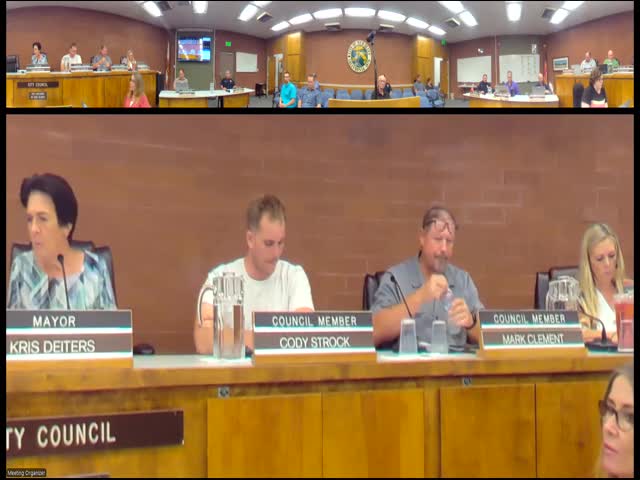
The Red Bluff City Council on Aug. 19 adopted updated water and sewer master plans and authorized staff to release a request for qualifications for a nexus study of water and sewer rates, development impact fees and user fees.
The Red Bluff City Council voted Aug. 19 to adopt updated water and sewer master plans and authorized staff to release a request for qualifications for a nexus study to support future rate and fee adjustments.
The council unanimously approved Resolution No. 29-2025 adopting the Water and Sanitary Sewer Master Plan updates, which PACE Engineering prepared, and later approved moving forward with a request for qualifications (RFQ) to select a consultant to prepare nexus and rate studies that would inform potential fee and rate changes under Proposition 218 procedures.
Why it matters: Council members and staff described the master plans as a roadmap for addressing aging underground infrastructure—old steel water mains and clay sewer lines—that staff and the consultant said are at or beyond typical service life. Without a multi-year funding and implementation plan, speakers warned the city risks more frequent failures and costly emergency repairs.
PACE Engineering civil engineer Paul Reuther summarized the technical findings and needs. He told the council the city currently has 14 large wells (11 active), two 3,000,000-gallon storage tanks, about 83 miles of water main, and roughly 18 wastewater lift stations. Reuther said water use has fallen about 22% since 2002 and that dry-weather wastewater flows have declined about 10%, but infiltration and inflow remain a major problem: “infiltration inflow contributes, 4 to 5 times your normal summertime flow,” he said, increasing conveyance and treatment demands.
Reuther said the consultant modeled a 20-year growth scenario based on the city limits and the growth rate adopted in the February 2025 general plan and estimated roughly 983 household-equivalent units in that projection. He also said an “ultimate development” build-out scenario would add far more demand and require additional storage, wells and lift-station capacity.
The master plans include a capital improvement program with improvements staged as immediate (1–3 years), near term (5–10 years) and long term (10–20 years). The sewer CIP items in the presentation include several priorities: rehabilitation and replacement of decades-old clay sewers (the consultant identified about 22,000 feet in very poor condition and another ~8,000–9,000 feet in poor condition) and upgrades at the wastewater reclamation plant. Reuther noted the total identified sewer-related capital needs across timeframes summed to a multi‑million-dollar figure.
City staff emphasized that adopting the plans does not itself authorize construction or contracts. Thomas Reardon, a city staff member, told the council the RFQ under consideration would identify a firm to perform the nexus study and rate modeling needed to develop legally defensible, cost-based rates and development impact fees. “The request for qualifications that’s before you this evening would allow the city to select a qualified firm to prepare the necessary documents,” Reardon said, and staff said the RFQ would be followed by a Prop. 218 process if rate or fee changes are proposed.
Members of the public urged the council to move decisively. One resident said the sewer and water work should be prioritized over other projects because “we don't wanna fix the sewers or the water pipes after they're broken.” Council members and staff responded that the master plans and the RFQ are the first concrete steps to assemble financial plans and that some interim repairs and mitigation measures (portable generators, scheduled CCTV inspections and targeted replacements) are already in place to reduce near-term risk.
Votes at a glance: The council voted to adopt Resolution No. 29-2025 (water and sewer master plans) and to authorize release of the RFQ for water and sewer nexus and rate studies. The motions passed with recorded named “yes” votes for the council members listed in the table of the minutes.
Next steps: Staff said it will publish the RFQ with an anticipated ~30-day response window and return to council with a recommended consultant contract; the consultant would then develop nexus and rate analyses and any subsequent Prop. 218 notification and hearing schedule if fee or rate changes are proposed.
The council covered other routine business during the meeting, including staff updates and committee reports, and adjourned shortly after the votes.