Board hears recommendation to maintain technology funding; facilities levy would add $27.1M a year for fields, systems and code work
August 04, 2025 | Lake Washington School District, School Districts, Washington
This article was created by AI summarizing key points discussed. AI makes mistakes, so for full details and context, please refer to the video of the full meeting. Please report any errors so we can fix them. Report an error »
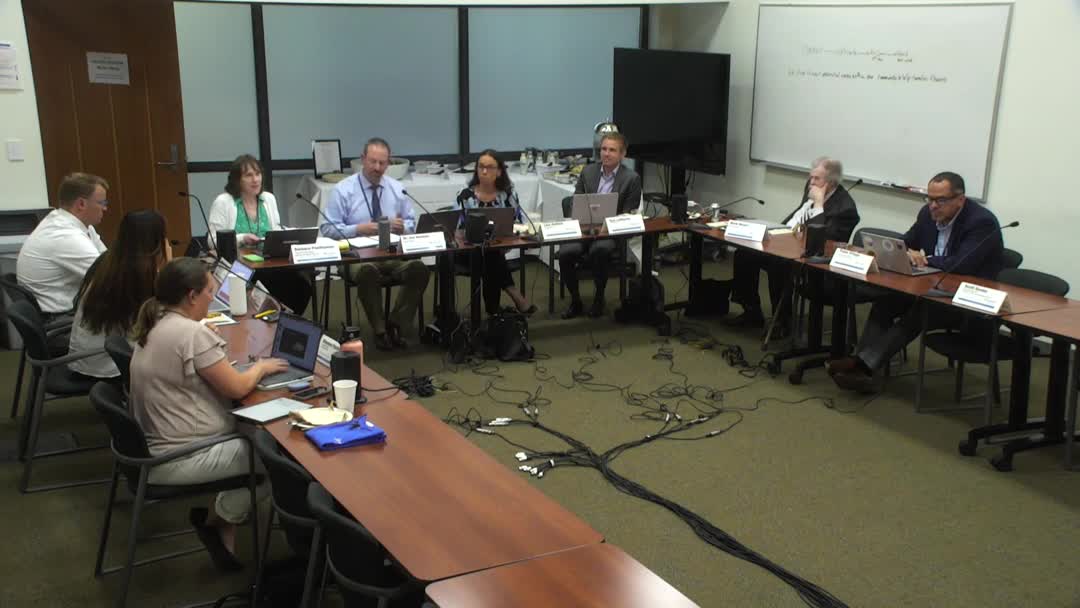
Associate Superintendent Posthumous said the capital projects levy combines two parts'technology and facilities'and that the district receives minimal state support for facility preservation. She recommended maintaining current technology funding, noting E-rate reimbursements would be available for specific projects and that carryover from the current levy could cover shortfalls. "The recommendation is really funding their maintenance level request," she said.
On the facilities side staff proposed funding the full scope of projects previously prioritized with input from the facility advisory committee and community survey. The recommended facility funding averages about $27.1 million per year over four years, with program categories that include building-systems improvements (~$8.5M/year), site and athletic/play-field improvements (~$13M/year), school and program improvements (~$3.9M/year) and code-compliance/health-and-safety work (~$1.3M/year.
Posthumous described the tax-rate implications: the facility package translates to roughly $0.06 per $1,000 of assessed value in the illustrative scenario; technology-plus-facilities scenarios presented ranged from a level combined rate of about $0.44 per $1,000 to an initial-year $0.46 declining to $0.42, depending on whether the district front-loads projects or levels the rate across the four years.
Board members asked about specific projects. Director Liberty asked whether the priority list included upgrades at Kamiakin and Evergreen; staff confirmed both high-school field and track upgrades were included as priority projects, along with Redmond and Rose Hill field and track upgrades and a multipurpose field at Redmond Middle. A board member asked whether turf installed for a project might later be removed for construction; staff said construction budgets cover restoration and the levy dollars would not be wasted on turf that would immediately be removed.
On technology, staff listed five categories funded by the capital-technology portion: infrastructure and support, equipment replacement, instructional software and support, business and technology systems, and training/professional development. The technology four-year total shown was about $34.6 million (roughly $138 million across four years for technology plus facilities). Posthumous said the recommended approach keeps technology at maintenance level and leverages E-rate and current levy carryover.
Director Short asked whether technology professional-development dollars are being used for training on artificial-intelligence tools; staff said AI training is evolving and privacy/data-protection requirements limit use of some tools with students; the district is piloting tools for staff and investing in critical-thinking instruction so students learn to use AI as a tool.
No vote was taken. Staff will incorporate the advisory-committee feedback and bring a formal levy recommendation to the board in September.
View the Full Meeting & All Its Details
This article offers just a summary. Unlock complete video, transcripts, and insights as a Founder Member.
30-day money-back guarantee
Sponsors
Proudly supported by sponsors who keep Washington articles free in 2025

