
District warns frozen federal grants, possible block-granting could shrink $13.5M in annual federal support
Get AI-powered insights, summaries, and transcripts
Subscribe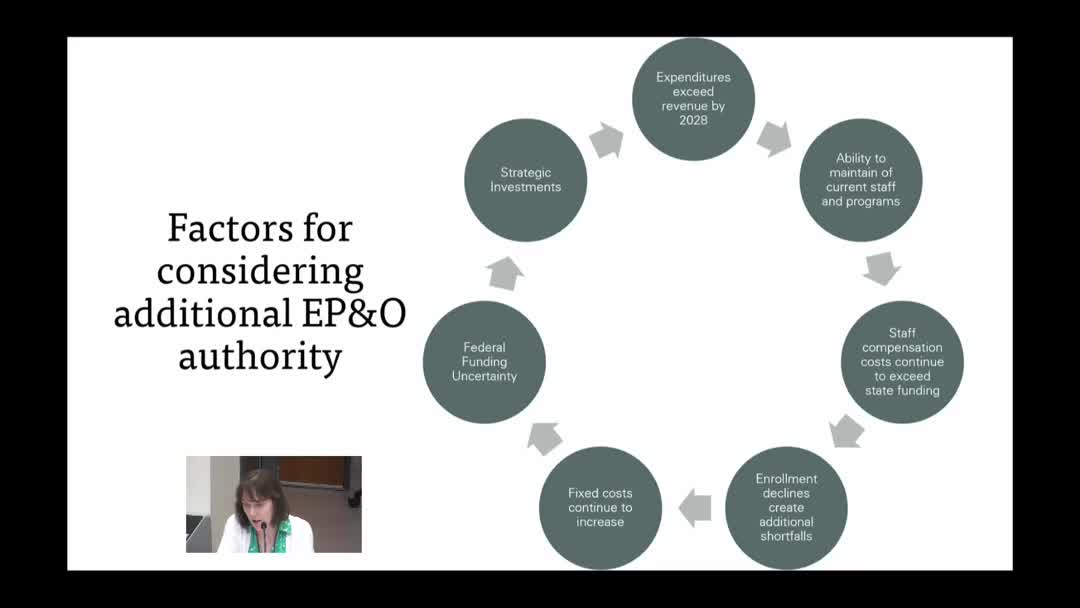
Summary
The Lake Washington School District told its board Aug. 4 that recent federal funding freezes and potential changes to how the federal government distributes education money could reduce about $13.5 million a year in federal support for programs including special education and nutrition services.
The Lake Washington School District reported Aug. 4 that federal funding uncertainty created new shortfalls the district must consider in levy planning, with staff saying certain grants were frozen this summer and the 2026 federal spending bill still excludes some previously expected allocations.
"OSPI let us know over the summer that they, that, the administration had frozen some of our federal dollars that we were expecting this fall and to, that we school districts should count on not receiving those dollars. For us, that was about a million dollars," Associate Superintendent Posthumous told the board. She said the state later restored allocations for the 2025-26 year, but the 2026 federal spending bill continues to show those funds removed.
Posthumous provided a district inventory of federal programs that together total about $13.5 million annually. The largest single federal allocation identified in the presentation was special education (roughly $7.6 million). Nutrition services and Title I were also listed as significant revenue sources; Posthumous said Title I provides roughly $1 million and nutrition reimbursements are another notable federal stream.
Staff warned that proposals to abolish the Department of Education or shift federal dollars into state-controlled block grants could reduce district funding further. "When they do that, they typically give it in block grants and then say, state, you decide how to, divvy it up, but they also then tend to reduce the funding when they give it in block grants," Posthumous said, explaining that a block-grant approach could result in a state distribution that leaves this district with a smaller share.
Board members asked for clarification on OSPI guidance and timing. Posthumous said OSPI's superintendent provides weekly communications about federal matters and that the state has asked districts to plan specifically for the two grants identified as at risk. She said the district was told to expect cuts affecting the 2026-27 budget cycle.
Directors discussed how a shift to block grants might change allocations because Lake Washington has a large absolute number of students in low-income households (Posthumous said that number exceeds 4,000) but a relatively low poverty percentage compared with other districts. Director Stewart urged using the 4,000 figure in messaging to legislators so the district's absolute need is visible.
No action was taken at the study session. Staff factored the federal uncertainty into levy scenarios and said they would update board materials and the formal recommendation to reflect any new federal guidance or allocation changes.
The board asked for continued monitoring and earlier alerts if OSPI and federal decisions would change the district's anticipated revenue for the 2026-27 budget cycle.