
District reports improved protective factors but continued risks in student survey; mental health and binge drinking flagged
Get AI-powered insights, summaries, and transcripts
Subscribe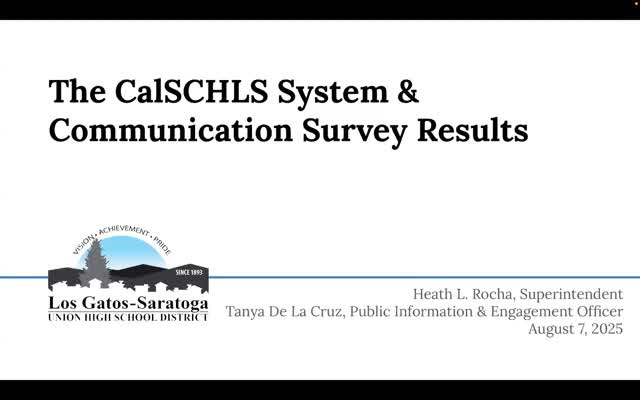
Summary
District staff presented 2024–25 California Healthy Kids Survey results showing gains in protective factors (school connectedness and adult support) at both high schools but persistent or rising risk metrics including binge drinking and reports of suicidal ideation; staff outlined Title IX, WeTip and wellness‑center actions to respond.
District leaders presented results from the California Healthy Kids Survey and related local modules at the Aug. 7 meeting, reporting gains in many protective measures but noting continuing areas of concern including binge drinking and measures of suicidal ideation. Superintendent Heath, who led the presentation, described the survey as a long‑running district tool used to shape Mosaic lessons and wellness‑center programming.
Why it matters: The survey is used to shape student supports and prevention programming. Staff said the district has made steady gains on several measures of connectedness and school support — items it ties to wellness‑center work and classroom Mosaic lessons — but that alcohol use and some bullying/harassment measures remain areas needing further action.
Summary of findings presented: Heath said “Cal schools have been around 1997. It is the largest student survey in the country,” and emphasized that the district has been administering it annually to gather trends. On protective factors — examples include “a teacher or some other adult who really cares about me” and “I feel part of this school” — both Los Gatos and Saratoga reported post‑pandemic recoveries and several high‑water marks; staff said Saratoga’s wellness‑center initiatives likely contributed to notable gains in some eleventh‑grade measures.
On risk factors, staff highlighted that binge‑drinking measures remain elevated at Los Gatos: the presentation showed an 18% rate for binge drinking in eleventh grade at Los Gatos High School, which district leaders described as especially concerning. Staff said they will revisit prevention curriculum and possible parent/student focus groups. Marijuana and alcohol measures were also discussed; for example, ninth‑grade reports of drinking were higher at Los Gatos than Saratoga.
Staff also addressed harassment and Title IX matters: Megan Ferrell, the district’s Title IX coordinator, will hold monthly on‑site office hours at each campus, increase on‑campus visibility, provide revised referral/reporting materials and develop a student leadership group, the district said. The district receives anonymous reports through a WeTip line; Heath said the district received 19 WeTip reports last year and that many resulted in school follow‑up. Board members requested that staff provide year‑to‑year trends and a tracking summary of WeTip reports, outcomes (substantiated/unsubstantiated) and resulting actions.
Mental‑health indicators remain a central focus. The survey asked whether students felt persistently sad or hopeless; Heath said both sites have improved since the pandemic peak but that absolute numbers remain significant — for example, the presenter noted that an eleventh‑grade cohort number still represents dozens of students in need of services. The district plans continued Mosaic lessons, wellness‑center outreach and additional Title IX and intake supports for students reporting harassment.
Actions and next steps: Staff will continue Mosaic lessons and wellness‑center operations, expand Title IX outreach, and provide the board with additional breakdowns and trend documents, including a WeTip report log that captures case numbers and outcomes. Staff also said they will consider focused prevention options for alcohol and drug use, including revisiting evidence‑based alcohol education interventions.
Ending: Trustees and staff agreed to keep the survey findings in the district’s continuous improvement process and to return with more detailed trend data and specific implementation plans for the most concerning risk areas.