Get Full Government Meeting Transcripts, Videos, & Alerts Forever!
Get email alerts on the Wildlife Wolves topic
No spam. Unsubscribe anytime.
Appropriations committee advances bill to shift $264,268 of wolf procurement funds to health insurance enterprise
Summary
House Appropriations moved Senate Bill 25B005 forward after sponsors and witnesses debated reallocating $264,268 originally appropriated for acquiring wolves to the state27s health insurance affordability enterprise; the measure preserves funding for wolf management and requires non-general-fund sources if further procurement occurs.
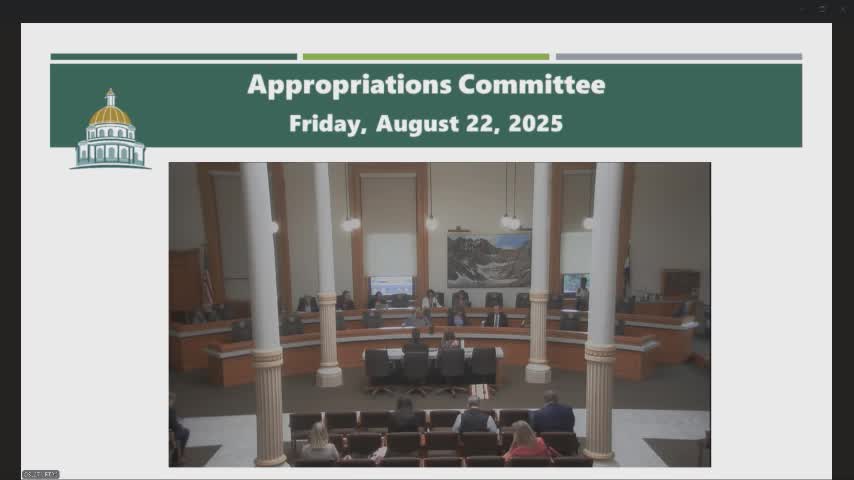
Representative Kari Lukens, co-prime sponsor, opened House Appropriations27 hearing on Senate Bill 25B005, saying, "This bill will save $264,000 in general fund dollars by reallocating funding originally allocated in the fiscal year 20252026 budget for procuring new wolves from Canada this coming winter to the health insurance affordability enterprise." The committee voted to send the bill to the Committee of the Whole with a favorable recommendation.
The bill would redirect $264,268 in general fund appropriations that had been set aside for capturing, transporting and releasing additional gray wolves, and apply that money to Colorado's Health Insurance Affordability Enterprise amid a special-session budget shortfall. Sponsors said the bill preserves existing funding for managing the current wolf population, conflict-mitigation programs and depredation compensation for livestock producers.
Why it matters: Sponsors framed the measure as a targeted, fiscally driven reallocation during a budget crisis while emphasizing compliance with voter-approved requirements for wolf restoration. Co-sponsor Representative Martinez described a Senate amendment (referred to in testimony as Amendment L3) that bars use of the general fund for acquiring new wolves in the 202526ndash;26 fiscal year and requires CPW to rely on gifts, grants or donations instead if additional reintroductions occur.
Legislative and technical points: Representative Lukens and Representative Martinez told the committee the Senate amendment does not prohibit future wolf introductions but restricts use of general fund dollars for that purpose. Committee members pressed sponsors on a discrepancy they found between the bill's operative language and the legislative declaration; Lukens said staff were drafting clarifying language to bring at second reading.
Wider testimony: The committee heard panels of witnesses from multiple perspectives. Supporters of the amendment and of continued reintroductions said Colorado Parks and Wildlife (CPW) remains under budget for the wolf program overall, that non-general-fund revenue (notably revenue derived from the Born to Be Wild specialty plate) has funded many conflict-mitigation projects, and that the 30-wolf headcount cited by some witnesses chiefly counts relocated wolves rather than pups or migrants. Opponents and some livestock representatives said additional releases could increase long-term state costs and urged cost controls.
Notable testimony included: - Matt Barnes, a rangeland and wildlife conservationist, who said the wolf program was under budget and that conflict-minimization work has been effective in many cases. - Maya Key and other conservation witnesses who urged retaining the program and cautioned that halting introductions now could harm the long-term genetics and viability of a restored population. - Kathleen Curry and other ranching-area witnesses who expressed concern about additional releases and welcomed limits on general fund spending for procurement.
Funding sources and department authority: A Department of Natural Resources representative told the committee CPW has four statutorily allowable sources beyond the general fund that could be explored: the species conservation trust fund, the wildlife cash fund (including spillover revenue such as keep-Colorado-wild/license-plate funds), the nongame conservation and wildlife restoration cash fund, and other non-general-fund enterprise revenues. Witnesses and sponsors repeatedly emphasized that the bill leaves intact funding for on-the-ground management, compensation and conflict-mitigation programs.
Committee action and next steps: The committee27s motion to advance the bill to the Committee of the Whole with a favorable recommendation passed; sponsors said they will submit clarifying language at second reading to resolve the drafting discrepancy identified by Representative Garcia Sander. The sponsors emphasized the compromise struck in the Senate that, in their view, preserves the reintroduction program's legal obligations while removing a specific general-fund appropriation for additional captures.
Ending: Sponsors said they will continue to consult CPW, DNR staff and stakeholders while the bill proceeds to the Committee of the Whole. No effective date or new procurement schedule was added by the committee; amendments to the legislative declaration were expected to follow at second reading.