Lawmakers, PED and Fiscal Offices Set Evaluation Timetable for Public Education Reform Fund Programs
Summary
The Public Education Department has submitted evaluation plans for five PERF-funded education initiatives required by Senate Bill 201; legislators and fiscal offices will provide feedback before Sept. 1 and plan annual reporting, but committee members raised concerns about statutory timelines and data sufficiency for funding-year decisions.
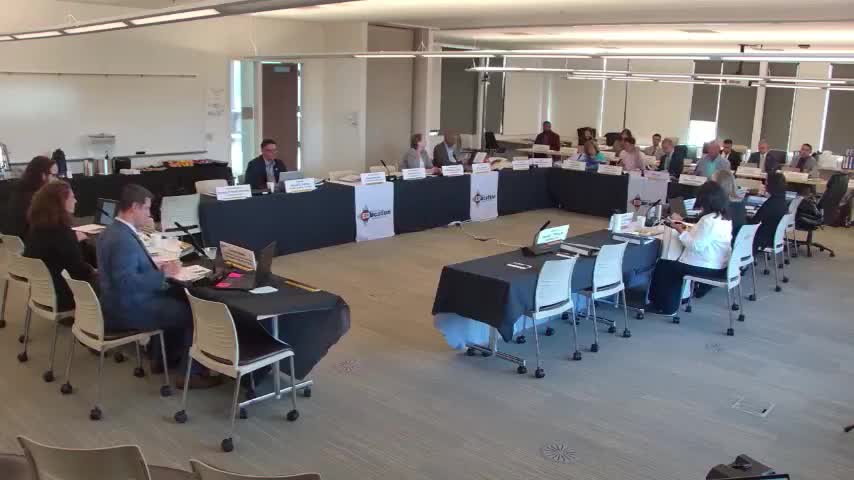
The Legislative Education Study Committee, the Legislative Finance Committee and the Department of Finance and Administration are working this summer to finalize evaluation plans for five multi-year programs funded from the Public Education Reform Fund, the Public Education Department told lawmakers at a July 24 LESC meeting.
LESC staffer Tim (last name not stated in the transcript), summarizing the statutory changes, said Senate Bill 201 refocused the fund as a three-year revolving vehicle “very focused on evaluation of the investments” and that PED met the statutory deadline to submit evaluation plans. Sarah Dintzes of the Legislative Finance Committee described required plan elements and the agencies’ role in providing feedback.
Why it matters: The PERF appropriations—intended to be evaluated before further commitments—total about $61.8 million across five initiatives. That funding is separate from districts’ State Equalization Guarantee (SEG) and other education appropriations. Lawmakers, fiscal staff and PED agreed they need reliable mid‑course information to decide whether programs should receive year‑four funding after the three guaranteed years.
LESC and LFC materials list the five PERF appropriations and annualized amounts: Attendance for Success, $18.6 million (roughly $6.2M/year); Secondary Educator Disciplinary Literacy, $15.6 million (approx. $5.2M/year); Math Achievement, $13.5 million (approx. $4.5M/year); Innovative Staffing Strategies, $7.8 million (approx. $2.6M/year); and Supports for Students Who Are Unhoused, $6.3 million (approx. $2.1M/year), for a three‑year total of roughly $61.8M.
Officials said the PERF statute requires PED to submit evaluation plans and requires LESC, LFC and DFA to collaborate on feedback. Dintzes outlined what the evaluation plans should include: a problem statement and logic model; research base and assumptions; identification of target populations; evaluation methods (experimental, quasi‑experimental, pre/post, or interrupted time series); data collection sources; year‑by‑year timelines; and contact points for ongoing queries.
PED’s Kenneth Stowe, director of strategic initiatives, told the committee the department engaged external reviewers, including WestEd and What Works Clearinghouse‑certified reviewers, and intends use a balance of rigorous methods and attention to reporting burden for schools. Stowe described short‑term and long‑term outcomes for the funded initiatives—examples included disciplinary literacy coaching and classroom walk‑throughs to measure teacher practice, math coaching and numeracy supports, relational home visits and mentoring to reduce chronic absenteeism, and a conditional cash transfer pilot to support students experiencing homelessness.
Committee members pressed officials on several implementation details and limits of authority. Representative Garrett asked whether PED will review assessment tools such as Amira (an AI‑powered reading intervention) to avoid over‑referral for remediation; Stowe said PED will monitor equity concerns and over‑referral risks. Representative Raybould Caballero asked whether evaluators have bilingual and multicultural capacity to review programs for Indian Education, Hispanic Education and Black Education Acts; Stowe said PED and its partners have those capabilities and are working with WestEd and certified reviewers.
Timeline and statutory tension: Senator Figueroa and others flagged a statutory timing issue: the bill calls for evaluation products by Sept. 1, 2027, but the three‑year appropriation structure means the Legislature may need to decide on year‑four funding before final evaluation data from year three are complete. LESC staff said the intent is to use interim (year‑1 and year‑2) evaluation data to inform decisions about extending funding into a fourth year and that the guaranteed third year of funding was designed to give districts implementation stability. Several members called for revisiting the timeline in future legislation to align evaluation results with funding decisions.
Discussion vs. direction vs. decision: Committee discussion focused on the evaluation process, not on amending or debating the underlying programs funded by PERF. The explicit directions recorded were that LESC, LFC and DFA will provide written feedback to PED on the submitted plans and that PED will deliver revised plans (if needed) by Sept. 1. There were no formal committee votes recorded on programmatic approvals during the meeting.
What’s next: Staff told the committee they will continue the working‑group feedback loop this summer and expect revised plans and annual updates (due Nov. 1 each year) showing outputs and outcomes. Lawmakers asked for more detail about assessment instruments, program implementation maps and data sources, and urged attention to bilingual and culturally responsive evaluation practices.
Ending note: Committee members repeatedly emphasized the importance of balancing evaluation rigor with administrative burden for schools, and they flagged the need to resolve statutory timeline issues so future funding decisions can rest on complete, reliable evidence.