
Roswell schools cite reading specialists and coaching for rapid gains at Nancy Lopez Elementary
Get AI-powered insights, summaries, and transcripts
Subscribe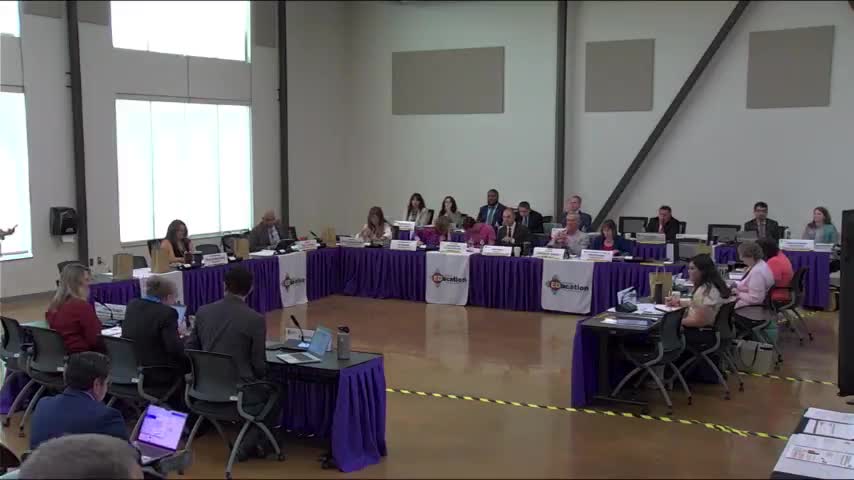
Summary
Carla Steinhardt, director for elementary education for the Roswell Independent School District, and Christy Sergut, a certified academic language therapist, described a district model that pairs LETRS training with on-site reading specialists, school-based coaching and program alignment to improve early literacy outcomes.
LEDE: Carla Steinhardt, director for elementary education for the Roswell Independent School District, and Christy Sergut, a certified academic language therapist, described a district model that pairs LETRS training with on-site reading specialists, school-based coaching and program alignment to improve early literacy outcomes.
NUT GRAF: Roswell officials said the district began training teachers in structured literacy in 2019, adopted Amplify CKLA (Core Knowledge Language Arts) as core materials, and built a resident coaching and CALT (certified academic language therapist) cohort to provide both classroom coaching and direct intervention. Staff described sustained gains at some schools, notably Nancy Lopez Elementary, while acknowledging districtwide proficiency remains a work in progress.
BODY: "We've been able to also provide professional development, do book studies, and really just raise the level of information in the science of reading," said Carla Steinhardt, director for elementary education, Roswell Independent School District, describing how the district used legislative funds and training opportunities to expand teacher knowledge.
Steinhardt told the committee Roswell enrolls 9,243 students, is about 75% Hispanic with 14% identified as English learners and roughly 25% of students receiving special education services. She said the district's overall literacy rate was "about 36%" (districtwide figure cited for the prior year).
Roswell officials said they pursued a multi-part model: (1) adopt core materials aligned to the science of reading (Amplify CKLA), (2) provide LETRS training to classroom teachers (Steinhardt told the committee RISD trained over 200 teachers), (3) hire resident reading specialists and CALTs to work directly with students and coach teachers, and (4) use multiple universal screeners (Istation and MCLASS DIBELS) to inform interventions.
"85% of our reading specialists' time is spent actually working directly with students," Steinhardt said, adding that the remaining time is used for teacher PLC participation and coaching. The district reported a phased rollout: one school with four years of a reading specialist (Nancy Lopez), three schools with two years, and plans to add three more in the coming fall, with some positions currently funded operationally or via private supports.
Steinhardt highlighted Nancy Lopez Elementary as an example: school-level data presented to the committee showed that Nancy Lopez's fourth-grade English language arts score was 72% (presenter identified that school as reaching 72% on its fourth-grade ELA measure) after a multi-year implementation that included a CALT practitioner at the school. Roswell staff said Nancy Lopez historically recorded single-digit and teen proficiency rates and has moved to substantially higher outcomes since adopting the district model.
"The reading systems in the brain are the same for all children," said Christy Sergut, certified academic language therapist, explaining why structured literacy practices can benefit English learners as well as monolingual students. Sergut and Steinhardt said Roswell saw gains in Spanish-language reading assessments as well, attributing the improvement to consistent, research-based routines that transferred across English and Spanish instruction.
District staff described practical classroom coordination issues: when multiple adults (core teacher, Title I, EL, bilingual, special education staff) use different terminology or routines, students face added cognitive load. Roswell said it focused on "program purity" so that routines and pronunciation rules are consistent across interventions and classrooms.
Committee members asked about coaching models and parent involvement. Steinhardt described classroom demonstration lessons, PLC co-coaching, and debriefing cycles as part of coaching. On parent engagement, Chavis and district presenters said practices vary by district and recommended written read-at-home plans, frequent communication and progress check-ins as models used in other states.
ENDING: Roswell presenters requested more sustainable funding for on-site reading specialists and support for CALT training cohorts, arguing that the combination of teacher training, resident specialists and principal-level instructional leadership produced measurable gains at schools such as Nancy Lopez. Committee members praised the results and asked for follow-up details on intervention lists and sustainability models.