
New Mexico Highlands outlines growth plans for nursing, forestry and technology programs
Get AI-powered insights, summaries, and transcripts
Subscribe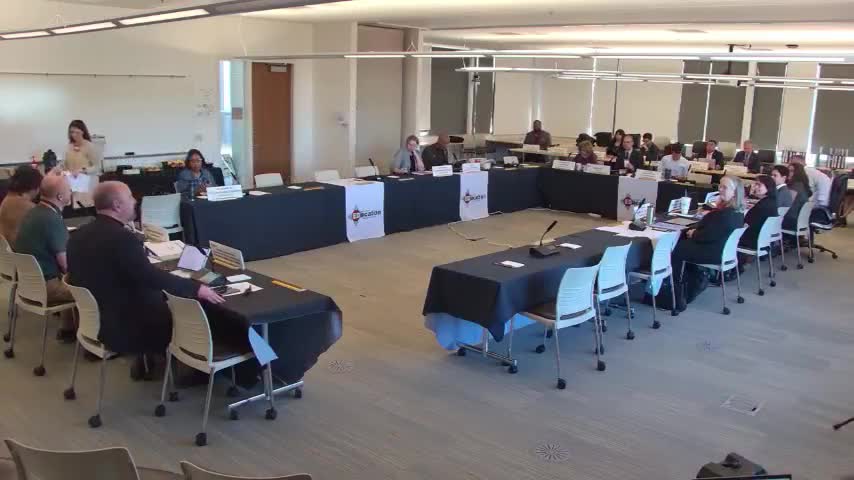
Summary
New Mexico Highlands University provost Dan Brown told the Legislative Education Study Committee that the university is expanding health, computer science and forestry programs, pursuing a Native American–serving designation and preparing for modest enrollment growth this fall.
New Mexico Highlands University on Tuesday described a package of academic and community initiatives it says will support workforce needs in northern New Mexico. Dan Brown, provost and vice president for academic affairs, told the Legislative Education Study Committee (LESC) in Las Vegas that Highlands plans to add a Doctor of Nursing Practice program, expand computing and supply-chain credentials and press forestry and entrepreneurship work tied to regional economic recovery.
Brown said the changes aim to produce “career ready” graduates who can be productive on day one after graduation. “We are committed to developing career readiness among our students and strengthening their sense of preparedness for the rapidly changing workforce,” Brown said.
The provost outlined several items the university is launching or expanding: a “Sandbox” graduate computing program that pairs coursework with mentorship and venture-capital exposure; new undergraduate and graduate certificates in supply-chain management in the College of Business; and a Doctor of Nursing Practice planned for spring 2026 to prepare advanced-practice nurses for rural hospitals. Brown also highlighted Highlands’ forestry programs, the New Mexico Forest and Watershed Restoration Institute work and a toy-lending center the school’s education faculty will open this fall to support families with small children.
Brown told committee members Highlands aims to become energy independent, reduce its carbon footprint and reinvest energy savings in student success programs. He said summer enrollment had risen about 5 percent year over year and that the university expects a modest fall enrollment increase. Brown added the university has nearly 600 residence-hall beds and is preparing for a large move-in day on Aug. 18.
Brown noted Highlands’ work on transfer and dual-enrollment partnerships, saying the university developed six new dual-enrollment agreements in the past two years with local high schools and community colleges, and described cooperative degree pathways with Central New Mexico Community College and the University of New Mexico. He said Highlands participates in the Complete College America accelerator to improve college access and completion.
Brown also discussed institutional goals tied to demographics and mission: Highlands is a nationally recognized Hispanic-serving institution and is pursuing U.S. Department of Education designation as a Native American–serving nontribal institution, which Brown said he hopes will occur within a few years. He described hiring and recruitment activity and pledged to provide periodic updates to the committee as programs roll out.
Committee members asked about university outreach to K–12 districts and workforce connections. Brown said he has been on campus a short time and that Highlands’ strongest existing dual-enrollment relationships are local; he offered to return with additional details about cross-district partnerships. Representative Andres Romero, committee chair, and others praised the university’s regional commitments.
Provost Brown closed by saying Highlands will “continue to focus on the success of our students in Las Vegas, Albuquerque, Farmington, Rio Rancho and Santa Fe” and that he welcomed questions from the committee as projects proceed.
The university presentation provided a strategic overview but included few hard deadlines or spending totals; many committee questions sought implementation details and partnership outlines rather than approvals or votes. No formal committee action was taken at the meeting because the LESC did not have a quorum and postponed business until the next session day.