
Roswell schools highlight multi-tiered mental‑health supports, community schools and CTE as absenteeism falls
Get AI-powered insights, summaries, and transcripts
Subscribe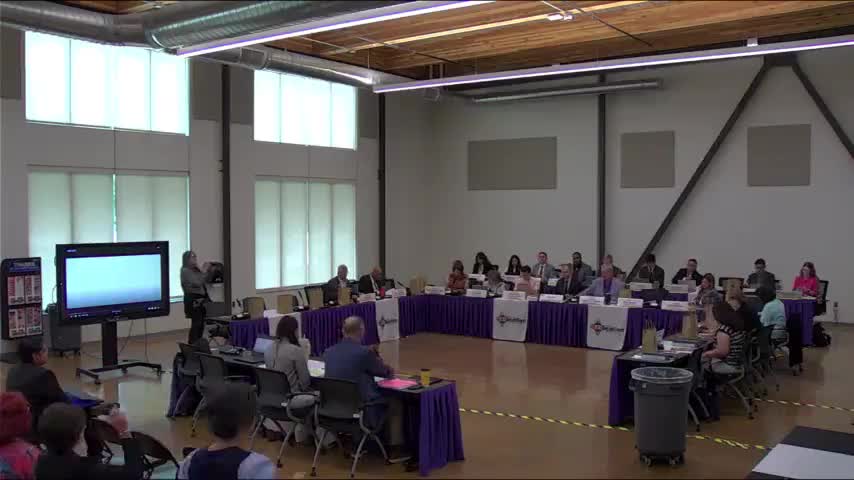
Summary
Roswell Independent School District leaders told the Legislative Education Study Committee in Roswell that the district has been building a district‑wide, multi‑tiered system of mental‑health and behavior supports while expanding career and technical education and community‑school services.
Roswell Independent School District leaders told the Legislative Education Study Committee in Roswell that the district has been building a district‑wide, multi‑tiered system of mental‑health and behavior supports while expanding career and technical education and community‑school services.
Superintendent Luck, superintendent of Roswell Independent School District, told committee members the district serves 24 schools and “we were able to bring down chronic absenteeism this year” at 22 of 24 schools. He said the district has used multiple state and federal funding sources and partnerships to implement the work.
The presentation outlined three nested public‑health frameworks guiding the work: multilayer systems of support, Positive Behavioral Interventions and Supports (PBIS), and an interconnected systems framework that seeks to align school‑based and community services. Cynthia Cobos, the district’s behavior intervention specialist, described a four‑year PBIS training cohort model in which schools progress from Tier 1 universal supports to Tier 4 intensive services and wraparound community care. “By utilizing these objective tools, I have seen more administrators, teachers, school workers, school counselors, and support staff have a deeper understanding of what it means to have a multilayered system of support,” Cobos said.
District leaders said they adopted several data platforms to support implementation: SWIS for office‑discipline and implementation monitoring, DESSA as a K–8 universal screener for social‑emotional skills, SCUDA for school‑counselor program documentation, and BHWorks for mental‑health case notes and to support future Medicaid billing. Cobos said the district required community partners in new memoranda of understanding to provide evidence‑based services and to present student‑level data tied to outcomes in schools.
Officials credited the work with measurable local results. Superintendent Luck said 8 of 24 schools reduced chronic absenteeism by more than 10 percent, 7 schools reduced rates by more than 5 percent, and 4 schools showed reductions between 1 and 5 percent. He also said the district’s graduation rates and interim assessment results had improved as those attendance and intervention efforts took effect. The superintendent also reported the district identified more than 200 students as homeless during the 2024–25 school year after a major rain event temporarily displaced students; he said 82 students became homeless as an immediate result of the flood.
School leaders also described expansion of career and technical education (CTE) and alternative programming. The district reported it had implemented 23 programs of study across high schools, earned about 1,543 industry certifications for students in the prior year, and awarded 31 biliteracy seals. Lucy Hall, principal of Early College High School and University High School, described University High School as an alternative school serving students who face homelessness, poverty or credit deficits and said the school uses capstone projects and CTE pathways to reengage students. Student Maya Phillips described a capstone coloring‑book project aimed at helping young children recognize first responders; Phillips presented the project and explained the community engagement behind it.
Committee members asked about staffing ratios and supports. Cobos said the district is working toward the national counselor‑to‑student standard (commonly cited as about 1:250 and preferably 1:200) and noted wide building‑level variation: some elementary schools have one counselor for 300–350 students while some secondary counselors may be 1:300. Superintendent Luck said the district’s teacher fill rate had improved and that staff salaries were “some of the most competitive in the state,” estimating the district was about 87–92 percent filled at the time of the presentation and identifying special education, math and science as higher‑vacancy areas.
Discussion and next steps at the committee level were questions and information requests; no formal motion or vote was taken on the district’s presentation. Committee members asked staff to provide cost estimates for improving counselor ratios and explored how community coalitions — including the local 100% Chavez County initiative — partner with the district on early‑childhood and prevention services.
Roswell officials thanked the committee for visiting and for local partnerships with the Public School Facilities Authority and regional providers. The presentation materials and district contact information were left with committee members for follow‑up and to inform statewide discussions of mental‑health funding and counselor staffing ratios.