
Court orders Public Education Department to lead Martinez Yazzie remedial plan, sets tight deadlines
Get AI-powered insights, summaries, and transcripts
Subscribe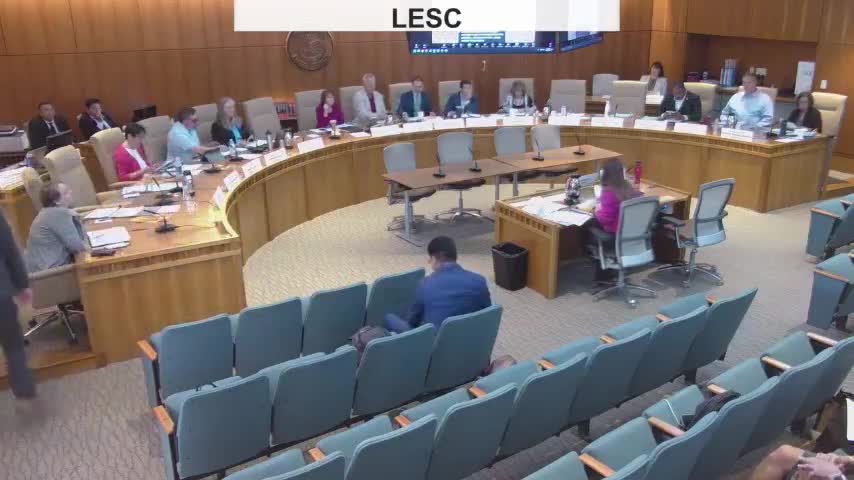
Summary
A First Judicial District Court order granted in part a plaintiffs' motion in the Martinez Yazzie case, finding continued noncompliance and directing the Public Education Department to develop a comprehensive remedial action plan with specified deadlines; Legislative Education Study Committee staff were invited to assist voluntarily.
A state judge has ordered the Public Education Department (PED) to lead development of a comprehensive remedial action plan in the long-running Martinez Yazzie litigation, granting a plaintiffs' motion in part and imposing a rapid timetable for deliverables.
The action stems from a hearing April 29 in First Judicial District Court in which plaintiffs argued the state has not corrected educational deficiencies for English learners, students with disabilities, economically disadvantaged students and Native American students. Jessica, a LESC staff member, told the committee the court found continued violation of students' constitutional rights and ruled PED — not the Legislative Education Study Committee — should lead the plan.
The order requires PED to select an outside expert consultant by July 1, produce a draft remedial plan that incorporates plaintiffs' and stakeholder input by Oct. 1, and finalize the plan by Nov. 3; plaintiffs may file objections by Dec. 1 that could prompt further proceedings. "By July 1, PED must select an outside expert consultant," Jessica said, and the court "continued to find that the state of New Mexico and the Public Education Department remain out of compliance with prior court orders."
Why it matters: the court found the state remains out of compliance with prior orders (2018 and 2019) and directed concrete next steps that could lead to sanctions if the plan and subsequent process do not satisfy the plaintiffs or the court. The remedial plan, if implemented, would address wide-ranging items the plaintiffs listed, including special education supports, teacher quality, department capacity, and systems such as technology access.
Details and committee reaction: Jessica emphasized the order's narrow change: the court agreed a comprehensive plan is needed but declined to compel the LESC to lead the work, citing separation-of-powers concerns. "The judge did not feel that he could compel LESC staff to lead this work," Jessica told lawmakers when explaining why LESC participation is voluntary.
Greg Prostead, a Public Education Department staff member, told the committee PED does not have a single bureau dedicated to Martinez Yazzie and said agency-wide work is focused on meeting the court's requirements: "The public education department does not have a a particular division or bureau that is focused just on the Martinez Yazzie lawsuit, but rather the whole agency is focused around making sure that we are making the improvements that are required by the order." Greg also said PED has already received interest from outside individuals and organizations to serve as the consultant and is working with its legal team to procure qualified help.
Committee members pressed for clarity about LESC's role and the court's ability to enforce its order. Senator Figueroa asked whether the committee must vote to permit staff involvement; Jessica and the chair explained LESC staff work for the legislature and that any staff participation would be voluntary and subject to committee direction. Senator Ezell asked about possible sanctions; Jessica summarized the court's language as broad and tied to how the court evaluates the remedial plan and any objections filed by plaintiffs.
Several legislators urged PED to use stakeholders and regional expertise in developing the plan. Representative Caballero and Vice Chair Vincent Romero emphasized including tribal, Hispanic and other community experts; PED staff and LESC representatives said stakeholder engagement and the consultant's scope will be part of the department's forthcoming process.
What happens next: PED must identify an outside consultant by July 1 and will file status reports with the court; the committee was told PED will present updates to LESC (including the identity of any selected consultant) after that date. The court's schedule gives PED three months to produce a draft plan, then roughly a month to finalize it before potential objections from plaintiffs.
The order does not specify the consultant's exact credentials; PED staff said the agency intends to develop selection criteria informed by prior court decisions and the litigation record. LESC staff noted they have been invited to assist voluntarily, including helping identify components and stakeholder engagement practices, but that the court did not compel LESC to lead the effort.
Ending: The committee will receive updates as PED proceeds; the court timetable places near-term demands on the agency and on any consultant it selects, and legislators signaled they plan to monitor progress and press for robust stakeholder input.