Get Full Government Meeting Transcripts, Videos, & Alerts Forever!
Get email alerts on the Animal Control topic
No spam. Unsubscribe anytime.
Navasota council reviews trap-neuter-vaccinate-return program for feral cats
Summary
At a special workshop, city officials discussed a proposed TNVR (trap-neuter-vaccinate-return) program with Best Friends in Houston to sterilize and vaccinate feral cats and return them to their capture sites; staff were asked to consult legal counsel and work out logistics before returning to council.
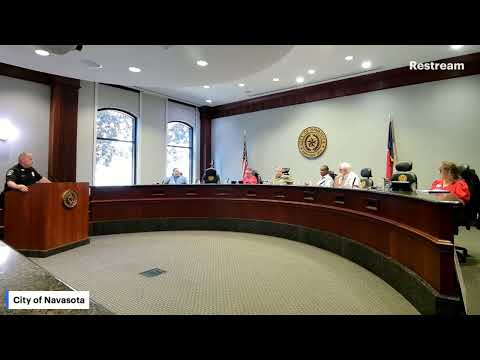
Chief Mize, Chief of Police, presented a proposed TNVR (trap-neuter-vaccinate-return) program at a special Navasota City Council workshop, saying the plan would trap feral cats, transport them to Best Friends in Houston for spay/neuter and vaccination, then return them to the area where they were captured.
The program as described would have Best Friends perform surgeries and vaccinations at no charge to the city; the city’s cost would be staff time to trap animals, transport them to Houston, supervise the procedures, and drive them back. Mize said cats that are already microchipped or wearing tags would be returned to owners rather than treated as feral.
The proposal aims to reduce feral-cat reproduction and lower the risk of bites by ensuring vaccinated animals. Mize said participating cities document trap locations and release cats in the same general area; cats that are sterilized are marked by an ear clip so officers and residents can identify them as fixed and vaccinated. Mize described the ear notch as a routine identifier and noted local examples of clipped-ear cats already in town.
Councilmembers and residents pressed staff on logistics and local impacts. A councilmember, Josh, questioned how owners would be notified if a pet without visible ID were trapped; Mize said the shelter would post found-animal notices on social media with date, time and general location and would check for vaccinations and microchips before releasing animals. Residents said that when the shelter posts a found animal on Facebook it is often reunited with its owner quickly.
Residents at the workshop described mixed experiences. Pat Gruner, a resident who said he has trapped cats for 10 years, advised that trapped cats typically are not trapped again and recommended relaxing any ordinance language that would require annual vaccination for animals that cannot practically be recaptured. Another resident asked whether using Houston as the surgical site would create a surge of animals dumped in Navasota; Mize said he did not see evidence of a rise in dumps where the program is used and that nearby jurisdictions reported population declines over time.
Participants discussed alternatives and costs. Mize said Texas A&M has done spay/neuter requests in the past but that the dedicated Best Friends program is tailored for TNVR and is free for surgeries; by contrast, A&M or local spay/neuter would cost roughly $60 to $120 per animal if done locally. Travel time to Houston was estimated at about one to 1.5 hours each way; the department would schedule surgeries and typically begin trapping about 10 days before the surgery date and then transport whatever number of cats had been trapped.
Concerns raised included the possibility that marked, clipped-ear cats could attract people who would feed them in public spaces, increasing congregation in parks or private yards. Mize and residents noted that some cities observed more approachable clipped-ear cats and that public-education efforts would be needed; Mize said the city would include publicity about do’s and don’ts if it moves forward.
The workshop also addressed local ordinance language. A councilmember noted the current city ordinance prohibits abandoning animals within city limits and requires rabies vaccination; Mize said the city would need to review and possibly amend ordinance language to accommodate returning sterilized feral cats under a TNVR program while remaining consistent with anti-abandonment and vaccination requirements.
No formal vote was taken. The council signaled general interest in the idea and directed staff to work with legal counsel on any required ordinance amendments and to develop logistics and publicity plans; staff said they would return with a recommendation or report back to the council if counsel determines no change is necessary. That direction was presented as next steps rather than a formal authorization to implement the program.
Supporters emphasized the humane objective of reducing reproduction rather than euthanasia. Several residents told the council they trap and privately sterilize cats or put them to work as barn cats; others urged the council to proceed carefully with public education and clear procedures for owner notification and release locations.
The city will not implement any changes immediately. Staff will consult legal counsel, refine the proposed operating plan with scheduling and transport details, and bring materials back to a future meeting for further council consideration.