Get Full Government Meeting Transcripts, Videos, & Alerts Forever!
Get email alerts on the Fy26 Budget Tax And Water Rates topic
No spam. Unsubscribe anytime.
Pearland council reviews FY 2026 proposed budget; staff recommends 63¢ tax rate and 5.5% water increase
Summary
City staff presented a balanced FY 2026 budget built on a proposed property tax rate of about 63 cents per $100 of valuation and recommended a 5.5% water/sewer rate increase. Council questioned revenue assumptions, reserve policy and options to fund roads; members signaled informal support for the 5.5% water scenario pending follow‑up analysis.
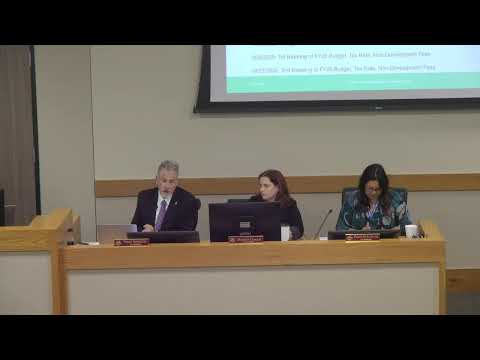
Pearland City Council held a special meeting Aug. 11 to review the city manager’s proposed fiscal year 2026 budget, staff’s recommended property tax approach and two water/sewer rate scenarios.
City staff presented a balanced general fund budget they said meets the city’s 25% fund policy and showed a proposed property tax rate of roughly 63 cents per $100 of taxable value while recommending that the council set a maximum rate of 63.5 cents to preserve flexibility. Staff also recommended a 5.5% water and sewer rate increase for FY 2026 (staff provided an alternative 7.5% scenario for comparison).
The budget matters because it sets the city’s operating resources and fees for the coming year, and it allocates money for long‑deferred maintenance needs including streets, sidewalk repairs, and replacement of large equipment. City staff framed the proposal around council strategic priorities and said it preserves service levels while funding targeted supplementals.
Staff presentation and key numbers
Trent Epperson and Finance and Budget staff walked the council through the budget development process and key assumptions. Rachel Winslow, Head of Office of Management and Budget, summarized the document and said the 400‑page budget is a policy, financial plan and operations guide. Winslow told the council the proposed general fund is balanced, meets the 25% (90‑day) fund policy and that staff projects the ending fund balance will remain above the policy minimum.
Major revenue and expense assumptions highlighted by staff included: - Property tax: staff built the budget using a proposed tax structure that staff described as approximately 63 cents; staff asked council to set a maximum tax rate of 63.5 cents, a half‑cent above the proposed rate, to preserve capacity during adoption. Staff also presented the tax rate worksheet and the city’s certified taxable values supplied by appraisal districts. - Sales tax and permits: sales tax revenue was budgeted with 4.5% growth to $32,600,000; building permits were estimated at about $4,000,000 based on year‑to‑date trends. - General fund: staff reported 81% of general fund revenue comes from property taxes, sales and use taxes and charges for services. - Tax‑backed debt fund: staff showed a debt component of the tax rate of about 0.278496 and estimated total property tax revenue for the debt service fund of about $38,500,000. - Enterprise (water/sewer): staff presented two rate scenarios and said the budget is built on the proposed 5.5% rate change; a 7.5% alternative was shown for comparison.
Winslow also listed specific supplementals included in the proposed budget: a paralegal position (estimated cost $71,007.94), an additional $500,000 for streets and sidewalks which raises the contracted street/sidewalk repair budget to about $2,300,000, and an assistant city manager position budgeted at roughly $280,000 with one‑third charged to the general fund and the remainder reimbursed from CIP and enterprise funds. She said two positions (an accountant and a purchasing officer) to support the capital improvement plan would be fully reimbursable and therefore net neutral for the general fund.
Council questions and major themes in discussion
Councilmembers asked for more detail on several items: contingency plans if revenues decline, the composition of taxable value (residential vs. commercial), sales tax forecasting, the effect of the city’s reserve policies on rates, and the timing and cost of enterprise debt (notably Berry Rose and Longwood wastewater projects).
When asked about a revenue shortfall scenario, staff said they would first rely on the city’s fund balance and then look to reduce discretionary expenditures; they also noted the city has monthly budget variance reporting and can use the traditional mid‑year budget amendments to adjust as needed.
On the tax rate, staff characterized the recommended maximum (63.5 cents) as a conservative cap that matches the current rate and gives the council room to add priorities during the adoption process. Councilmember discussion included a question about how much additional funding would be available if the council held the rate at the current level rather than raising it; staff responded that keeping the rate at the current level would provide roughly an additional $700,000 for O&M compared with the proposed structure.
Water and sewer rates: scenarios and direction
Staff explained the enterprise rate model factors in projected water use, growth, capital projects and debt service. The model shows a large rate jump in years when major plant debt is sold (staff identified the Berry Rose and Longwood projects as drivers) and smaller increases in later years once those tranches are placed.
Rachel Winslow and other staff said the model had been validated by a third party. They also noted the model’s year‑to‑year outcomes depend on near‑term variables including how much debt is sold, actual water usage and current‑year revenues.
Several councilmembers said they were concerned about multi‑year spikes that could affect residents on fixed incomes. After extended discussion, multiple members indicated informal support for the 5.5% proposed increase for FY 2026 while asking staff to return with additional analysis showing how alternative reserve targets (for example, reducing some working capital set‑asides) would affect future bond costs and the outer‑year rate projections. Councilmember Patel said, “I would be in favor of 5 and a half,” and other members voiced similar, conditional support tied to follow‑up analyses.
Other items raised
- Hydrant/valve program: council discussed a supplemental (about $409,000) to stand up a crews/trailer and equipment for hydrant inspection, valve exercising and repairs. Staff said the initial crew would be three people and included inspection plus repair capability; council asked staff to evaluate outsourcing inspections/repairs as a cost comparison. - EDC infrastructure recapitalization: staff reminded council the Economic Development Corporation’s policy directs a minimum of 20% of EDC revenues toward infrastructure recapitalization. - SAFER grant/Fire Station No. 7: staff noted the department applied for a SAFER grant that would phase in staffing; if awarded, the grant would affect how the city absorbs new positions over multiple years.
Decisions and next steps
There were no formal votes taken during the workshop. Staff asked for direction on the water/sewer rate; members signaled informal support for the 5.5% scenario contingent on the additional reserve and bond‑impact analysis staff promised to provide. Staff said it will circulate a follow‑up budget memo answering outstanding questions, run reserve‑level scenarios tied to borrowing cost assumptions and present the results before the council’s next budget discussion (staff identified Aug. 25 as the next opportunity and set first readings for Sept. 8 and a second reading later in September for final adoption).
Mayor Plutone and councilmembers emphasized the need to balance debt and operations funding and to provide clearer documentation in the budget book where assumptions (for example, sales tax growth vs. EDC forecasts) differed. Staff said they would provide a more detailed memo and updated exhibits on reserve policy choices, bond implications and targeted funding options for streets.
For transparency, staff also reminded the council that adopting a tax rate above the no‑new‑revenue rate will require the supermajority (60%) vote required by state tax rules when the maximum is set higher than the no‑new‑revenue calculation.
The council will consider the budget, tax rate and related fees at upcoming meetings after staff issues the follow‑up memo and additional exhibits requested during the workshop.