Get Full Government Meeting Transcripts, Videos, & Alerts Forever!
Get email alerts on the Capital Improvement Program topic
No spam. Unsubscribe anytime.
Planning commission recommends the 2026–2030 five-year CIP after questions about funding detail
Summary
The Planning and Zoning Commission voted 7-0 to recommend the City of Pearland’s proposed five-year Capital Improvement Program for fiscal years 2026–2030, asking staff to reconcile numeric discrepancies between the packet and presentation and to clarify funding sources and project prioritization.
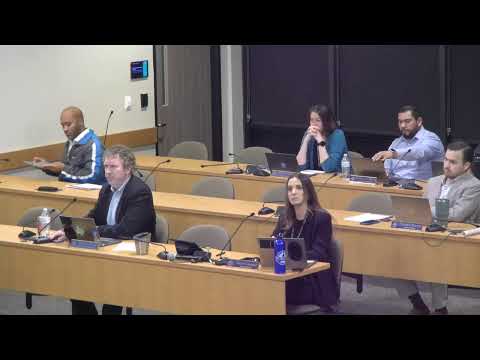
The Pearland Planning and Zoning Commission on June 16 recommended the City of Pearland’s proposed five-year Capital Improvement Program (CIP) for fiscal years 2026–2030 by a 7-0 vote after an extended presentation and discussion about timing, funding sources and how project estimates are developed.
Fabiola de Carvalho, assistant director of capital projects, presented the CIP and noted the program includes projects across drainage, streets, water, wastewater, parks and facilities. Staff said the FY26–30 packet was produced after a year-long internal review and that some projects are funded (historical funds or already appropriated), some are proposed and others are unfunded or dependent on future bond elections or grant awards.
Commissioners raised detailed questions about line-item totals and the relationship between the presentation slides and the spreadsheet provided in the meeting packet. Commissioners asked why some planning years show zeros for categories and why packet totals differed from presentation totals. Staff explained differences arise because (a) some projects included in the packet are unfunded or contingent on future bond elections, (b) midweek adjustments changed which year projects were programmed into and (c) some projects are combined across utilities/drainage to reduce cost and disruption.
Commissioners also asked how staff estimates construction costs and when a project moves from planning to design to construction. Staff said preliminary engineering reports and engineers’ opinions of probable cost (at 30% or 60% design) are used to refine estimates; final costs come from competitive bids or, for certain large projects, alternative delivery methods such as construction-manager-at-risk.
Commissioners requested clearer labeling of “historical” funds (staff said historical indicates funding already approved by council), clarification on grant and matching sources (e.g., Houston-Galveston Area Council, GLO), and a reconciliation of the spreadsheet/slide totals before the packet is forwarded to council. Staff committed to reconciling the numeric discrepancies and to providing the commission with the clarified totals.
After discussion, Commissioner McDonald moved and Commissioner Eisenberg seconded the motion to recommend the CIP to city council. The motion carried unanimously, 7-0.
Staff will incorporate commissioner feedback on packet labeling and reconcile the totals and funding source descriptions prior to the council presentation and budget adoption process.