Get Full Government Meeting Transcripts, Videos, & Alerts Forever!
Get email alerts on the School Impact Fees topic
No spam. Unsubscribe anytime.
King County Council adopts revised school-impact fee formula, limits fees on some multifamily units
Summary
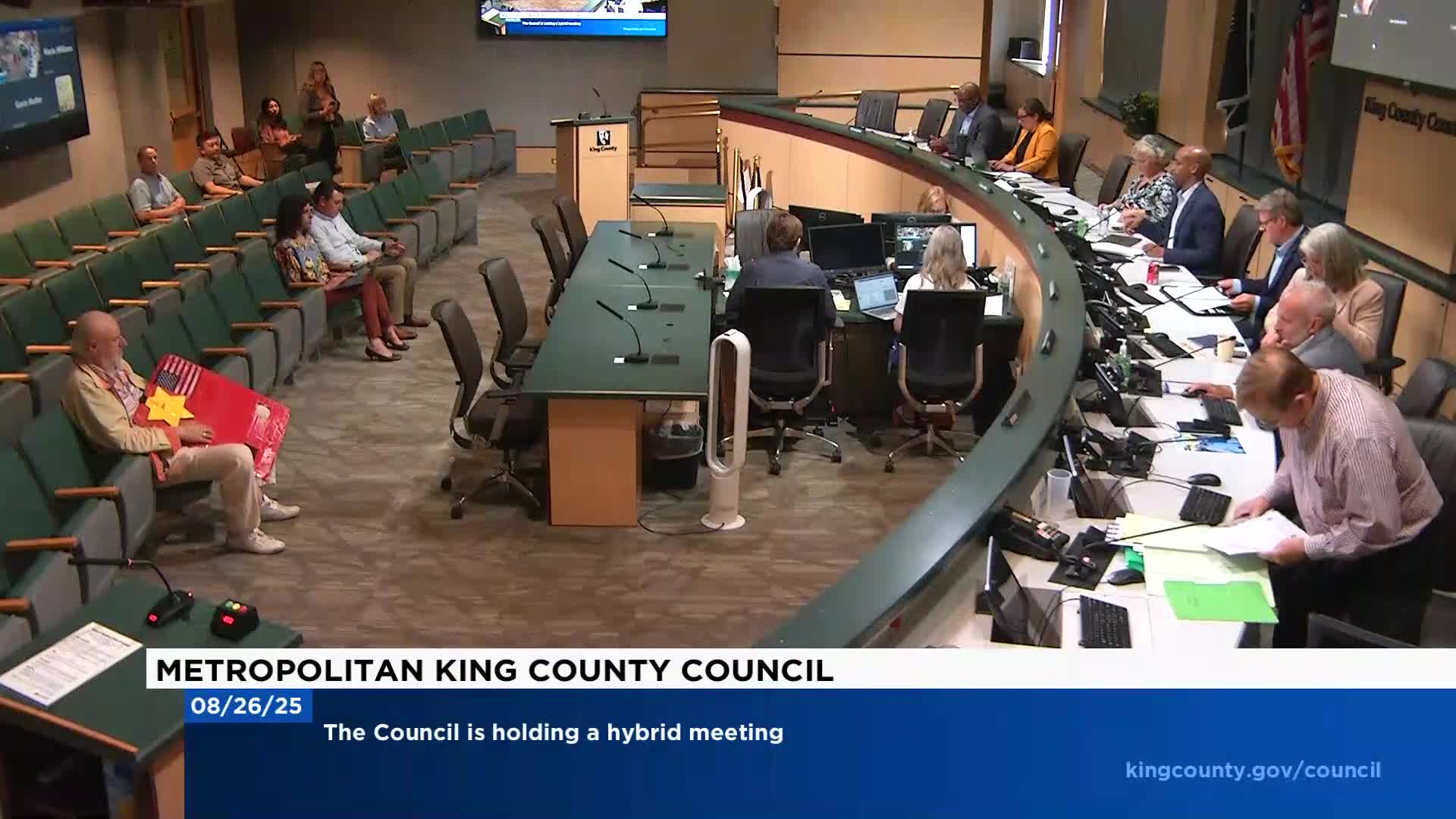
The Metropolitan King County Council voted 8–1 on Aug. 26, 2025, to adopt a revised school-impact fee formula that lowers some fees for multifamily units, clarifies an affordable-housing exemption and requires a housing-impact analysis and a county housing representative on the school plan review committee.
SEATTLE — The Metropolitan King County Council voted 8–1 on Aug. 26, 2025, to adopt a revised ordinance changing how the county calculates school impact fees, adding lower maximum fees for some multifamily units, codifying an affordable-housing exemption allowed under state law and requiring a future evaluation of the new formula.
The ordinance, proposed substitute ordinance 2025-0127, responds to a 2023 state law that requires jurisdictions that charge school impact fees to account for smaller units when calculating fees. Councilmember Susie Mosqueda, who led the package of amendments, said the changes aim to reduce the cost pressure on developers building family-sized multifamily units while preserving funding for school construction.
The council’s action matters because school impact fees pay for school capital projects and because the county is trying to balance those capital needs with incentives to produce “missing middle” family-sized housing. The final ordinance changes the county’s fee schedule, establishes a cap on certain multifamily fees, clarifies the affordable-housing exemption process, and requires housing-impact analysis and a staff representative from the county’s housing division to participate in school plan reviews.
Most significant changes - Fee caps for multifamily units: The council adopted amendments that set a maximum school impact fee on certain attached housing and multifamily units. Councilmember Mosqueda said the cap is targeted: “It only puts a cap of $5,000 on those duplexes, triplexes, quads, apartments for those units that have 2, 3 or 4 and more bedrooms.” That cap was adopted as part of a package of amendments that also expanded the cap to include smaller units (studios and one-bedroom apartments) in a subsequent amendment. - Affordable-housing exemption clarified: The ordinance implements the state-authorized exemption for units made affordable at 80% of area median income (AMI) or below and removes county discretion for approving those exemptions so long as statutory requirements are met. Denise Steifarm of Pacifica Law Group, representing 12 school districts, said, “We support continuation of the county’s existing affordable housing exemption and support the amendment to clarify its application and remove a layer of county review.” - Housing-impact analysis and process changes: The county will add a representative from the Department of Community and Human Services’ Housing, Homelessness and Community Development division to the School Technical Review Committee and require school districts to submit an analysis of the impact of proposed impact fees on housing production as part of their capital facilities plans. The ordinance also asks the county executive to evaluate the new fee formula’s efficacy in about four years and moves the county’s routine fee review to a biennial schedule.
What supporters and opponents said Supporters — including Councilmembers Mosqueda and Dombowski and several housing advocates who testified — said the measures aim to reduce barriers to producing family-sized units that can increase enrollment and long-term school funding. Jose Ortuzar of the White Center Community Development Association told the council his organization is developing family-sized affordable units and supported the amendments.
Opponents, including some school-district representatives, cautioned that any reduction in fee revenue could reduce capital funds for classrooms. Denise Steifarm told the council districts “oppose a cap of any kind beyond the existing county-required adjustment reducing the calculated fee by one half,” noting capital funds lost to fee reductions are not interchangeable with state operating aid.
Vote and next steps The council adopted the ordinance as amended by an 8–1 vote; Councilmember Dunn was recorded as voting no. The ordinance contains multiple provisions that will require follow-up: the executive is directed to implement the revised fee schedule, add the housing division staff representative to the technical review committee, and return with evaluation data in four years. The code changes also make the affordable-housing exemption administratively automatic when projects meet the statutory requirements, with the school district’s concurrence.
Implementation and review Council members and staff emphasized the ordinance is the start of an iterative process: several council members asked for additional district- and region-level analysis and for continued engagement with housing developers and school districts as the new formula is implemented.