Get Full Government Meeting Transcripts, Videos, & Alerts Forever!
Get email alerts on the Nuclear Disarmament topic
No spam. Unsubscribe anytime.
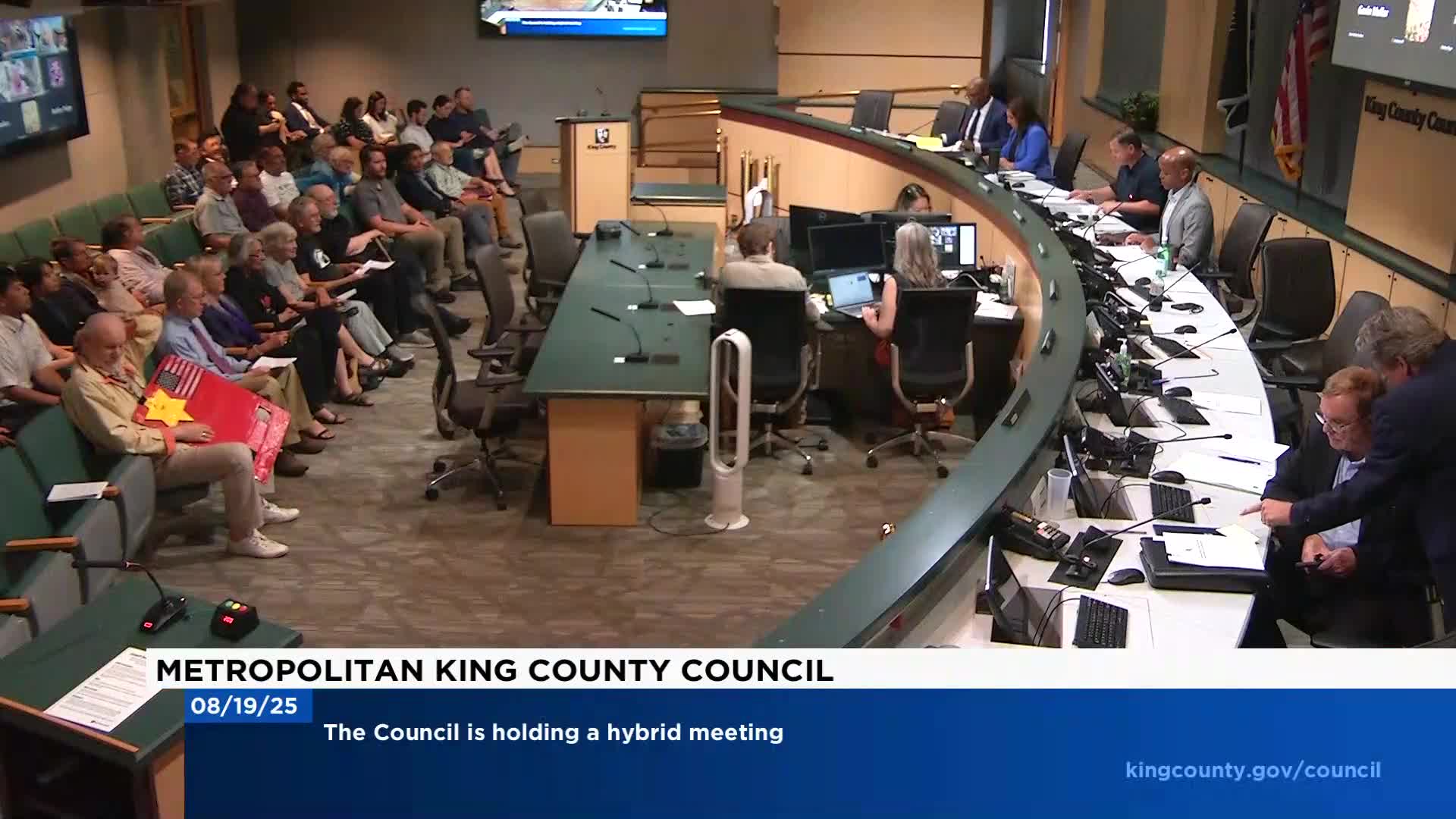
King County Council proclaims 80th anniversary of Hiroshima and Nagasaki bombings; coalition urges local action on nuclear risk
Summary
The council read and adopted a proclamation recognizing the 80th anniversary of the atomic bombings of Hiroshima and Nagasaki and heard remarks from local coalition representatives who urged local leadership on nuclear risk reduction and community remembrance.
The Metropolitan King County Council on Aug. 19 read a proclamation recognizing Aug. 6 and Aug. 9, 2025 as the 80th anniversary of the atomic bombings of Hiroshima and Nagasaki and placed the proclamation in the meeting record. Councilmember Teresa Mosqueda sponsored the proclamation and invited a coalition of local and national organizations to join the dais.
Coalition speakers said the remembrance is both historical and a present-day call to reduce nuclear risk. Gretchen Hunn, board chair of Plowshares Fund, said local voices “have an essential role” and described the risks posed by modernizing arsenals and new technologies that increase escalation speed and unpredictability. Jim Thomas, who identified himself with the Seattle chapter of Pax Christi and Washington Physicians for Social Responsibility, urged that county leaders consider the opportunity costs of nuclear spending in a county with unmet basic needs and cited Hanford cleanup estimates in testimony.
Stan Shikuma, vice president of the Seattle chapter of the Japanese American Citizens League and board member of From Hiroshima to Hope, told the council about survivors’ testimony and local efforts including the Sadako Renewal Project, an initiative to replace a stolen Sadako statue that commemorates a Hiroshima‑area child survivor.
Councilmember Mosqueda read the proclamation into the record, which recognized the deaths and long-term suffering caused by the 1945 detonations, named affected communities including Hibakusha (survivors), Koreans, Marshall Islanders and “downwinders” from production sites, and called for federal action to prevent an escalating arms race. The proclamation noted reports that nuclear powers possess over 12,000 weapons and cited concerns about modernization plans and expiring arms control arrangements.
Action taken: The council placed the proclamation into the record and councilmembers signed it; no regulatory or funding action accompanied the recognition.
Context: Speakers tied local efforts to national and international disarmament movements and urged public education and coalition work. Several speakers asked the council to support local memorial projects and public education efforts that keep survivors’ testimony visible in the community.
Speakers quoted in this article are listed in the speaker section below and quotes are drawn from the meeting record.