Get Full Government Meeting Transcripts, Videos, & Alerts Forever!
Get email alerts on the Public Health Substance Use topic
No spam. Unsubscribe anytime.
County health officials cite syringe-collection, naloxone distribution and referrals as measures of harm-reduction program progress
Summary
During public comment and a commissioner forum, county health officials described metrics for the local harm‑reduction program: syringes collected and distributed, naloxone boxes distributed and reported overdose reversals, and client assessments that led to treatment referrals.
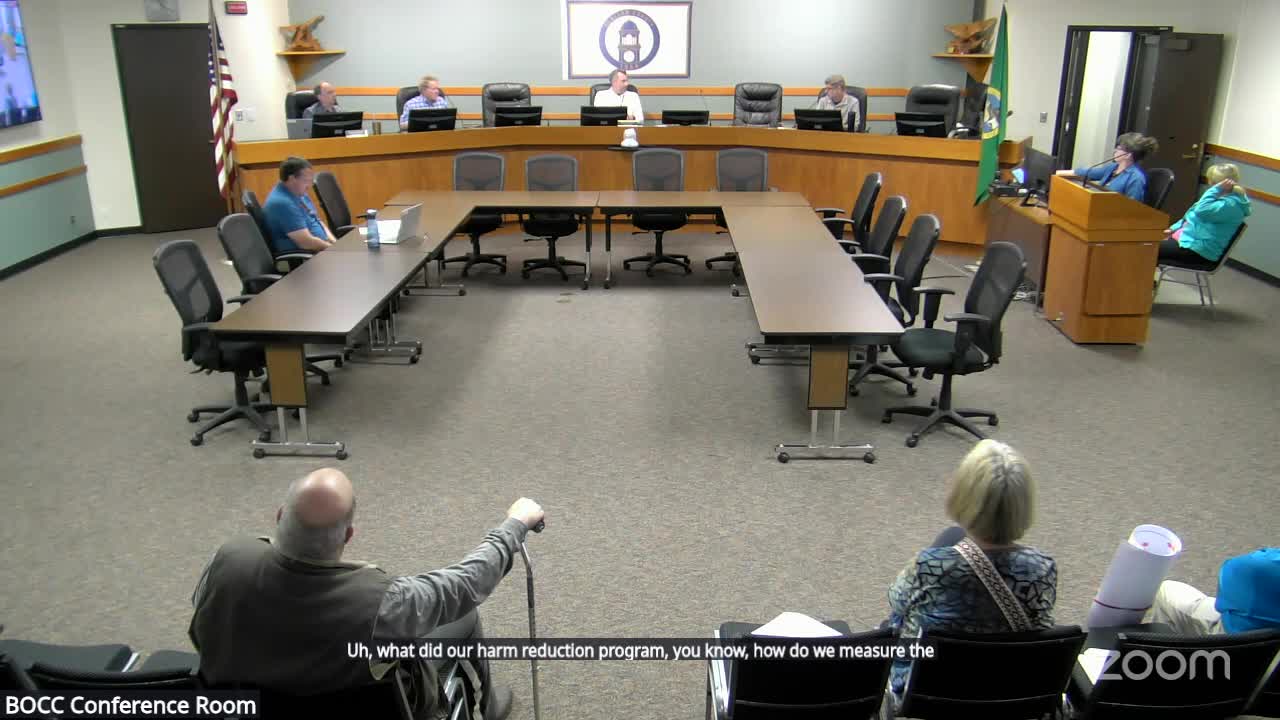
Clallam County health officials on Aug. 26 described program metrics they use to evaluate the county’s harm‑reduction efforts and answered public questions during the commissioner forum.
County leaders said harm‑reduction programs have several aims: reduce spread of communicable disease, prevent overdose deaths and help people enter treatment. Officials cited 2024 program figures in the county’s Board of Health annual report to illustrate progress: the county received 122,407 syringes and distributed 90,948 in 2024, distributed just under 6,000 boxes of naloxone/ARCAN, and recorded roughly 356 reported overdose reversals tied to naloxone distribution. Officials also said the program documented 38 agency assessments last year that led individuals into treatment when they were ready.
Officials framed these numbers as public-health outcomes: taking used syringes out of circulation reduces disease risk, naloxone/ARCAN distribution reduces fatal overdoses, and agency assessments and case management create pathways into treatment. A county staff member added that wound-care services and on-site clinicians can reduce emergency-room visits and connect people to detox and recovery services.
Public debate at the meeting was pointed. Some members of the public argued that harm-reduction services enable increased substance use and questioned whether syringe distribution and other services reduce broader community harms. A resident said the county's settlement dollars come from pharmaceutical settlement funds, and questioned whether buying supplies from vendors tied to pharmaceutical companies was appropriate. Other commenters, and county health staff, reiterated evidence-based outcomes and client stories as essential measures of program success.
Why it matters: Commissioners said overdose prevention, reduced communicable disease spread and connections to treatment are central public-health goals; program metrics inform whether the county is meeting those goals and shape future funding decisions.
Next steps: Health department staff offered to meet with residents and to share program reports; the county’s harm-reduction metrics and outcomes will be part of regular public-health reporting.
Ending: Commissioners and staff asked the public to continue the conversation and offered to provide more detailed, published data on program outcomes on request.