Get Full Government Meeting Transcripts, Videos, & Alerts Forever!
Get email alerts on the Land Use Taxation topic
No spam. Unsubscribe anytime.
Board adopts new open-space code language; residents warn assessor lacks capacity to enforce compliance
Summary
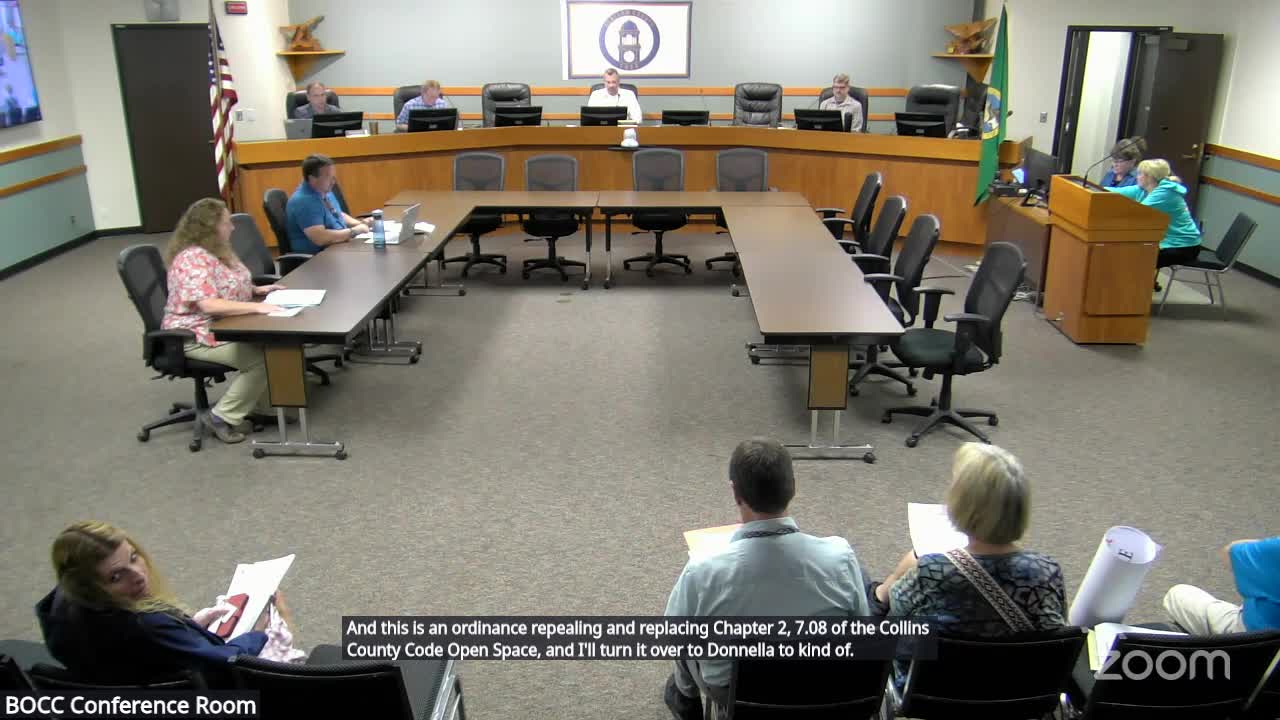
The Board of Clallam County Commissioners on Aug. 26 adopted an ordinance repealing and replacing Chapter 27.08 of the county code, which governs open-space classifications.
The Board of Clallam County Commissioners on Aug. 26 adopted an ordinance repealing and replacing Chapter 27.08 of the county code, which governs open-space classifications.
Staff said the ordinance was revised after the assessor requested added language clarifying that applicants must be compliant with other taxing programs in order to be reclassified to open space. The change does not prevent new applicants from applying, staff said. The board held a continued public hearing before voting and then approved the ordinance unanimously.
Why it matters: the open-space classification can materially reduce property-tax bills for landowners who qualify, shifting some tax burden to other taxpayers. Commissioners and staff said the assessor's requested language was intended to ensure applicants meet compliance requirements; several commissioners said applicants receiving substantial tax reductions should document eligibility.
Public comment: Jake Zegers (District 3) opposed the change, saying the assessor lacks staffing to perform annual compliance audits for forestry and agricultural exemptions and that adding reclassification compliance could increase the burden on landholders. Ed Bowen criticized the planning commission’s public-engagement practices and said the ordinance increases confusion for taxpayers. An online commenter asked for a deeper review of assessor metrics and equitable application.
Board response: Commissioners acknowledged administrative concerns but said that, when an elected official (the assessor) requests specific language that staff believes is relevant, it is appropriate to include it in an update. One commissioner said that while administrative burden is real, the public expects that those who receive steep property-tax reductions demonstrate they meet program requirements.
Next steps: County planning staff will proceed with implementation; staff and the assessor’s office will be expected to manage compliance reviews under existing resources. Public commenters asked the board to consider additional public outreach and clearer guidance for applicants.
Ending: The ordinance passed unanimously after the continued public hearing. Residents who spoke said they intend to press for further study of assessor capacity and for improved public engagement on future code updates.