Get Full Government Meeting Transcripts, Videos, & Alerts Forever!
Get email alerts on the Solid Waste Recycling topic
No spam. Unsubscribe anytime.
County unveils solid‑waste StoryMap to guide residents on recycling and hazardous‑waste options
Summary
Solid‑waste staff demonstrated a StoryMap that aggregates local options for batteries, paint, electronics, household hazardous waste and other materials and described existing collection locations and pilot programs to reduce improper disposal.
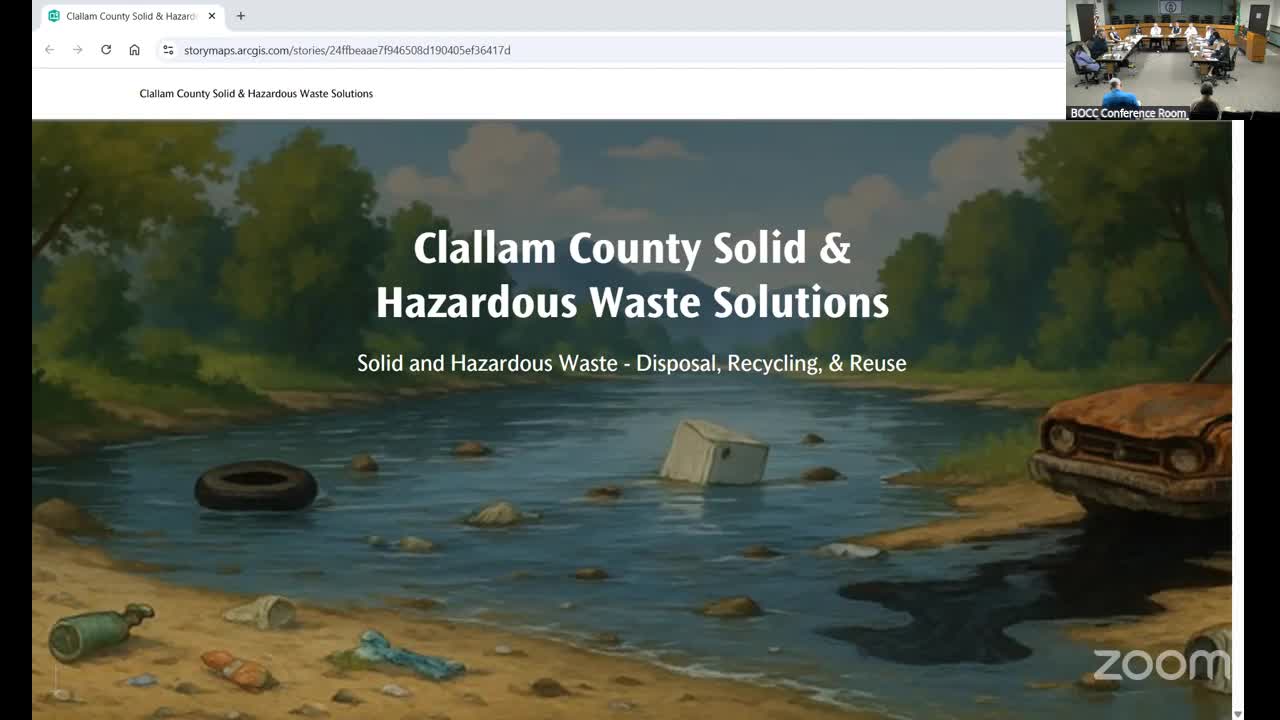
Eli, a county solid‑waste staff member, demonstrated a StoryMap prototype at the Aug. 19 Calum County Public Health meeting that catalogs local disposal and recycling options for household materials, such as batteries, paint, e‑waste, appliances and hazardous products.
Eli said the StoryMap is designed as a public, interactive resource that will show drop‑off points, event schedules and contact information and will be updated as service options change. Examples demonstrated included a Home Depot kiosk that accepts many rechargeable batteries, transfer‑station locations that take automotive batteries and other materials, Goodwill locations that accept an evolving set of e‑waste items (including TVs under the state e‑waste contract), and a local fire‑equipment vendor that accepts fire extinguishers for a fee. The StoryMap also links to upcoming household hazardous‑waste collection events; staff cited a Forks collection with 74 participants in 2024.
Staff discussed enforcement and costs: transfer‑station operators currently remove obviously dangerous items off tipping floors when staff see them, and the county said transfer operators are piloting an AI camera system that flags problematic loads and can notify customers. Staff noted that batteries are a leading cause of fires in waste collection and encouraged residents to separate single‑use and rechargeable batteries and to use designated kiosks where available.
Eli asked for feedback before public release; staff said the StoryMap remains under internal review for final tuning. Board members asked how the county handles improperly disposed items discovered later in the waste stream; staff said it depends on where the item is found and that transfer‑station staff often intercept hazards but that costs and responsibility vary case by case.
Next steps: staff will finalize and publish the StoryMap once internal feedback is incorporated and will update the map as service providers change. The demonstration was informational; no formal board action or vote occurred.