Get Full Government Meeting Transcripts, Videos, & Alerts Forever!
Get email alerts on the Environmental Health Annual Report topic
No spam. Unsubscribe anytime.
Calum County environmental health staff present 2024 annual report, highlight septic incentives and database upgrade needs
Summary
Environmental health staff reviewed 2024 work across drinking water, food safety, on‑site septic, solid and hazardous waste, and water-quality monitoring; presenters reported staffing levels, revenues, inspection rates, incentive payments and ongoing database and module needs.
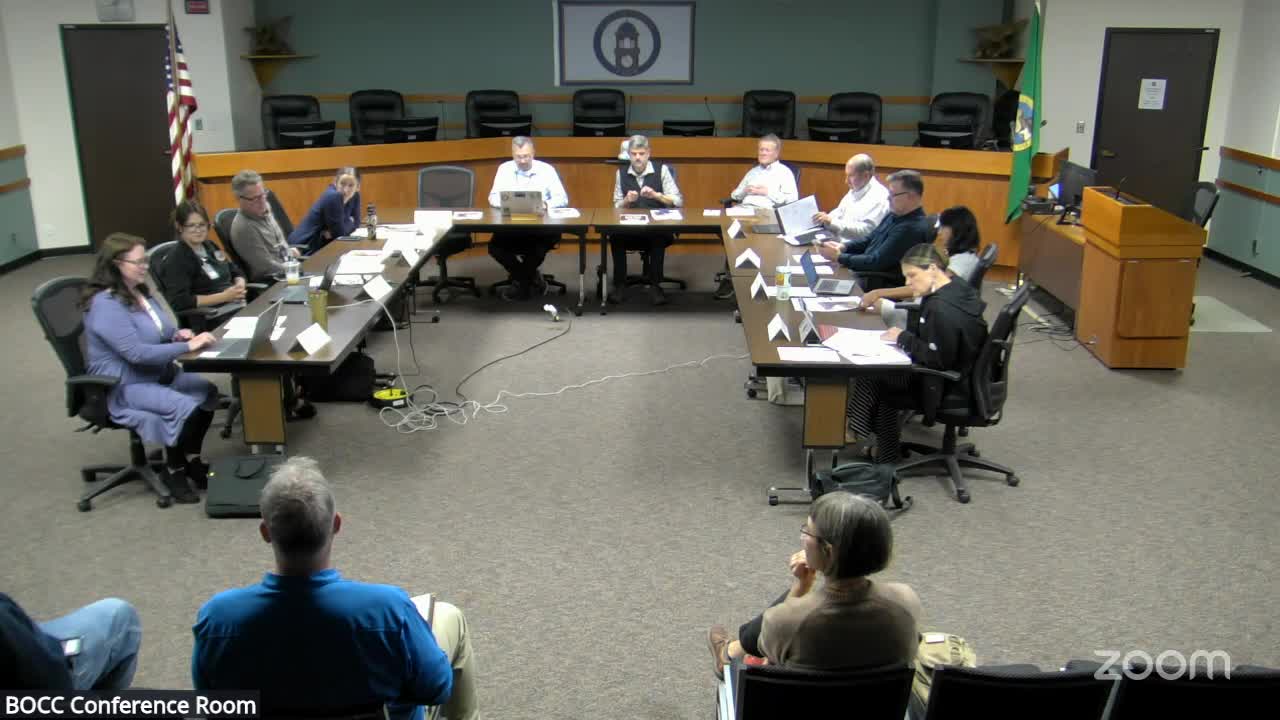
Jen Garsalon, environmental health staff, presented Calum County’s 2024 annual environmental health report at the Aug. 19 public-health meeting, summarizing program work, revenue and staffing and highlighting several operational challenges including database transition and low on‑site septic compliance rates.
Garsalon said the environmental health division had 13 staff (12.1 full‑time equivalent) in 2024, with 7.3 environmental specialists, two customer‑service specialists, one water‑quality specialist, the director and a database technician. She reported 2024 revenue of about $1.5 million and expenditures near $1.4 million, with salaries and benefits the largest spending category. Grants and program fees were the largest revenue sources. For 2025 the department’s revenues and expenditures were budgeted at approximately $100,000,000 in countywide accounts reflected in the presentation materials.
Program activity: Garsalon described the accredited drinking-water laboratory that processes thousands of bacterial samples annually; a food‑safety program that oversees roughly 400 permitted establishments and completed 54 plan reviews in 2024; and an on‑site septic permitting program that processed about 300 permits and investigated 59 complaints. She said the county has about 21,000 septic systems and that long‑term compliance remains a challenge: roughly 30 percent of systems countywide are current on their required inspections and 35 percent are current in the marine recovery area, with a peak of about 38 percent historically.
Incentives and enforcement: The environmental health office processed 82 incentive payments in 2024 and distributed about $43,000 to support septic inspections and repairs; funding for incentives was described as coming from on‑site operation and maintenance (O&M) fees and the local OSS (on‑site septic system) program’s management funds. Garsalon noted that processing small $100 reimbursements is administratively costly and that increasing incentive amounts can improve participation and follow‑through for pumping and repairs, which typically cost several hundred dollars.
Database and staffing issues: Garsalon and board members discussed ongoing difficulties migrating records into a new county permitting system (Tyler Technologies) and the need to acquire the vendor’s health module to restore functionality the department had in a legacy system. The department requested funding to cover the health module and to support data integration, which staff said will help automate notifications, track inspection histories and improve outreach. She also described variable postcard outreach for O&M compliance dependent on staff time and the department’s recent hires to address notification work.
Emergency response: Garsalon reviewed environmental health’s role in emergency incidents, describing the department’s participation in the Indian Creek oil spill response. Staff coordinated with the Washington State Departments of Ecology and Health and the city of Port Angeles to identify drinking-water sources to sample and to support messaging, restaurant guidance and shoreline assessments.
Discussion and next steps: Board members and staff discussed grant opportunities, the need to expand public outreach and technical assistance, and the potential to continue fee updates and database transitions. No formal vote or ordinance was taken; the presentation was informational and staff proposed following up on database funding and continued incentive programs.