
DNR says silviculture work completed this biennium helped, but fire danger remains high
Get AI-powered insights, summaries, and transcripts
Subscribe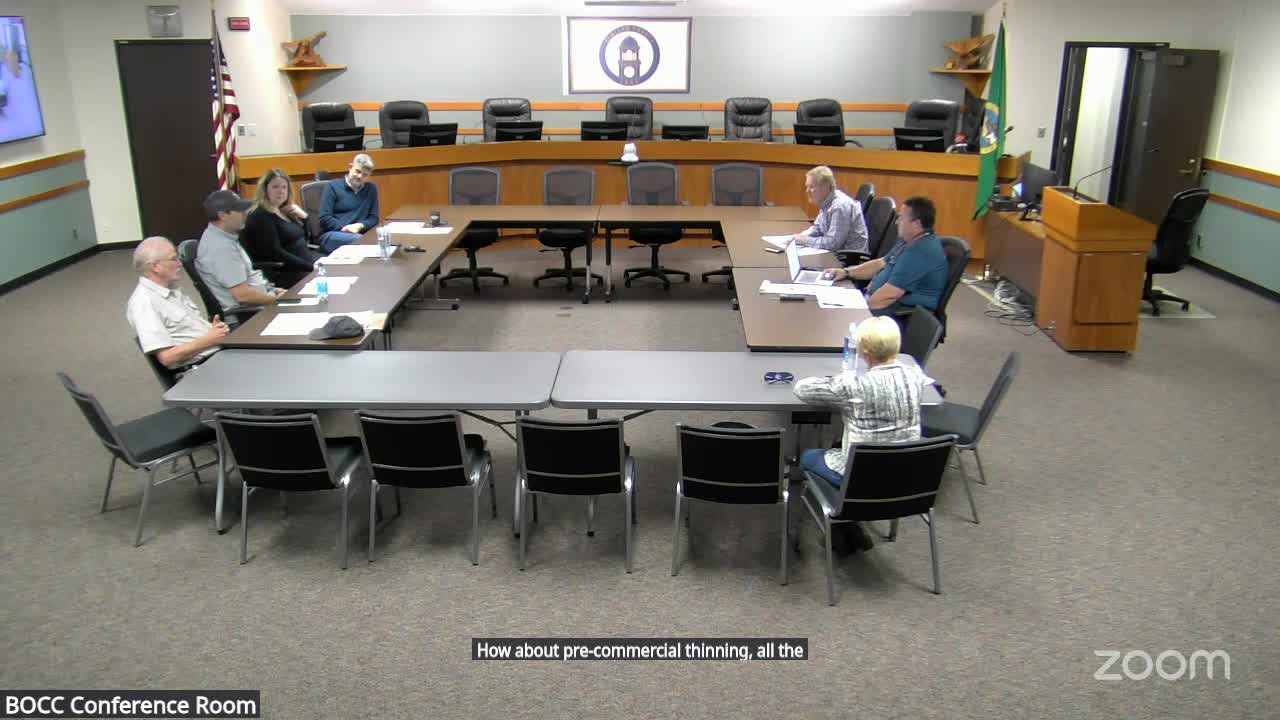
Summary
The Department of Natural Resources told commissioners it used one-time funding to accelerate silviculture work, retained seasonal fire staff and prioritized helicopter response; staff said the recent rain is temporary and fuels remain ready to ignite.
DNR staff told the Board of Commissioners that the agency used one-time funding in the last biennium to accelerate silviculture work (planting, precommercial thinning and related activities) and to retain some fire staff through the winter. A DNR presenter said the agency completed more silviculture work than previously scheduled as a result of that funding, but cautioned that the next two years will likely be tight on resources.
On fire response, DNR staff described a coordinated approach with local fire districts that has kept incidents small so far this season. The agency said helicopters can be started early when dispatch information indicates a possible need and turned back if not required. “It was a fire that we thought we'd be on the last gate for weeks, you know, was basically out within a shift just because of how quickly we’re able to get people to it,” a DNR speaker said of a recent Clearwater Block fire; the cause remains under investigation.
Staff warned that a recent rain event provided only temporary relief: fuels under the canopy remain dry, and small-fuel moisture can drop quickly when sun and wind return. The agency said it will prioritize essential silviculture work over the next two years, but some desirable projects may be delayed.
No formal decisions were made. DNR staff said they will continue to coordinate with fire districts and provide information on planned silviculture spending as budget planning proceeds.
Ending: Commissioners were told the combination of retained seasonal staff, quick air resources and interagency cooperation have limited large fires so far, but persistent dry fuels keep the county at risk and prioritize continued vigilance.