Get Full Government Meeting Transcripts, Videos, & Alerts Forever!
Get email alerts on the Healthcare Workforce topic
No spam. Unsubscribe anytime.
Shasta County leaders push for residency expansion, HPSA designation and regional medical training
Summary
After a consultant’s report flagged a steep drop in local primary care physicians, county leaders and local medical educators agreed to pursue federal and state shortage-area designations, funding and a regional coalition to expand residency slots and explore a satellite medical school.
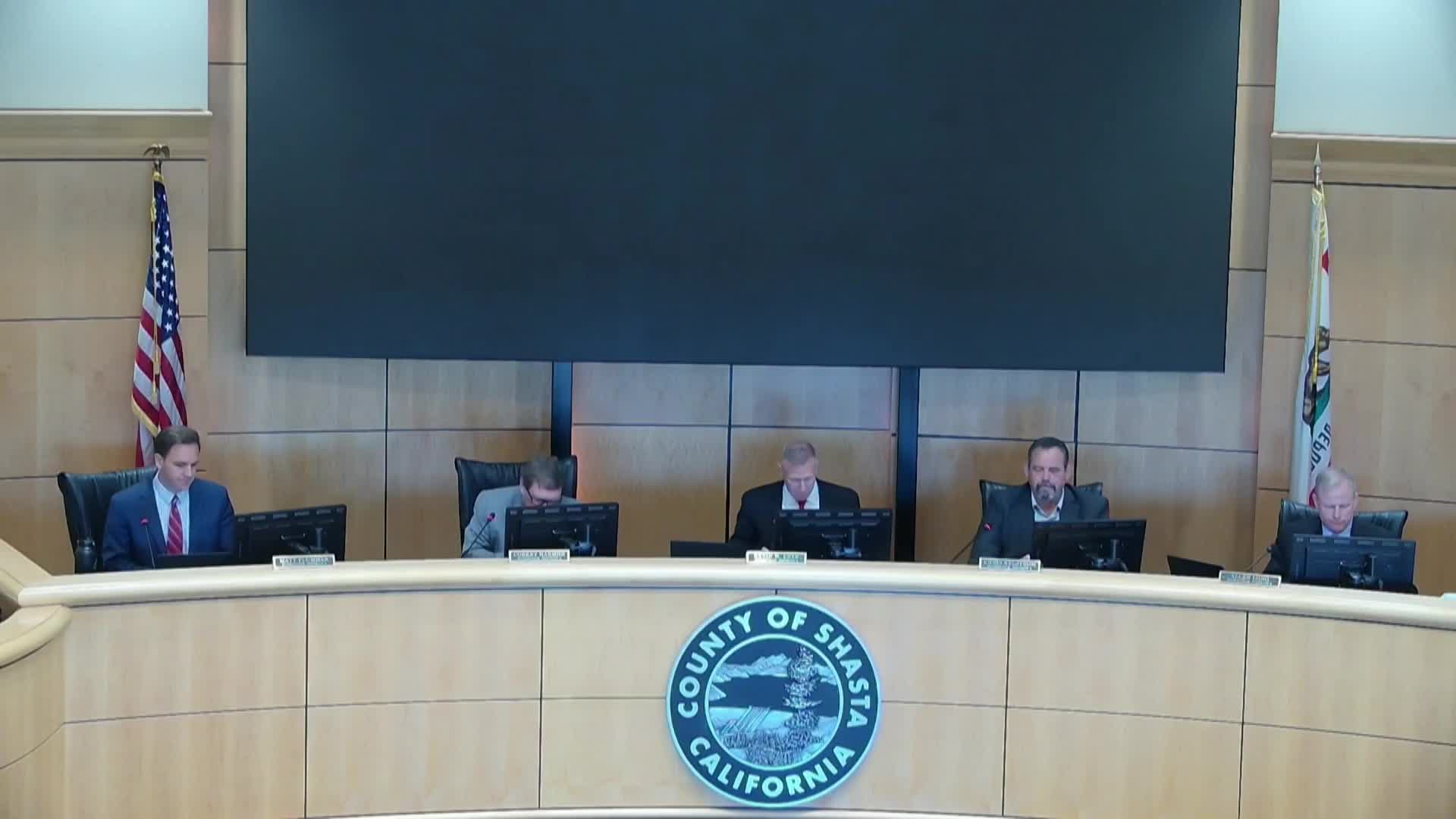
Shasta County supervisors on Aug. 19 heard a presentation and community response about the county’s shortage of primary care physicians and next steps to expand medical training locally.
The presentation by health care consultant Chris Street summarized county and regional studies that, he said, show local primary care capacity has dropped dramatically and now places Shasta County above federal shortage thresholds. “Today we are 1 primary care physician for every 3,542 residents,” Street told the board, and he said that change opens the county to federal and state funding for workforce development and training.
The shortage, speakers told the board, is driving higher avoidable morbidity and mortality and constraining access to routine care. Dr. Danuka, a local physician who has been convening a coalition of providers and educators, told the supervisors the group is discussing several paths: expanding residency training, creating a regional branch campus or satellite medical school with university partners, and recruiting for short-term physician staffing while the longer programs develop. “We have assembled a coalition of doctors and educators and advocates,” Dr. Danuka said. “We would like to invite the county to designate a representative.”
Why it matters: Primary care shortages affect routine access for patients, pressure emergency departments and create eligibility for federal Health Professional Shortage Area (HPSA) and Medically Underserved Area (MUA) programs that unlock grant funding and loan-forgiveness incentives for clinicians who practice in designated areas.
What the board learned and discussed - Data and designations: Street cited earlier local workforce inventories and a 2019 Dignity Health analysis and said physician counts in Shasta County dropped from an earlier tally of about 132 to roughly 58 clinicians. He and other presenters said that based on those ratios the county meets thresholds used to designate HPSA/MUA status and could pursue large federal and state grant opportunities. Street said those opportunities can include multi‑million‑dollar streams; he described “very large” federal opportunities and a potential state funding pool noted in his presentation. - Coalition and university partners: Supervisors heard that UC Davis representatives have been engaged and that Simpson University has stepped forward as a local partner; Dr. Norm Hall of Simpson said his university has begun internal study work. Speakers described two main program paths being discussed: (1) a regional branch campus model tied to an established medical school and (2) creating an independent accredited program with long-term accreditation requirements (LCME standards were referenced by presenters as a necessary future consideration). - Short‑ and long‑term tactics: Public speakers and county presenters emphasized a mix of near‑term and long‑term measures — short‑term locum tenens coverage, recruitment incentives (signing bonuses, loan repayment), expansion of residency slots, clinical rotation agreements with local hospitals and clinics, and the larger, longer-term possibility of medical education locally.
Board direction and formal actions - The board received the consultant’s report and discussed next steps with medical, higher‑education and hospital partners. No vote was required to receive the presentation (agenda item R2). The board and presenters agreed to continue developing a regional coalition and to seek federal/state designations and funding that could support residencies and education programs. - Staffing and representation: CEO Dave Rickert said he will direct the county’s Health and Human Services Agency (HHSA) director to participate with the community coalition and facilitate county liaison work with hospitals and universities. - Signing‑bonus motion (formal action): Supervisor Plummer moved and Supervisor Harmon seconded a direction to staff to return with a proposal for signing bonuses to recruit for currently vacant county psychiatry and psychologist positions, funded using opioid settlement dollars (a related item discussed later in the meeting). The board voted to bring that signing‑bonus proposal back for consideration; the motion to have staff return with parameters was approved (recorded vote in meeting minutes: 5–0).
Caveats and questions raised - Multiple speakers — physicians, university representatives and members of the public — warned that a medical school is a long, resource‑intensive project that requires durable university partnerships, accreditation planning, clinical rotations and funded residency slots. Several asked the board to prioritize expanding residency training and recruitment incentives as near‑term priorities while coalition work continues. - Several speakers urged that letters of support from hospitals, clinics and physician groups, plus feasibility testing for clinical rotations, be produced before major commitments are made.
Next steps County staff, the coalition led by local physicians and educators, and partners including UC Davis and Simpson University said they will prepare clearer materials for funders and university partners: a coalition charter, letters of support from regional clinical partners and a plan that ties HPSA/MUA designation and specific grant targets to residency expansion and clinic staffing. The board asked staff and the coalition to return with those materials for follow‑up consideration.
Ending note: Supervisors and presenters framed the effort as long‑term and multi‑pronged — immediate recruitment and residency expansion alongside coalition work to pursue regional education options and federal/state funding opportunities.