Committee approves revised Lake County Sheriff's Office fee schedule after cost study
Summary
The Law and Judiciary Committee approved an ordinance updating the sheriff office fee schedule, including notable increases to replevin fees and a reduction in some service-of-summons charges tied to route efficiencies.
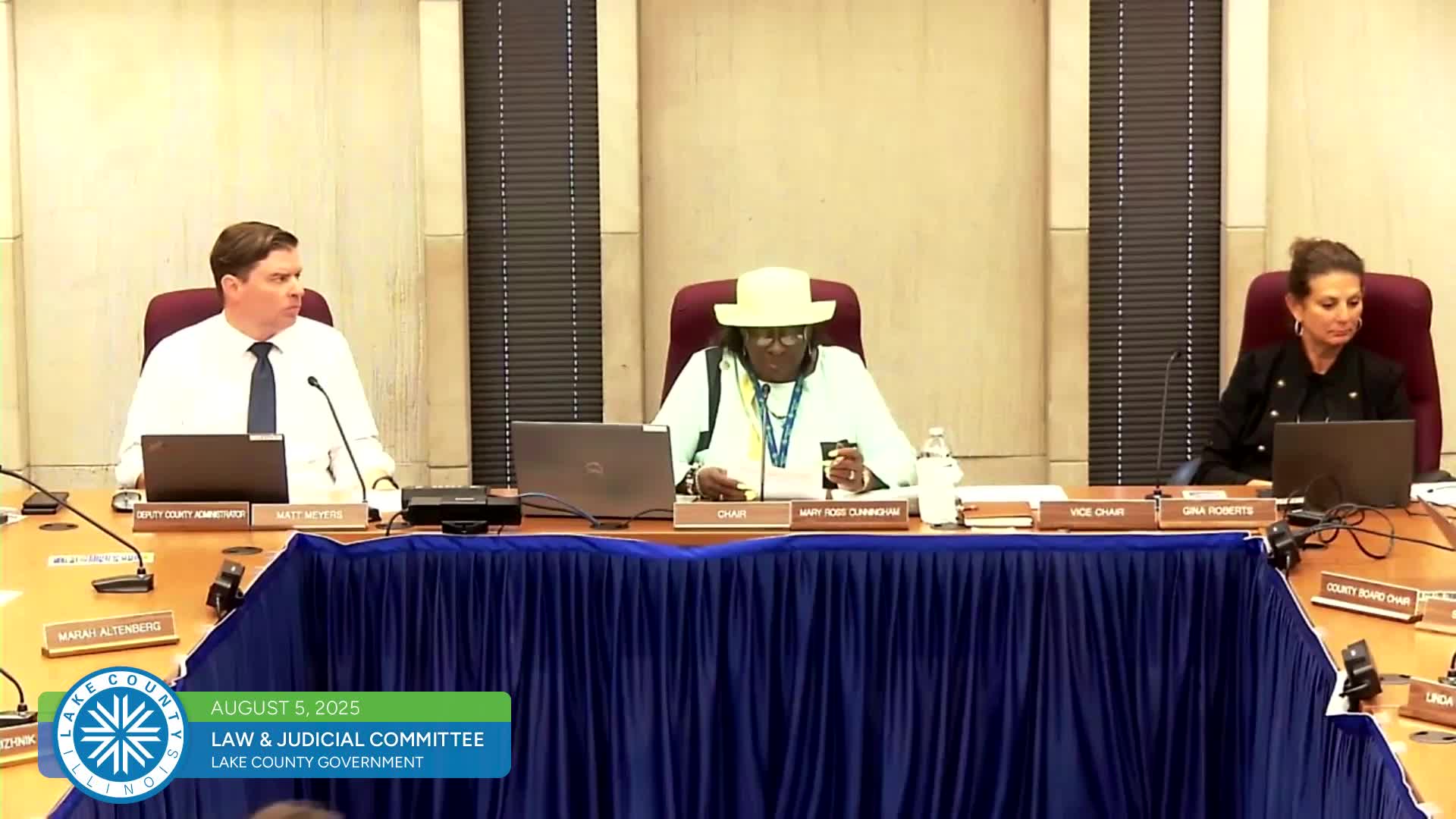
The Law and Judiciary Committee on Aug. 5 voted to adopt an ordinance that updates the Lake County Sheriff's Office fee schedule following a departmental fee study.
The ordinance, presented by sheriff's office staff in coordination with county finance, updates a set of fees last changed in 2017. Committee members were told the proposed fee changes represent about 5% of the sheriff's fee-derived revenue and were developed by examining workload, miles driven and staffing grade steps in each division.
A subject-matter expert, Sergeant Scott Morrison, explained that some fees rose because the department now requires more staff resources for certain services. For example, committee discussion noted that replevin service formerly could be handled by a single deputy, while current practice requires a minimum of three deputies in some cases; that change was cited as one reason for a substantial increase in that fee. The committee heard that some other fees, such as paper-service charges, decreased (one figure mentioned was about a 27% reduction) after the office reworked routes and consolidated assignments.
Committee members asked whether municipalities set rates for contract work; staff said the sheriff's office coordinates rates with the county finance office, and municipal contract rates can reflect a mix of deputies at different steps in the collective-bargaining pay scale. Sergeant Morrison said the division that handles many of the adjusted fees is staffed primarily by senior deputies who are billed at the highest step in the wage matrix.
Chair Cunningham called the voice vote; members recorded “ayes” with no opposition and approved the ordinance.
Why it matters: County fee schedules affect municipal customers and private plaintiffs who use sheriff services (for example, to execute court-ordered replevin actions). The committee’s action implements a cost-recovery update the sheriff's office says reflects current practices and personnel costs.
What’s next: The ordinance takes effect per county rules; fee revenues will be recognized in future departmental revenue reports.