Get Full Government Meeting Transcripts, Videos, & Alerts Forever!
Get email alerts on the Nuisance Ordinance topic
No spam. Unsubscribe anytime.
Health department proposes nuisance‑ordinance tweaks to cover well/septic enforcement, cross‑property animal‑waste nuisance
Summary
The committee approved amendments to Lake County’s public nuisance ordinance to remove well and septic language in favor of enforcing those violations under their native ordinances, and to expand nuisance language so depositing animal feces or urine on another person's property may be cited.
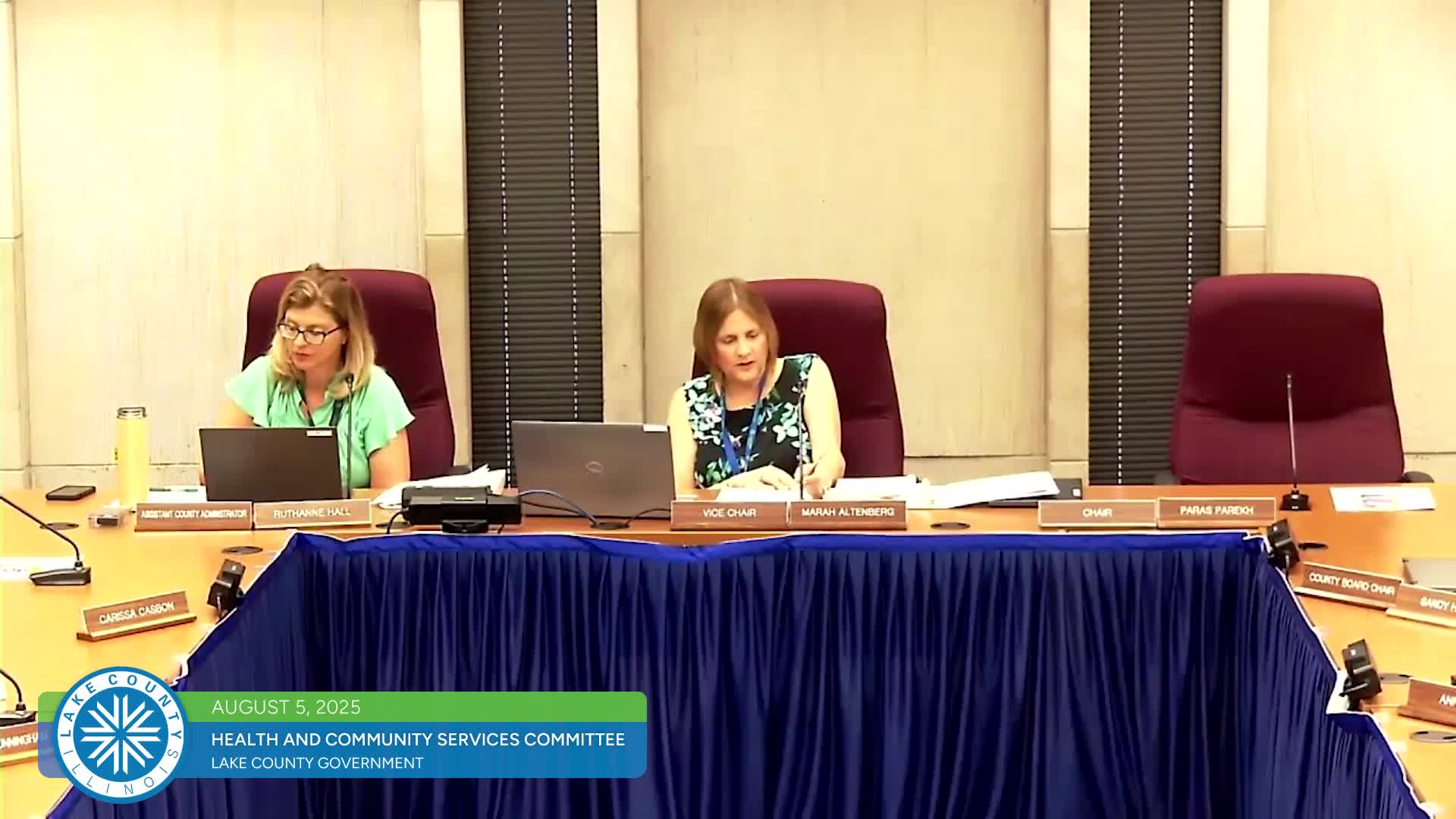
Lake County’s Health and Community Services Committee on Aug. 5 approved amendments to the county’s public nuisance ordinance that change how certain well and septic violations are enforced and expand the definition of nuisance to cover deposition of animal waste on another person’s property.
Larry Mackey, director of environmental health, said the proposed changes remove minor well and septic language from the general nuisance ordinance and instead enforce those violations under the native well and septic ordinances. "So those 2 sections are proposed to be stricken in favor of using just the native ordinances for both well and septic," Mackey said.
Mackey said the other change clarifies that permitting the deposition of manure or pet feces or urine to the point it causes loss or property damage on somebody else’s property constitutes a public nuisance and could be cited. The amendment would also allow citations where a person "harbors" or feeds animals in a way that causes feces or urine to accumulate on a neighbor's property, provided there is evidence.
Committee members asked how enforcement would work in high‑traffic public areas and how often complaints occur. Mackey said the provision is intended for targeted, extreme cases and would require strong documentation (for example, video or photographic evidence or witness testimony) before a citation would be pursued. He said the department vetted the change through its advisory committee, a public hearing and the county board of health.
The committee approved the ordinance amendment by voice vote. Mackey and members noted the change is not intended to criminalize ordinary use of property but to give staff clarity for enforcement when a neighbor’s property is harmed.