Get Full Government Meeting Transcripts, Videos, & Alerts Forever!
Get email alerts on the Finance Taxation topic
No spam. Unsubscribe anytime.
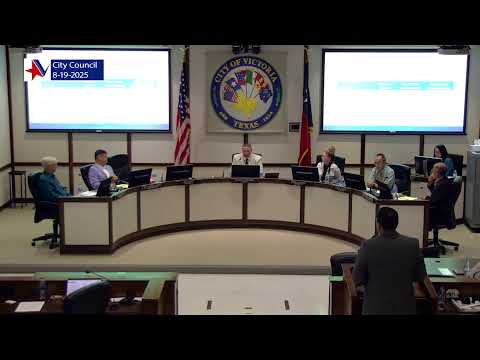
Work session: staff outlines tax-rate options, five-year compounding impacts and recommended bond redemption
Summary
Staff presented tax-rate options and a five-year projection showing how repeated mid-level rate choices could reduce cumulative revenues by millions; staff recommended a $600,000 bond-redemption from the stabilization fund to buy down future debt service and increase flexibility.
City staff presented a work-session analysis of tax-rate options and the multi-year, compounding effect of repeated rate decisions. The presentation covered the voter-approval tax rate included in the proposed budget, a midpoint tax-rate option (roughly a 1% increase over the current rate), a no-new-revenue rate and an option modeled with a 2.5% growth assumption tied to potential legislative change.
Staff walked the council through how a single tax-rate choice compounds over five years. Using conservative assumptions (1% growth in taxable value, 1% new improvements, 1.5% annual sales-tax growth, and modest inflation on maintenance and operations), staff showed that consistently choosing a midpoint rate rather than the voter-approval tax rate could yield a cumulative shortfall of roughly $5 million in general-fund property-tax revenue over five years. That shortfall was illustrated as reduced capacity for multi-year pay-program funding and for one-time capital expenditures.
Mister Garza framed council options for 2026: adopt the voter-approval tax rate included in the proposed budget (maximizes revenue for next year), select a midpoint tax rate that would generate about $338,000 less in 2026 revenue (and would require expense reductions or using reserves), or choose a no-new-revenue rate that would reduce revenue by roughly $600,000 for 2026. He explained how staff would balance a midpoint option by increasing conservative sales-tax projections and by trimming M&O by about 1.3% if council directed staff to pursue that option.
To help future flexibility, staff recommended a one-time $600,000 bond-redemption from the city's stabilization fund (which had about $1.7 million), noting that paying down debt would reduce the I&S portion of the tax rate by approximately one penny in the subsequent fiscal year — providing room if future councils wish to increase M&O without raising the total tax rate. Councilmembers praised the long-range illustration, said they would review options individually and provide staff guidance before the September ordinance readings, and several members expressed support for the budgeted voter-approval rate with the proposed bond-redemption approach.
No formal tax-rate ordinance was introduced at the work session; staff requested direction ahead of the September meetings and offered to follow up with members individually.