
Illinois Commerce Commission approves Ameren revenue‑neutral rate design, adopts sliding‑scale low‑income discount and rejects mandatory peak charge
Get AI-powered insights, summaries, and transcripts
Subscribe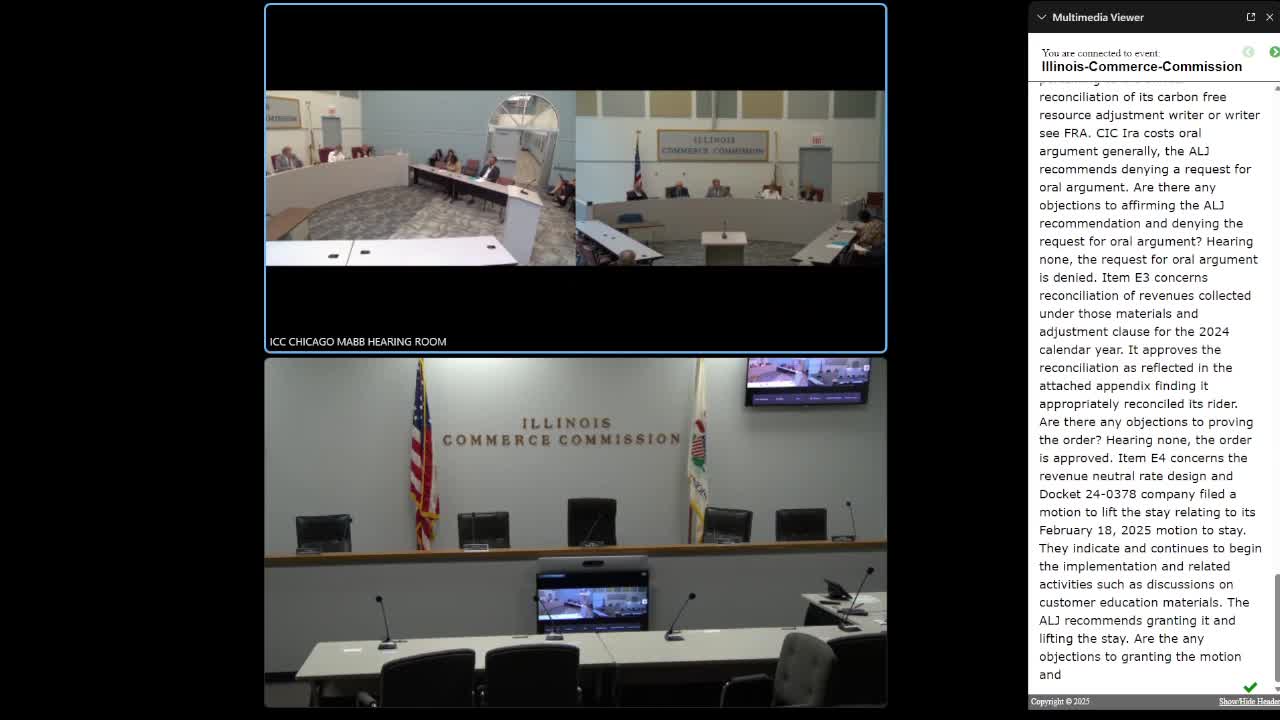
Summary
The ICC approved edits to Ameren's revenue‑neutral rate design order, adopting a sliding‑scale low‑income ESDA aimed at a 3%–6% maximum energy burden, rejected a mandatory demand‑based peak usage charge, and directed multiple compliance filings and reporting deadlines.
The Illinois Commerce Commission on Aug. 7 approved substantive edits to an order adopting Ameren’s revenue‑neutral rate design, including a new low‑income Energy Security Discount Adjustment (ESDA) structured as a sliding‑scale program and the rejection of a mandatory demand‑based peak usage charge for residential and small commercial customers. The commission found that Ameren’s Option 2—a sliding PIPP‑style program designed to achieve a maximum 3% or 6% energy burden for eligible low‑income customers—"appropriately balances the needs of all customers," and the edits set an implementation date of June 1, 2026, for the ESDA. The commission directed Ameren to submit a compliance filing within 60 days detailing actions to mitigate program costs for low‑income customers distinct from other residential customers, and to submit an implementation report as a compliance filing within 90 days of the final order. The commission also rejected Ameren’s proposed mandatory demand‑based peak usage charge, concluding the record did not support that change. Instead it directed Ameren to engage stakeholders on potential volumetric time‑of‑use (TOU) structures, customer education needs, and to file a straw man proposal for a DTOU or bundled rate and a customer education plan within 180 days of the order. The edits keep staff reporting requirement No. 10, which requires Ameren to provide additional information upon staff request with a demonstration of necessity, and they adopt reporting language consistent with previously approved low‑income discount program requirements to enable evaluation of program effectiveness and system benefits. A commissioner moved the edits; Commissioner Paradis seconded. Hearing no objections, the commission approved the edits and the order as edited on the record.