Get Full Government Meeting Transcripts, Videos, & Alerts Forever!
Get email alerts on the Marijuana Regulation topic
No spam. Unsubscribe anytime.
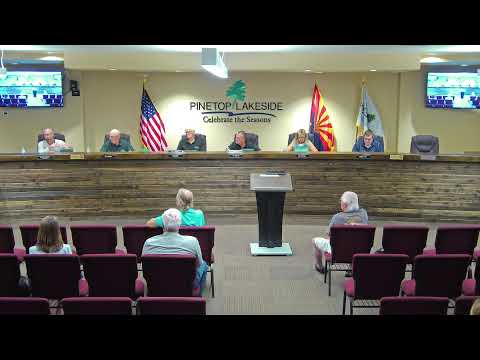
Pinetop‑Lakeside planning commission recommends amending marijuana rules to align with state law and lower separation distances
Summary
The Planning and Zoning Commission voted to recommend town-council amendments to town code chapters 17.102 (medical) and 17.114 (recreational) so recreational sales mirror medical rules and to reduce separation distances between dispensaries and residences, schools and religious institutions.
The Pinetop‑Lakeside Planning and Zoning Commission voted to recommend that the Town Council amend town code chapter 17.102 (medical marijuana) and chapter 17.114 (recreational marijuana) to comply with state law and to loosen certain distance limits for dispensaries.
The recommendation would require recreational dispensaries to be regulated no more restrictively than medical dispensaries and would change the local separation rules: the update reduces the required distance from a dispensary exterior wall to the exterior wall of the nearest residentially zoned property from 500 feet to 250 feet, and reduces the required distance from schools and religious institutions from 1,000 feet to 500 feet. The commission also recommended allowing one dual-licensed facility (medical and recreational) in town, consistent with state licensing rules.
Interim Town Manager Miller told the commission that state law requires recreational and medical dispensaries be treated the same and that the current town rules severely limit potential locations. “Tonight’s business is to have the recreational marijuana ordinance … mimic what’s done for medical marijuana,” Miller said, explaining the recommended reductions in separation distances.
Jeremiah, the town planning director, told commissioners that the reduced distances “would open up many more locations” on commercial corridors such as White Mountain Boulevard (Highway 260), where commercial parcels butt up against residential uses and existing separation rules make locating a dispensary difficult. He said the changes would not permit multiple outlets: whoever obtains the town’s single facility would operate both medical and recreational sales from the same site.
Commissioners and the public raised concerns about proximity to schools and religious facilities. Sterling Beues, identified in the record as vice mayor, said he had reservations about reducing distances near schools and religious institutions and urged the council to consider keeping larger buffers. The commission noted the town attorney reviewed the draft ordinance; commissioners asked staff to confirm with legal counsel whether any proposed local distances conflict with state statutes before final council action.
Staff outlined anticipated fiscal and public-safety effects: a town sales tax rate of 3 percent would apply to cannabis retail sales, and state distributions from cannabis taxes may provide public-safety funding. Commissioners also discussed whether potential dispensaries would be new construction subject to site-plan requirements (landscaping, screening, decorative walls) or existing buildings that might be re-used.
The motion recommending amendment of chapter 17.102 passed with affirmative votes and no recorded opposition; the separate motion recommending amendment of chapter 17.114 (recreational) passed with recorded approval and one no vote. Both recommendations are advisory and will go to the Town Council for final action. The commission record shows the original medical-marijuana ordinance was adopted by council in November 2020 and that the proposed changes are intended to cure a conflict with state law that arose after legalization of recreational cannabis at the state level.
Next steps: the commission’s recommendations will be forwarded to the Town Council for public hearing and final ordinance adoption; staff said they will confirm statutory compatibility with the town attorney prior to council consideration.