Get Full Government Meeting Transcripts, Videos, & Alerts Forever!
Get email alerts on the Liquor Fee topic
No spam. Unsubscribe anytime.
Watertown council postpones decision on reduced restaurant liquor fee after hours of debate
Summary
After lengthy public comment and council debate, the Watertown City Council voted to postpone action on changing the on‑sale retail restaurant liquor fee. Councilmembers agreed to take the issue to a work session for further legal and policy research.
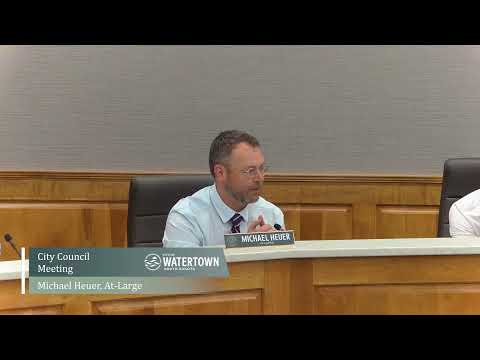
The Watertown City Council on Aug. 18 postponed a vote on a resolution to reset the city's on‑sale retail restaurant liquor fee after several hours of public comment and council debate. The measure drew competing proposals: Councilman Jerns proposed reducing the fee to $25,000; Councilman Mormon and others floated alternatives including $75,000 or a staggered payment plan. Public testimony from local restaurateurs warned that a low, unlimited permit could erode the market value of existing liquor licenses. The matter was deferred by a substitute motion to postpone consideration until a work session in September, with Councilman Jerns making the substitute motion and Councilman Peters seconding. The motion to postpone carried on a roll call vote. Why it matters: the city's current ordinance and state law set the framework for how on‑sale retail restaurant licenses are handled in Watertown. Changes could ease the path for entrepreneurs to serve mixed drinks with meals but could also affect the equity value of existing full liquor licenses held by longstanding businesses. Council debate and public comment Councilman Jerns, who introduced lowering the fee, described the existing $100,000 one‑time charge as a high barrier for new local restaurateurs and said a lower fee would make starting a restaurant more feasible. "When I heard it was a $100,000, I'm like, there's something wrong with that," Jerns said, adding his $25,000 proposal was intended to reduce that barrier. Several current license holders and restaurant operators urged caution. Sean Dempsey, owner of Dempsey's Brewery Pub and Danger Von Dempsey's, and Tom Bolt, owner of Cloud 9 and Lone Pine, warned a low fee, if unlimited, could sharply reduce the resale value of existing licenses and create enforcement challenges. "That just floors me that it'd be when this was enacted in, what, 2019," Dempsey said of prior fee changes, adding concern about auditing compliance with a 60/40 food‑to‑alcohol requirement. Bolt said liquor is a "huge asset" for his businesses and supported lowering the fee but urged protections and clarity on how the new permits would work. Legal and administrative uncertainties Mayor Ewer and City Manager Steger both urged more research before finalizing a fee structure. Steger and City Attorney Carrickle flagged state statutes that affect whether and how the city may issue new on‑sale retail restaurant privileges; Steger specifically referenced South Dakota Codified Law 35‑4‑118 as relevant to the transfer and sale of licenses. City Manager Steger said staff would further investigate enforcement mechanisms, statutory constraints and how other South Dakota cities handle compliance and violations. Outcome and next steps Rather than vote on any price, the council voted to postpone the resolution and asked staff to prepare more background for a council work session in September. Councilman Hoyer announced he would abstain from the item earlier in the meeting. No fee change was adopted at the Aug. 18 meeting. Discussion vs. decision Discussion only: proposed fee levels ($25,000; $75,000; or staged payments), public testimony from restaurateurs, questions about enforcement and market effects. Direction/assignment: staff directed to research statutory constraints, enforcement mechanisms, and practices used by other South Dakota cities; prepare materials for a dedicated work session. Formal action: substitute motion to postpone the resolution; motion carried. What to watch: the council expects to revisit the item after staff reports and a work session that will detail legal options and possible fee structures.