Get Full Government Meeting Transcripts, Videos, & Alerts Forever!
Get email alerts on the Utilities topic
No spam. Unsubscribe anytime.
Council weighs options for $4.5 million in corrections proceeds while utility staff highlight water-loss gains
Summary
Council members discussed uses for Department of Corrections proceeds and directed staff to study reserve levels and utility rates; utility staff reported water-loss fell to 2% after meter fixes and flagged an upcoming multi‑year meter replacement expense.
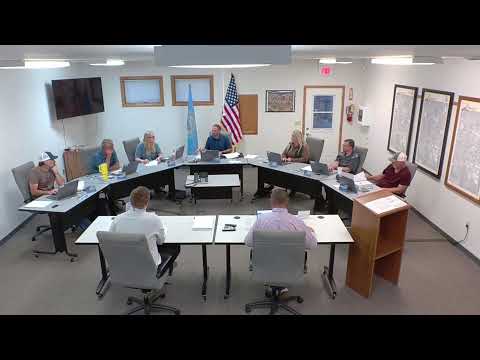
Lenox — Council members discussed how to use proceeds tied to the Department of Corrections and directed staff to research legally permissible options and impacts on utility reserves and rates.
At the start of the meeting, staff reported operational gains for the city’s water system. Kyle (staff member) told council that the utility’s measured water loss dropped to 2% last month, down from an average of about 15–20% when he started six years ago. “Last month, I had a 2% water loss,” Kyle said, describing work to correct miswired meters—examples included a baseball-field irrigation meter and other facility meters that were not being captured.
The council then moved to a wider conversation about roughly $4.5 million in proceeds tied to a Department of Corrections arrangement. City staff cautioned council that the final outcome of a September vote on that matter remained uncertain and said the city should avoid committing funds to a single plan until the legal and contractual picture is clear. “I would still caution you against getting too bought into any one idea at this point,” a staff member said, noting the possibility the city may need the funds for plant upgrades.
Councilmembers asked staff to prepare analyses of options and to check what state law would permit. Tyson (staff member) and other staff were asked to: (1) model utility reserve targets and the effect on future rate increases, (2) review the city’s current funds and investment timing (money market accounts, CDs), and (3) identify capital priorities should the proceeds be available. One councilmember summarized the direction: get more work done on utility reserves and rates and report back over the coming months.
Council also discussed the timing and source of revenues used for capital projects. Staff said most internal tracking is done through the city’s fund balances while proceeds currently sit in a money-market account; some investments are structured as CDs maturing over time. Council discussed the possibility of using interest proceeds to cover relatively small ongoing obligations and the option of interfund loans for capital needs.
On implementation details, staff noted that the city’s meter fleet is approaching the end of its expected life and that replacement will be a multi‑year expense. Kyle said an average 3/4‑inch residential replacement meter costs about $380, and council estimated a future replacement program could total roughly $500,000 over the next few years depending on meter sizes and phasing. Staff recommended tracking failures and replacing meters when they fail rather than proactively replacing all at once, given current communications and replacement procedures.
Discussion also covered sewer infrastructure priorities: councilmembers agreed the Northwest lift station will likely need upgrades as the Countryside subdivision grows, and noted that even pump upgrades have hydrological limits. Staff said they will continue work with engineering consultants as needed and consider asking HDR or a similar firm to review proposed rate changes before finalizing.
No formal ordinance or appropriation was adopted at the meeting. Council voted to continue studying options and to receive regular staff updates.
Ending — Staff will return with modeled options for reserve targets, a revised utility rate analysis, and a prioritized capital list for possible use of the proceeds; council did not adopt any spending plan at the meeting.