Get Full Government Meeting Transcripts, Videos, & Alerts Forever!
Get email alerts on the Liquor License Fee topic
No spam. Unsubscribe anytime.
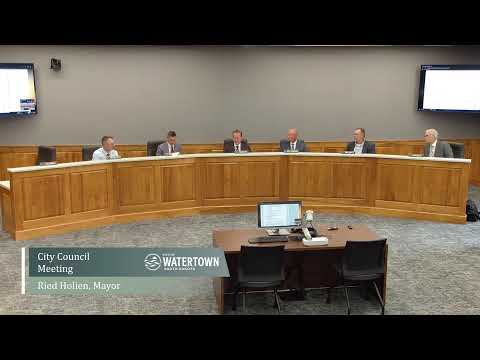
Watertown council reopens discussion on restaurant liquor-license fee; no vote taken
Summary
Council members debated lowering the city's on-sale full-service restaurant liquor-license fee, citing potential to attract restaurants and increase sales tax revenue; no formal change or vote occurred and the initiating councilman asked for the item to return for a decision in two weeks.
Councilman Jerns opened a council discussion Aug. 4 on a resolution to reset the on-sale license fee for full-service restaurants under chapter 2.02 of the Revised Ordinances of the City of Watertown. The council explored lowering the current fee, which was set at $100,000 by a 2019 resolution, and discussed options including a proposed $25,000 fee and the statutory minimum of $1 per resident. The item matters because the license limits holders to deriving at least 60% of revenue from food, and council members said changing the fee could affect restaurant variety, visitor spending and sales-tax receipts. Councilman Jurins said the state sets a minimum based on population and that "the minimum it could go to is 23,000 based on state law." Councilman Jerns said the city currently has no active applicants for this license and argued lowering the fee could spur local restaurant startups: "I see it as just a little bit more revenue because 0 have been sold, even at 25,000." Council discussion centered on two tensions: whether the license fee is the primary barrier to new restaurants, and whether lowering the fee would devalue existing liquor licenses that current owners treat as assets. Councilman Allen asked for evidence that price is the barrier, saying many chains use population and income thresholds. Councilman Peters supported lowering the fee to "stir up" interest after nearly two decades of no transfers. Several members noted that banks do not treat this license as a borrowable asset because it is tied to a business location and does not travel with the owner. No formal motion to change the fee was made or voted on at the meeting. Councilman Jerns said he would like to bring the matter back for a vote at the next council meeting in two weeks. A council member stated they would recuse themselves from this discussion (recusal was announced during the item); no formal vote, ordinance amendment, or fee change was approved on Aug. 4. Background presented to the council noted the license was created in 2009 with an initial fee of roughly $205,000, lowered by council resolution in 2019 to $100,000. Staff provided comparative local data: Aberdeen and Brookings each set the license at $100,000 (Aberdeen has issued three), Sioux Falls set theirs at about $192,000 and has ten, and Yankton was cited at $70,000. Council members also referenced recent upticks in sales and lodging tax and the potential for event-driven visitor demand to support more restaurant choices. Council members asked staff to clarify enforcement and reporting: the license requires annual reporting to the finance/licensing office to verify the 60% food-revenue threshold; failure to meet the threshold would invalidate the license. Members also discussed a potential scenario in which current bar owners could switch to a food-based license to free up an unrestricted license for sale, but agreed the food-percentage requirement would constrain that practice. The council framed the discussion as exploratory; city staff and several council members said they would collect additional information before any ordinance or fee change was proposed for a vote.