
District reports strong K–8 literacy, math gains tied to ELG grant and assessment changes
Get AI-powered insights, summaries, and transcripts
Subscribe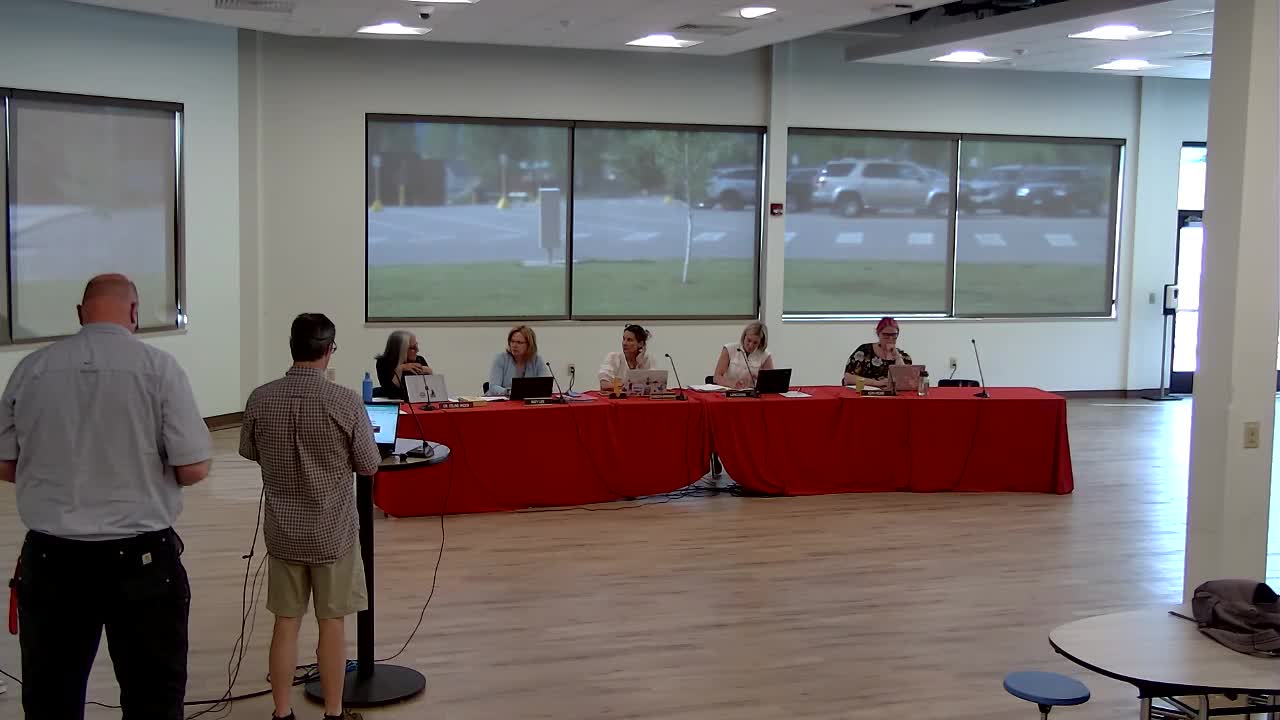
Summary
Steamboat Springs presented end-of-year data showing notable growth in K–5 DIBELS and I-Ready measures and middle-school gains; district staff credited ELG grant supports, new intervention cycles and curriculum alignment for the improvements.
Tim Ritter, who presented district assessment data at the June 16 school board meeting, said the district will present the information across three board meetings this year and showed results tied to the district’s ELG (Early Literacy Grant) work and other assessment programs.
"First things first, we are going to, much like we have in previous years, roll out the data at 3 different board meetings," Ritter said. He described K–3 DIBELS growth tied to the ELG grant, showing reductions in the share of students in the "well below benchmark" category and districtwide proficiency gains.
Ritter highlighted that all schools met the grant goals for accelerated growth and achievement, and that the district’s K–5 pooled DIBELS and I-Ready results show broad improvement. On I-Ready math, he noted reductions in students two grade levels below (from 14% to 3% in one comparison) and attributed gains to renewed emphasis on instructional strategies and the Ready Math program trainer.
Ritter and Superintendent Celine Wicks credited the district’s ELG grant partner (Scribe consultants) and a three-week PDSA cycle for tiered reading instruction: "They've created a system of data-driven instruction called PDSA... 3 week cycles for reading, that they're able to be responsive and make adjustments with their tier 2 instruction," Ritter said.
Board members asked for clarification about a mistaken percentage in the board book (a carryover error): when Leah pointed out the discrepancy, Ritter acknowledged a typo and asked the board to "ignore the 9%" and use the corrected value of 71%.
Middle-school NWEA and I-Ready results showed median percentiles above national averages in many grade-level measures and year-to-year percentile growth; Ritter noted a concurrent curriculum adoption underway for middle grades to improve alignment. He also described projected CMAS proficiency that NWEA modeling provides and said the district will revise data-driven action plans and share disaggregated CMAS, PSAT and SAT results when available.
Why it matters: The data indicate measurable recovery and improvement after pandemic-related learning disruptions; the board will use the vendor and locally collected data to guide curriculum adoptions, staffing and targeted interventions.
Next steps: The district will present disaggregated CMAS and high-school data in August, pilot fourth- and fifth-grade curricular resources, finalize middle-school curriculum adoptions and plan a data-driven action plan for 2025–26.