
Vancouver council approves short-term deferral of traffic and park impact fees and utility SDCs with clarifications
Get AI-powered insights, summaries, and transcripts
Subscribe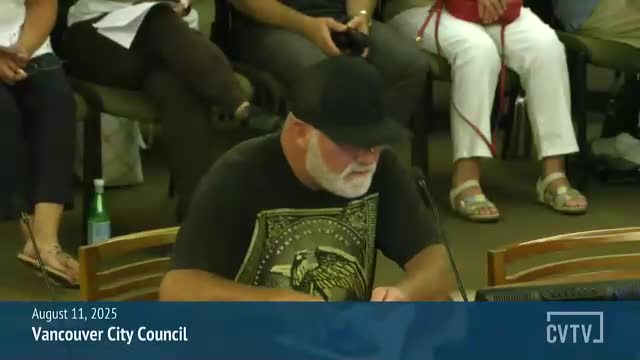
Summary
On Aug. 11, 2025 the Vancouver City Council approved ordinances allowing developers to defer payment of certain city impact fees and utility system development charges (SDCs) until later in the construction process, adding a clarifying exclusion for school impact fees and directing staff to update reports and monitoring.
The Vancouver City Council on Aug. 11 approved amendments that let developers defer payment of two city fees — traffic and park impact fees and utility system development charges — until later stages of construction, while adding clarifying language and staff reporting requirements.
City staff and councilors emphasized the change defers collection rather than waives the fees. The ordinances amend the Vancouver Municipal Code (impact fees: section 20.915; water and sewer SDCs: VMC 14.04) to allow payment at temporary occupancy or another later point in the construction timeline, with a maximum deferral cap of 36 months.
City staff told council the typical expectation is the impact-fee deferral will average about 23 months and deferral of SDCs about nine months; council members and the public pressed for clarity around those averages and the 36-month cap. Council requested and the attorney agreed to add an explicit sentence excluding school impact fees from the deferral language in the impact-fee ordinance and to revise staff materials to make clear that the 9-month and 23-month figures are averages, not the maximum allowed under the ordinance.
During public comment Bruce Barnes, a longtime Vancouver resident, argued against the fee deferrals, saying they would shift tax burdens to existing homeowners. Council members questioned the financial exposure if a developer failed to pay after occupancy and asked staff to report how many deferrals are granted and the outstanding fees over time.
Councilor Hansen asked whether the staff report and ordinance used consistent timing language; staff confirmed the ordinance sets the 36-month cap while the presentation used the average estimates. The city attorney said staff could incorporate an option for clearer ordinance language before the public hearing and that the staff reports would explicitly call out averages versus the maximum.
Council voted to approve the impact-fee ordinance amendment with the attorney’s requested clarification excluding school impact fees, and to approve the water and sewer SDC deferral ordinance with staff-report clarifications. The council also asked staff to include periodic reporting of the number of deferrals granted, outstanding fees and any defaults in the city’s annual housing report and related briefings.
Why it matters: Deferring the timing of fee collection shifts short-term cash flow and interest earnings for the city and delays when funds are available for capital projects; the council’s clarifications narrow the potential for differing interpretations about whether school impact fees were included and set up regular tracking to monitor fiscal exposure.
Details and next steps: The ordinances do not change the amount owed — only the time when payment is due. Staff will revise the staff reports to make the averages-versus-cap distinction explicit, add the explicit exclusion of school impact fees to the impact-fee ordinance text, and include deferral tracking in the annual housing and project reports. The ordinances remain subject to standard administrative implementation and any developer-specific conditions imposed at site plan review.
Speakers quoted or referenced in this article are identified in the council transcript for the Aug. 11 meeting.