
Preston council keeps $28,000 fire‑suppression hookup fee after hours of debate
Get AI-powered insights, summaries, and transcripts
Subscribe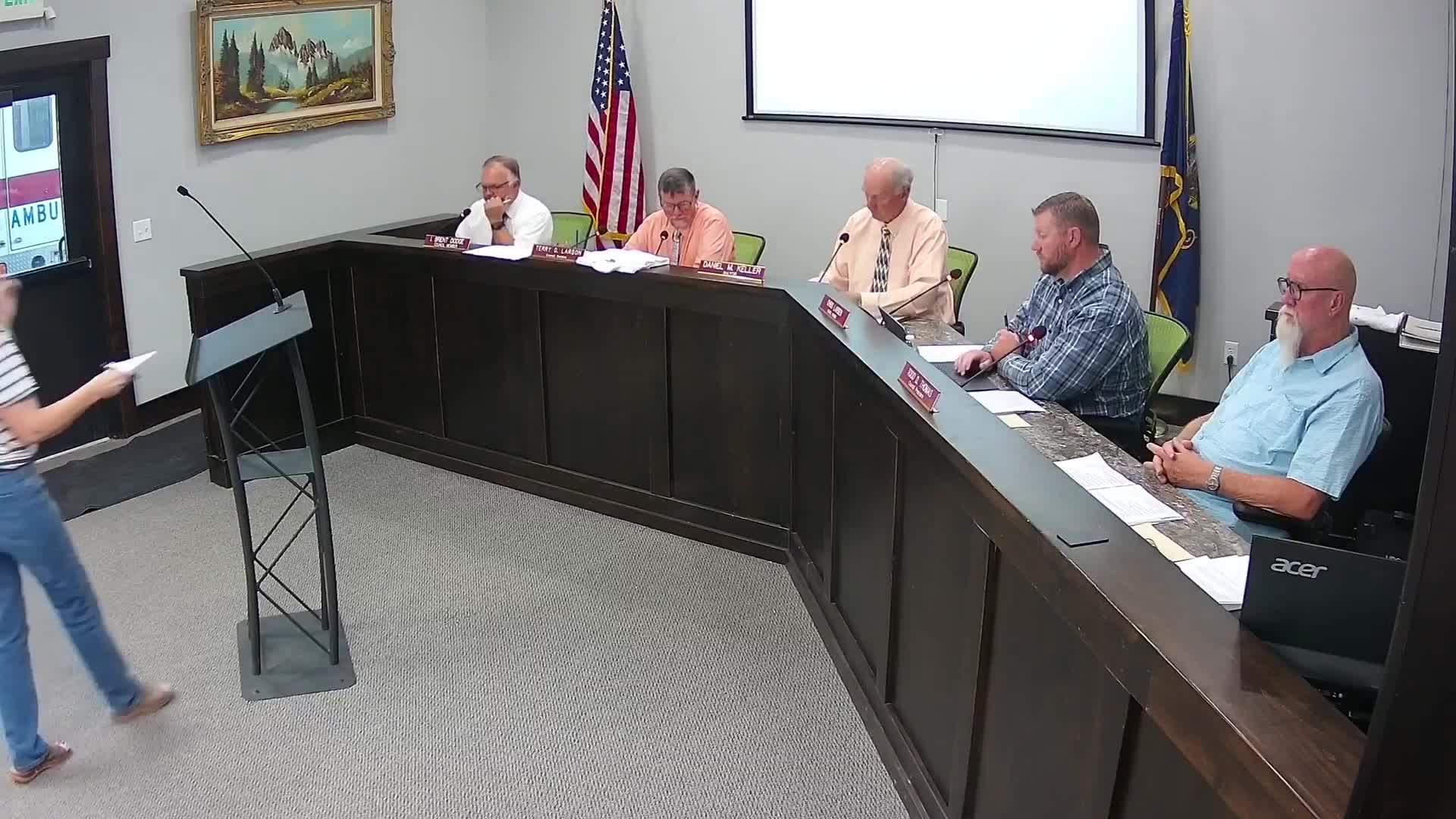
Summary
After a two‑hour discussion and public comment, the Preston City Council voted to keep the city's existing $28,000 hookup fee for fire suppression lines, rejecting a proposal to sharply cut the up‑front charge in favor of a smaller connection fee plus a monthly charge.
The Preston City Council voted to keep the city's existing $28,000 fee for fire‑suppression water hookups following public comment and lengthy council discussion. The council approved leaving the fee unchanged in a roll‑call vote that split the council but resulted in enough votes to maintain the current rate.
The issue drew a public comment from Sandy Martin, who told the council that the $28,000 hookup fee "can be very counterproductive" and urged a change so smaller businesses, nonprofits and affordable housing developers are not priced out of installing fire suppression systems. "Fire safety should be accessible for all," Martin said, adding that the fee is "way higher than any city I've ever talked to."
The discussion focused on competing priorities: public safety and water‑system capacity versus the economic burden on small businesses and developers. Council members and staff cited the city's water study by Keller Associates while arguing about how hookup fees should reflect replacement costs and system capacity. Councilmember Chris Larson summarized the study arithmetic, telling colleagues that dividing total system replacement costs across an estimated 3,000 potential connections produced a per‑connection figure of about $27,065, which closely matches the current $28,000 fee.
Several council members advocated alternatives. Councilmember Terry Larson proposed reducing the one‑time connection fee to $5,000 and recouping revenue with a $50 monthly charge for each fire‑suppression line; he said the city's water supply would not be materially strained because most suppression systems are "nonconsumptive" and seldom discharge water. Others, including members who favor keeping the higher fee, argued the upfront buy‑in helps finance long‑term transmission, redundancy and replacement costs.
After debate, the council member motioned to leave the rate unchanged. The roll call was recorded as: Mister Thomas, nay; Mister Chris (Larson), aye; Terry Larson, nay; Mister Brent Dodge, aye; plus the mayor voted to keep the fee as is. The motion carried and the fee remains unchanged.
The council noted the procedural steps required for any future fee change. City staff said changing the fee schedule would require amending the fee resolution and holding a public hearing at city council level before a new fee could be imposed.
The council left open the possibility of revisiting the issue. Members who supported a lower fee said they would pursue proposals that, if adopted later, could include grandfathering current payers from monthly fees so those who already paid $28,000 would not be charged again.
The discussion also included technical details from the Keller water study: that about 30–37% of existing hydrants cannot deliver the flow modern firefighting standards require, some older parts of town are on four‑inch mains rather than six‑inch, and the draft replacement cost estimate for the system referenced in the study totaled roughly $81,580,000.