
Commission broadens pool barrier options to allow ASTM-certified safety covers with conditions
Get AI-powered insights, summaries, and transcripts
Subscribe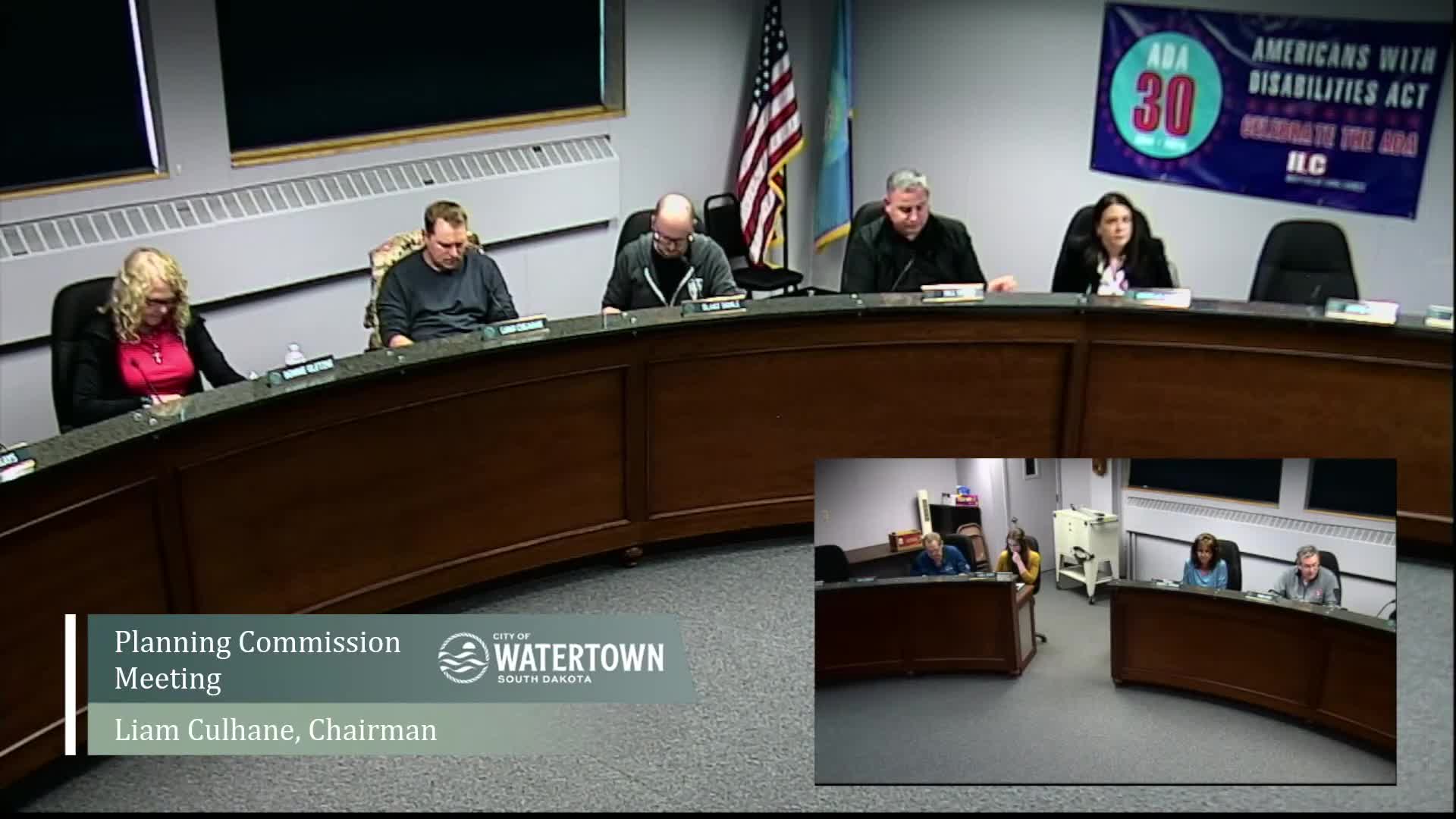
Summary
The Planning Commission approved ordinance 25-6 amendments that let permanent pools use an ASTM-certified automatic safety cover plus a 4-foot fence (with specified latch and opening restrictions) as an alternative to a 6-foot fence.
The City of Watertown Planning Commission approved an amendment to local zoning standards that gives property owners two options for barriers around permanent swimming pools: a 6-foot fence or a 4-foot fence paired with an ASTM-certified automatic pool safety cover and specified safety hardware.
City staff explained the revision modifies Chapter 21-79 (swimming pool barrier requirements) to reflect changes in pool safety technology and to reduce accidental-drowning risk. The amendment retains the city’s barrier purpose while adding precise conditions for latch placement and maximum opening size.
Brandy, presiding officer for the meeting, summarized staff’s proposal and said the commission had asked staff to reconcile existing local language with provisions from the International Building Code and the International Swimming Pool and Spa Code. Staff recommended keeping the core local requirement but allowing a 4-foot fence when the pool has an automatic safety cover that “meets the standards of the ASTM.”
The ordinance sets technical conditions for either barrier option: latches or locking devices must be positioned to prevent child reach (the commission clarified the final language will specify placement “not more than 3 inches” below the top of gates), and fence openings must not permit passage of a 4-inch-diameter sphere. Staff said the “permanent” pool definition applies to pools installed more than six months per year.
No public speakers spoke against the amendment. Commissioner Michelle moved to approve the ordinance “as presented with the additional clarification of the position of the locking device”; Commissioner Falley seconded. The commission called a voice vote; all present said “Aye” and the motion passed.
Staff said the changes are intended to incorporate newer safety technology while preserving protections against accidental drownings; the commission noted a preference that safety devices be used because they “protect the people that live there as well as those you’re trying to keep out.” The amended ordinance will proceed per normal adoption procedures.