Get Full Government Meeting Transcripts, Videos, & Alerts Forever!
Get email alerts on the Capital Spending topic
No spam. Unsubscribe anytime.
Council defers $9.8 million supplemental appropriation for motor graders and data‑center move to Sept. 9
Summary
Councilors deferred a proposed supplemental appropriation that included $8 million to purchase motor graders and $1.8 million to move the city's primary data center; staff argued buying the fleet now would save long‑term lease costs but some councilors wanted the request considered with the full 2026 budget.
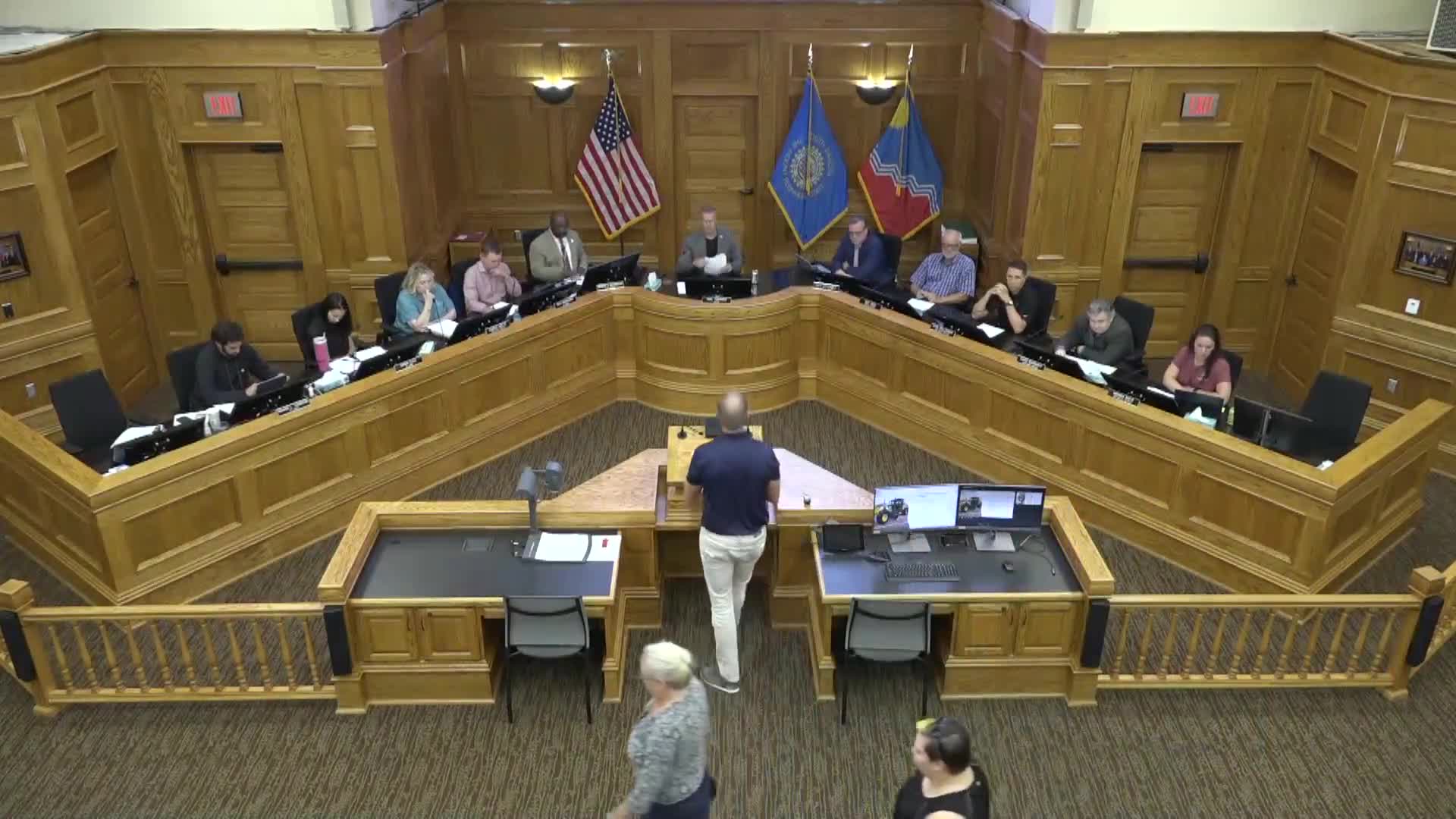
Sioux Falls — The City Council voted 6–2 to defer until Sept. 9 a supplemental appropriation that would have transferred $1.8 million to move the primary data center and $8 million to the fleet fund to acquire motor graders the city currently leases. Sean Pritchard, the city’s finance director, told council members the measures are intended as one‑time investments that would produce long‑term savings and improve financial stability. "We were really focusing on one‑time investments that would create cost savings for the City long term," Pritchard said, describing the request as a chance to accelerate a data‑center move and to start a buy‑rather‑than‑lease program for motor graders. Why it came up: Public works uses motor graders for snow removal on arterial and neighborhood streets; Pritchard told the council the city currently operates 44 motor graders (two per 22 snow districts), 34 of which are on leases that expire in April 2026. He said lease costs for the older fleet have more than doubled since 2018 — from $775,000 to $1,750,000 per year for the 34‑unit lease — and that market conditions make future leases likely to be pricier. The administration presented a model in which acquiring the 34 graders for $8 million now would avoid steep lease increases and produce an estimated $21 million in cumulative savings over 15 years. Key financial assumptions and questions: Pritchard’s presentation included the administration’s assumptions: a hoped‑for purchase price of $8 million for the existing fleet (brand and hours vary), a conservative 10% jump in lease costs at the next renewal and a 5% annual escalator thereafter, estimated annual maintenance of about $8,000 per grader with a 3% inflation escalator, and an assumed asset useful life of 15–20 years. He also said new motor graders currently cost about $500,000 apiece and buying all new would cost roughly $17 million. Several councilors asked for more detail and for comparison figures showing the cost of buying new equipment versus buying the existing leased units. Councilor Sale pressed for the grader and data‑center requests to be considered alongside the full 2026 budget: “We are being asked ... to spend $8 million for motor graders, $1.8 million for the data center right before we're going to try and make cuts to the budget. I just don't think those two things work well.” Sale moved to defer the item to Sept. 9; the motion passed 6–2. Operational impacts and procurement: Public Works staff said owning graders would let the city plan cyclic replacement rather than periodic one‑time purchases and that staggering purchases would ease delivery timelines. Mark Cotter (Public Works) said the plan would shift the city from leasing to owning, allowing the city to set aside funds and avoid future one‑time cash requests for equipment replacement. What the deferral means: The council’s deferral sends the appropriation request back for further analysis and likely inclusion in the broader budget conversation on Sept. 9. Councilors who supported deferral said they wanted the $9.8 million request considered in the context of reserves, competing priorities and a full view of the 2026 budget; those who opposed deferral said the purchase model produced material long‑term savings. Related actions: The companion capital program amendment tied to the appropriation (agenda item 34) was also deferred to Sept. 9 by the same vote count. Next steps: Staff said they will return with more detailed comparisons — including the administration’s purchase‑new vs. buy‑used scenarios, maintenance assumptions and the reserve impacts — and with the appropriation request presented as part of the council’s Sept. 9 budget deadlines.