
Council advances controversial dwelling ordinance to second reading after hours of public comment
Get AI-powered insights, summaries, and transcripts
Subscribe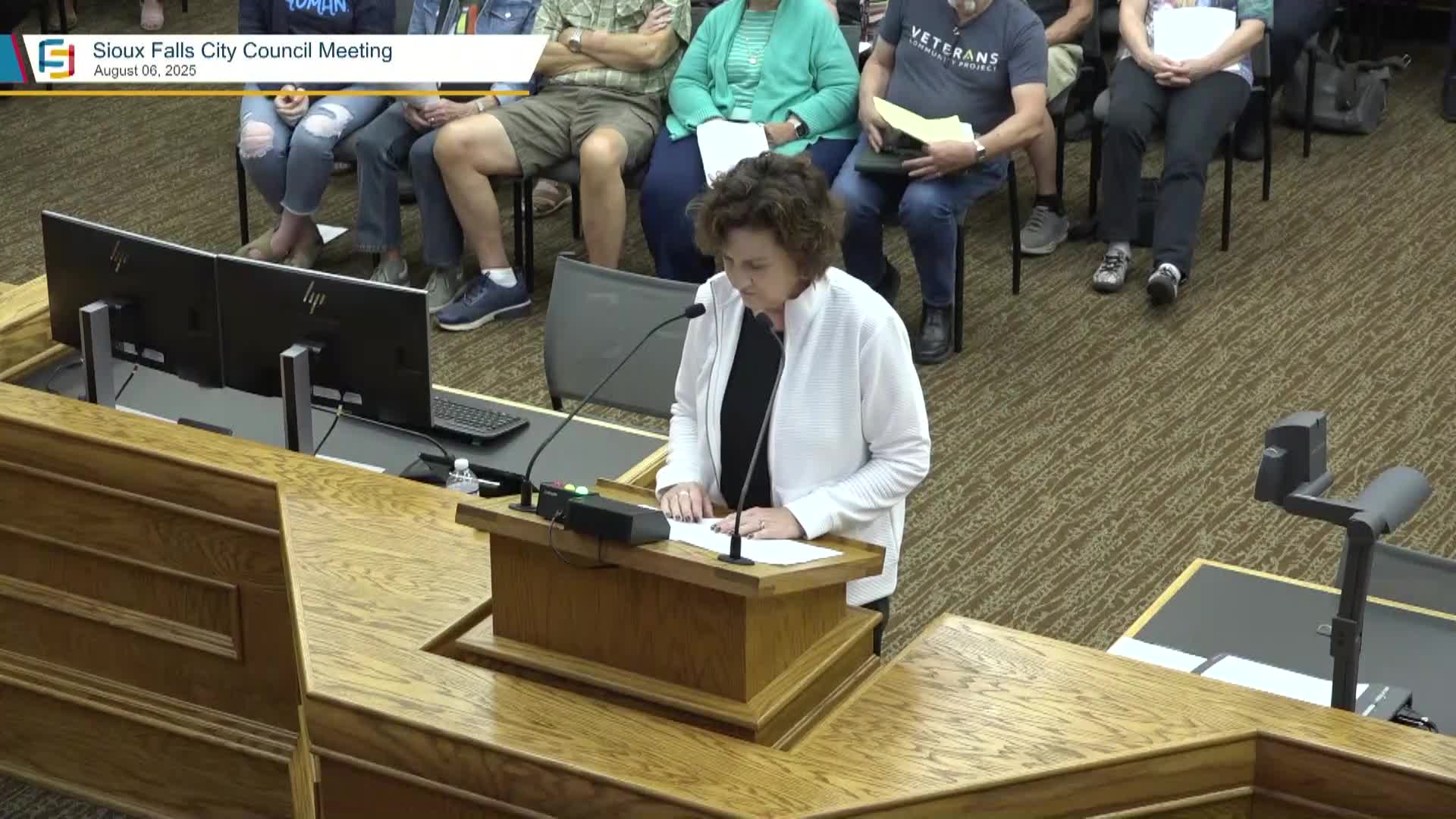
Summary
City council sent a proposed ordinance on camping and temporary structures in parks to a second reading on Aug. 12 after an hour of public testimony that included service providers, advocates and residents who urged both caution and action.
The Sioux Falls City Council approved sending to a second reading on Aug. 12 a proposed citywide ordinance that would restrict temporary dwelling — including tents and makeshift structures — in parks and other public spaces. The measure, presented by the city’s homelessness services coordinator, is intended to give parks staff and outreach teams a clearer tool to manage encampments while coordinating social services.
Michelle Treasure, the city’s homelessness services coordinator, told the council the ordinance is part of a broader service‑driven approach that pairs enforcement authority with outreach, mobile crisis teams and planned winter shelters. Police Chief John Toombs said the measure is designed to give park officers a clearer framework and is intended to be used during daytime contacts when outreach teams can be present; he said the city’s objective is to connect unhoused residents to shelter and services rather than to criminalize them.
Public comment filled more than an hour. Supporters of the ordinance included some local business and property owners who said encampments had led to trash, human waste in runoff zones and safety concerns. Several speakers urged the city to adopt tools to remove hazardous encampments.
Opponents included pastors, homelessness advocates and residents with lived experience who urged the council to reject criminalizing measures and instead invest in housing, low‑barrier shelter, hygiene facilities and additional outreach. Multiple speakers cited national research showing encampment bans do not reduce homelessness over time and warned the ordinance could push vulnerable people further into crisis and reduce trust between communities and police. Several speakers also asked that the city ensure shelter access before any enforcement actions occur.
Councilors debated procedural and policy concerns about process, accountability and whether the county should be more directly involved; several members said the measure needs clearer implementation guardrails. Councilors voted 6–1 to move the ordinance to a second reading.
The second reading will be the next opportunity for council debate and for staff to supply requested clarifications, including how the city will coordinate daytime enforcement, outreach staffing levels, shelter capacity and specifics about penalties or citations.