Get Full Government Meeting Transcripts, Videos, & Alerts Forever!
Get email alerts on the Homelessness Transitional Housing topic
No spam. Unsubscribe anytime.
Committee of the Whole approves funding to buy 50 modular housing pods for transitional shelter
Summary
Lansing’s Committee of the Whole voted unanimously to permit Human Relations and Community Services to use FY25 carry-forward funds to purchase 50 modular housing units, approving a budget amendment while regulatory, siting and operational details remain to be resolved.
LANSING, Mich. — The Lansing Committee of the Whole on Aug. 11 approved a budget amendment to let the Human Relations and Community Services (HRCS) department buy 50 modular transitional-housing units, often called "mod pods," as part of a plan to add temporary, individually lockable living spaces for people experiencing homelessness.
The motion, made by Vice President Carter and passed unanimously, authorizes HRCS to draw forward approximately $645,000 in unspent FY25 funding for immediate purchase and logistics to take advantage of a market opportunity, city staff said. The council did not vote on a site or an operating plan; officials said those details will follow separate approvals.
HRCS and city staff told the Committee that the purchase price being pursued is well below an earlier estimate from an RFP that totaled roughly $1.3 million for a comparable number of units. Jake Brower, the city's chief strategy officer, told the council the vendor opportunity would reduce the acquisition cost; Roy Plowman, who discussed logistics, said a one-time relocation and storage fee would be a not-to-exceed $20,000 and is included in the amendment.
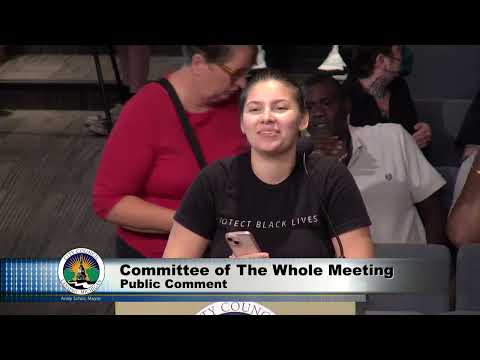
Supporters who spoke during the meeting said the pods offer dignity, privacy and shorter-term stability that can help people connect to services and move into permanent housing. Joanne Galloway, a Lansing resident, told the council she supports the resolution and emphasized “community and stakeholder inclusion, sustainable operations, and transparency and timelines.” Patricia Bremen, director of the Housing Assessment Resource Agency (HARA) for Ingham County, described HARA’s role in assessment and HMIS data entry and said the pods could help people currently sleeping in cars, tents or on sidewalks.
HRCS Director Delvada Moses and contract staff described the model HRCS intends: a trauma-informed pod community with 50 units (single and double configurations), on-site case management and wraparound services, 24/7 security, hygiene facilities (showers and laundry), lockers and a resource center for housing navigation. Moses said the department plans to use the CoC coordinated entry process and HUD criteria for client screening and anticipates an operating timeline that includes zoning and licensing steps that typically take about nine months; if approvals proceed on schedule staff said they aim to break ground in March 2026.
City staff estimated annual operating costs in the range of $750,000, and told the council they will pursue state and federal grant opportunities and county homelessness funds to help sustain operations; HRCS said basic human services allocations could be used as a backstop in future budgets if needed. Brower emphasized that the current vote covers acquisition and immediate logistics only; future council approvals will be required for siting, procurement of an operator through an RFP and ongoing operating budgets.
Public commenters raised recurring questions the council and HRCS staff said must be addressed during planning: whether pods should have residency requirements or preference for Lansing/Ingham County residents; how families (the department said the proposed pods are primarily aimed at single adults and some double-occupancy units rather than families) would be accommodated; infrastructure costs for water, sewer, showers and trash; site selection and neighborhood impacts; and how to ensure participation by people with lived experience in planning and governance.
Speakers pointed to other municipalities’ experiences as models and warnings. A graduate student and community health worker, Clinton Morales, cited Eugene, Oregon, and Oakland as places where transitional and outreach-based models reduced emergency costs and helped people into housing. Several speakers asked that people with lived experience lead planning and sit on decision-making bodies; multiple presenters urged a public reporting schedule through zoning and licensing milestones.
City staff also disclosed a discrepancy in pod counts expressed during the meeting: Jake Brower cited an earlier vendor breakdown of 34 single units and 16 double units, while HRCS staff later described the proposal as 36 single units and 14 double units. HRCS said the exact configuration will be finalized during procurement and permitting.
The council's action does not authorize a site, operator, or the program's operational budget beyond the immediate funds to acquire units and pay short-term logistics. Delvada Moses said HRCS will issue an RFP for operations and contract administration and will work with community partners, hospital systems, nonprofits and county agencies to identify sites and services. Mayor Shore and HRCS staff said multiple city-owned properties and private partnerships are under consideration; Mayor Shore noted parks with larger restroom facilities as some early possibilities but said no final site decision has been made.
Next steps enumerated by staff include: finalizing the procurement for the units; pursuing zoning and habitability approvals and state licensing; issuing an RFP for operations and case management; and continued community engagement. Council members and staff repeatedly said additional approvals will be required and cautioned that the purchase alone does not put units into service.
Votes at a glance: Vice President Carter moved the budget amendment for HRCS to purchase 50 modular units and cover logistics; the motion passed unanimously.
The Committee adjourned after the vote; HRCS said it will return with further details on siting, procurement and an operating plan for council review.