Get Full Government Meeting Transcripts, Videos, & Alerts Forever!
Get email alerts on the Council Attendance topic
No spam. Unsubscribe anytime.
Lansing committee sets Aug. 11 public hearing on ordinance to penalize council absences after public complaints
Summary
The Committee of the Whole voted unanimously to set a public hearing Aug. 11 on a proposed amendment to the Lansing Codified Ordinances that would define excused and unexcused absences and set penalties for council members; public commenters urged stricter attendance standards for elected officials.
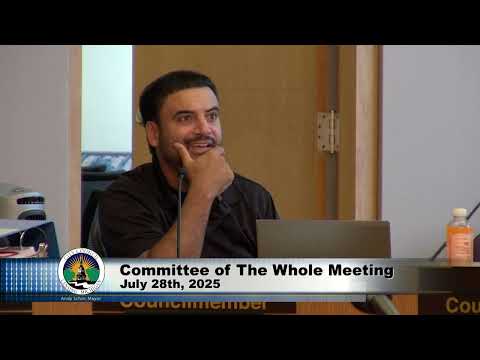
Two residents urged the City of Lansing’s Committee of the Whole on June 28 to adopt firm attendance standards for city council members, and the committee voted unanimously to set an Aug. 11 public hearing on a proposed ordinance that would define absences and allow censures and other penalties.
The proposed ordinance would amend the Lansing Codified Ordinances Chapter 2.10 by adding Section 210.06 to define “council meeting,” “committee meeting,” “absence,” and “excused absence,” and to establish a scale of penalties and a process for requesting excused absences under authority cited to City Charter section 3-204. Councilmember Pali Vanoglu moved to set the public hearing for Aug. 11; the motion passed unanimously.
Why it matters: The ordinance would create a formal local mechanism to respond to repeated unexcused absences by elected members, a matter that residents said affects neighborhood outreach and trust in representation. Public comment at the committee meeting connected the proposed law to recent campaign rhetoric about attendance and to prior efforts to address attendance through council rules or the charter.
Residents’ remarks: Loretta Stanaway urged the committee to adopt the amendment, saying it is “a very necessary and appropriate move” after a candidate at a recent neighborhood forum said, “I don't really think you have to always be there because you can accomplish things without being at the meetings.” Nicholas Zandy, president of the Old Everett Neighborhood Association, told the committee that neighborhood leaders expect attendance and argued the same standard should apply to council members: “If you're not gonna be showing up at a neighborhood meeting, well, I don't know if you should even be on the board at all.” Zandy added, referencing work expectations, “If you don't show up to work, you don't get a promotion.”
Council discussion and background: Councilmember Pali Vanoglu, who introduced the ordinance language, said the draft sets clear definitions and parameters for requesting excused absences. Vanoglu said the ordinance “sets a scale of penalties for unexcused absences for council and committee meetings, and it sets parameters around requesting excused absences for any council member.”
Councilmember Hussain noted the item had been discussed previously, including at the charter commission, and asked whether amending council rules might be an easier path; Vanoglu said she had asked the city attorney to draft the ordinance and believed the ordinance was a straightforward way to codify expectations.
What it would do: According to the explanation presented to the committee, the ordinance would (1) define meeting types and absence categories, (2) create a graduated set of penalties for repeated unexcused absences (referred to generally in the draft language presented), and (3) specify how members may request excused absences. The committee did not adopt the ordinance on June 28; it set a public hearing date to receive public input and a future council vote.
Public-record context: Committee members and public commenters said the topic had been raised previously at the charter commission and during neighborhood forums; speakers named specific council members and candidates in describing concerns about attendance. The committee’s vote on June 28 was to set the public hearing only. The record at the meeting shows no amendment language adopted at that session and no final penalties or forfeitures were enacted at the June 28 meeting.
Next steps: The committee scheduled a public hearing on the proposed ordinance for Aug. 11; the ordinance will return for further legislative action after public input.