D60 board rejects immediate charter‑application action, removes citizen statement after extended debate
Summary
Board members sparred over procedure and statute after a request to move a citizen’s charter‑school item into an action item and to waive application timelines. The board voted to remove the item from the agenda; a charter group led by Steven Varela urged the board to hear a full application instead.
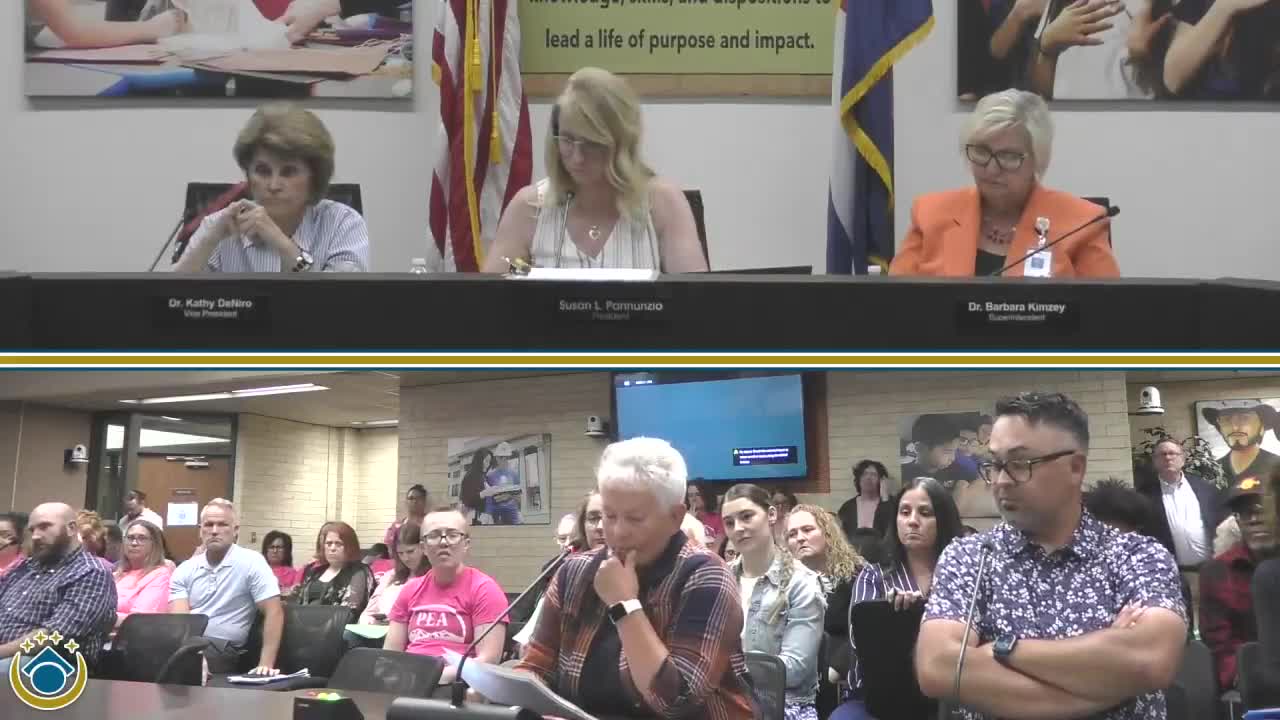
Director Roberto Cisneros moved at the June 24 meeting of the D 60 Board of Education to amend the agenda so the board could consider a request to waive statutory charter‑application timelines under CRS 22‑30.5‑107 and related subsections. The board debated whether the district’s policies (BEDB, BEDH) and Colorado statute allow the board to consider such a waiver when no full application had been filed.
The item prompted sustained legal and procedural discussion among board members. Director Thibault and others argued the board’s citizen‑statement slot is not designed to host an actionable hearing and that the board’s policy requires unanimous consent to add an action item after the agenda is posted. Director Thibault noted the February 1–April 1 filing window in statute and said, “The next application that will properly be before this board by any applicant for charter school authorization cannot be filed until 02/01/2026.”
After discussion, Director Cisneros’s motion to move the citizen statement into an action item and to waive the statutory timeline did not receive the unanimous consent the board’s policy requires and therefore did not advance. A substitute motion from Director Thibault to remove item 6.02 — listed on the agenda as a citizen statement concerning a potential charter application — subsequently carried. The board debated whether the removal was required because of notice concerns under Colorado open‑meetings law and whether the district could, or should, consider a waiver outside the statutory window.
During the public‑comment portion of the meeting, Steven Varela and members of his group presented an outline of their plan and said they had submitted a letter of intent (LOI) to the district. Varela said the LOI was followed by a request that the board waive timelines “so that the board may receive a full briefing, ask clarifying questions, and consider any forthcoming action.” He asked the board to call a special meeting or otherwise schedule an action hearing on the group’s application and repeatedly urged the board to “hear us” and “give us an opportunity.”
Multiple board members pressed for process and documentation. Director Mays said he wanted any material submitted by applicants to be placed on the public record and questioned whether follow‑up material that contradicted earlier correspondence had been provided. Director De Niro and legal counsel cited the statute’s requirements for accountability‑committee involvement, public notice and hearings, and a typical 18‑month timetable from application to opening.
Community speakers also raised concerns and context. Teresa Martinez, speaking as a CHIPA staff member, described impacts on students after the charter’s recent closure and urged the board to consider continuity of services for affected students. Barb Clementi asked about potential conflicts of interest and the origins of the proposed application materials.
No board action was taken to approve a waiver or to accept a full charter application at the meeting. Board members emphasized statutory timelines, public‑notice requirements and the district’s policies as the bases for their procedural rulings. Several directors said they would be willing to consider a properly noticed application filed within the statutory window or a waiver request filed according to statute.
The charter proponents said they will continue to pursue an application and asked the board to schedule a hearing; the board left the item off the current agenda and proceeded with other business.