Get Full Government Meeting Transcripts, Videos, & Alerts Forever!
Get email alerts on the Emergency Rules topic
No spam. Unsubscribe anytime.
Department of Agriculture files emergency rules to delay cannabis labeling change, extend kratom registrations
Summary
The Department of Agriculture and Food filed two emergency rules — one to roll back a new cannabis labeling restriction and another to extend kratom product registrations for up to three months — after industry concerns that permanent rule changes would force costly relabeling or leave products on shelves that would soon be noncompliant.
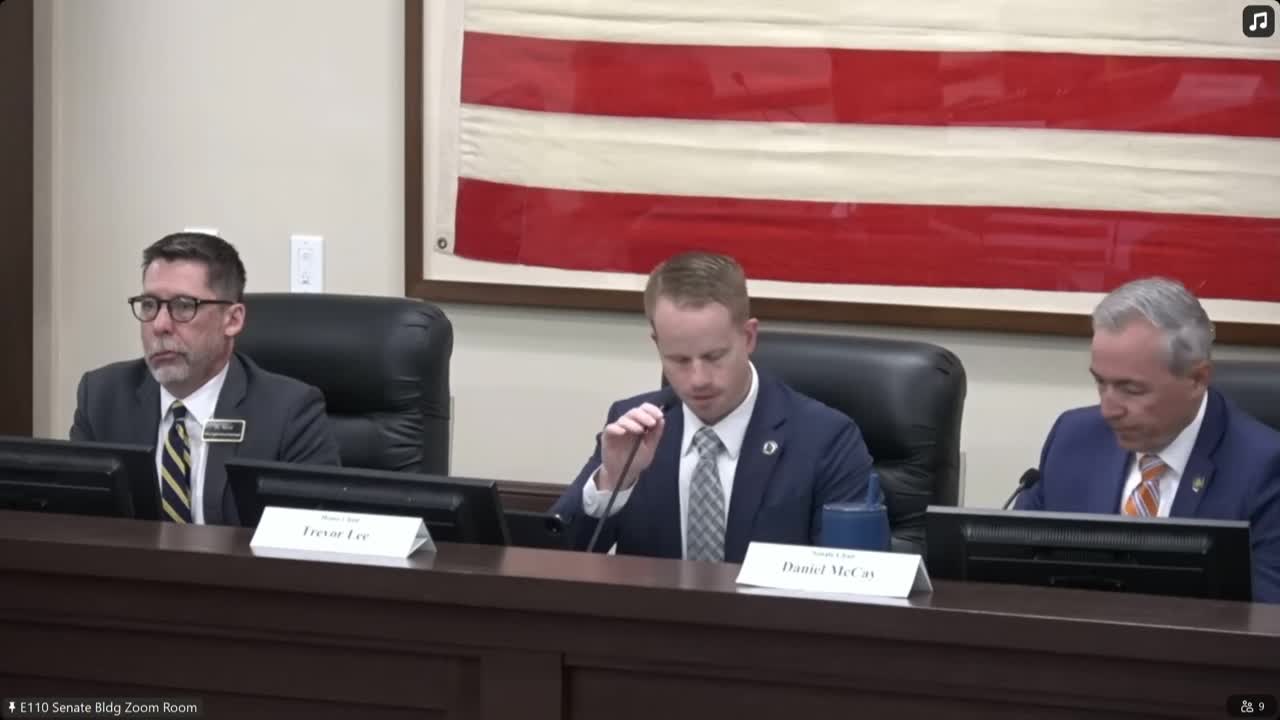
At an Administrative Rules Review Committee meeting in July 2025, the Utah Department of Agriculture and Food told lawmakers it had filed two emergency rules to avoid unintended market disruption while it finalizes permanent rule changes.
Deputy Commissioner Amber Brown told the committee the department filed an emergency cannabis processing rule on July 9 to remove a newly added restriction that would have barred directions for use on product labels. Brown said the change, if left in place while businesses reworked labels, “would require them to create new labels for a significant number of products at a high financial cost and would lead to some products being taken off the shelves.” The emergency rule “pull[s] that restriction back,” she said, while the department prepares a permanent compromise.
On kratom, Brown said the department filed an emergency amendment on June 28 that allows regulators to extend a product’s registration period for up to three months. The department said it added limits on certain additives to new kratom rules filed August 15, which are scheduled to take effect September 22. Because some products legally registered under the prior rule would become noncompliant under the new rule, the emergency extension prevents the agency from re‑registering products for a full year that would be unlawful under the updated standard and gives sellers time to move inventory.
Why it matters: The department said the emergency filings are intended to avert immediate patient access or consumer disruption while public comment and permanent rulemaking proceed. The kratom extension was framed as a temporary, safety‑focused measure to avoid allowing previously lawful products to remain on the market for a full year after registration renewal.
Committee discussion Representative Walter asked whether the emergency filings were intended to fix unintended consequences and Brown confirmed they were. Representative Thurston asked whether kratom industry stakeholders were satisfied; Brown said the extension helps industry run down inventory and adjust to the new rules but that stakeholders may still disagree with the underlying regulatory changes.
Administrative details - Cannabis processing emergency rule: filed July 9; transcript records the rule would expire in roughly 77 days from filing (emergency period recorded by the department). - Kratom product registration and labeling emergency rule: filed June 28; transcript records the rule would expire in about 66 days; the department said the new permanent kratom rule was filed August 15 and scheduled to take effect September 22.
Quotes “We filed an emergency rule to kind of pull that restriction back and we have now met internally and … we can strike a better compromise position,” Amber Brown said.
“The issue here is that as the kratom industry has grown…we have some products that had previously been registered because they were legal under the old rules, but will not be legal when the new rules are in place,” Brown said.
Ending Department staff said the emergency rules are temporary fixes while they complete permanent rulemaking and stakeholder engagement. Committee members accepted the department’s explanation and did not move to object; the hearing then moved to other agenda items.